
By Donnie Yance
In part 1 of this series, we gave an introduction to the vagus nerve and its powerful physiology as part of the parasympathetic nervous system and the longest nerve in the human body. Part 2 covered the implications of vagal stimulation in the context of cancer and other chronic conditions. The next part of the series will discuss the many ways to naturally stimulate the vagus nerve for reduced stress, inflammation, and disease risk.
Ways to Increase Your Vagus Nerve Function and Promote Optimal Wellness
Vagus nerve stimulation may be achieved by one of the many vagal maneuvers such as: holding the breath for a few seconds, dipping the face in cold water, coughing, or tensing the stomach muscles as if to bear down to have a bowel movement (Valsalva maneuver).
Even more vagus nerve practices are listed below:
1) Prayer and Meditation – Faith, Hope, Compassion, Love, and Connection to God
“[If] you do not listen to Theology, that will not mean that you have no ideas about God. It will mean that you have a lot of wrong ones— bad, muddled, out of date ideas.” — C. S. Lewis 1
Loving kindness meditation promotes feelings of goodwill towards yourself and others.2 Perceived positive social connections account for the upward spiral between positive emotions and vagal tone.3 The full mechanisms underlying the association between positive emotions and physical health remain a mystery. Some scientists hypothesize that an upward-spiral dynamic continually reinforces the tie between positive emotions and physical health and that this spiral is mediated by people’s perceptions of their positive social connections.
Researchers tested this overarching hypothesis in a longitudinal field experiment in which participants were randomly assigned to an intervention group that self-generated positive emotions via loving-kindness meditation or to a waiting-list control group. Participants in the intervention group increased in positive emotions relative to those in the control group, an effect moderated by baseline vagal tone, a proxy index of physical health. Increased positive emotions, in turn, produced increases in vagal tone, an effect mediated by increased perception of social connections. This evidence identifies one mechanism through which positive emotions build physical health, indexed as vagal tone. Results suggest that positive emotions, positive social connections, and physical health influence one another in a self-sustaining upward-spiral dynamic.
There is no greater joy then, to be working in loving kindness in serving God above all else. But how do we find out what God’s will is for us? Before we can know God’s will, we must desire it above everything else. We must pray to God with “simple intentions,” asking that our desires be pleasing to Him. We should feel a longing for God’s presence to be with us always throughout our entire life in every moment, and in any situation we are in. “Loving kindness” implies a deep desire to make others happy even when it requires self-sacrifice, suffering and in extreme cases even death. Watch the movie ’Pay It Forward’ for an illustration.4
Studies tell us that patients who are given spiritual support have a significantly better quality and length of life.
Research conducted by Dacher Keltner, director of the Social Interaction Laboratory at the University of California, Berkeley showed that stimulating that vagus nerve is not only good for you, it’s also good for the planet! “Our research and that of other scientists suggest that activation of the vagus nerve is associated with feelings of caretaking and the ethical intuition that humans from different social groups (even adversarial ones) share a common humanity. People who have high vagus nerve activation in a resting state, we have found, are prone to feeling emotions that promote altruism – compassion, gratitude, love, and happiness.” 5
Compassion is an effective response to another’s suffering and a catalyst of prosocial behavior. Compassion, which is associated with activation of the vagal system, is associated with heightened parasympathetic activity through the vagus nerve and is a core affective component of empathy and prosociality.
A new science of happiness is finding that these emotions can be readily cultivated in familiar ways, bringing out the good in others and in oneself. Here are some recent empirical examples:
- Experiences of reverence in nature or of being around those who are morally inspiring improves people’s sense of connection to one another and their sense of purpose.
- Meditating on a compassionate approach to others shifts resting brain activation to the left hemisphere, a region associated with happiness, and boosts immune functions.
- Talking about what we are thankful for– in classrooms, at the dinner table, or in a diary, boosts happiness, social well-being, and health.
- Devoting resources to others, rather than indulging a materialist desire, brings about lasting well-being.6
Meditation Improves Gene Expression
After eight hours of mindfulness practice, meditators showed a range of genetic and molecular differences, including altered levels of gene-regulating machinery and reduced levels of pro-inflammatory genes, which correlated with faster recovery from a stressful situation.7
Become a Poustinik
In a previous post, I talked about becoming a Poustinik, a Russian word literally meaning ‘desert’ but has meanings related to seeking a quiet place of sacred retreat. Prayer and meditation offer opportunities for enhanced emotions throughout the day, not simply during meditation. Most importantly, you can use the insights and psychological skills developed during meditation practice in many practical life situations.8
Meditation and mindfulness, which are perhaps best known as elements of Eastern religious-spiritual practice, have also proven to be fruitful topics within research on well-being.
For instance, for over 2 decades, Kabat-Zinn and his colleagues have reported evidence that meditation helps people self-regulate stress, anxiety, chronic pain, and various illnesses. 9
A recent meta-analysis of nearly 300 findings concluded that: positive emotions produce success and health as much as they reflect these good outcomes.10
Practice Quietness and Stillness to Enter the Great Mystery of God
In the age of reason and rational thinking, we face a fundamental problem: we cannot understand God through logic and calculation alone. Reason has its limits. We cannot think our way to God, nor can we arrive at Him through numbers and formulas.
Encountering God requires something different. It demands contemplation—a deliberate turning of attention inward. But contemplation alone is not enough. True encounter with God requires a response, and that response can only emerge from a particular spiritual state called hesychia.
Hesychia is a Greek word meaning “stillness, rest, or silence.” It describes a spiritual practice of complete inner stillness that Eastern Christian Mystics have cultivated for centuries. Within this state of profound quietness, the conditions for genuine encounter with God become possible.
There are four characteristics:
- A state by which you strive to be in a place of total rest, stillness, and quiet, which excludes reading and even mediation.
- Repetitive prayer often with beads or knotted ropes – Eastern Christians say the “Jesus Prayer”, Western Catholics say the “Rosary”. Prayer beads are also used in Buddhism, Islam, Sikhism, and the Bahá’í faith to mark the repetitions of prayers and/or chants.
- Physically position your body in a way to enable yourself to do deep breathing so you can let go and bring the mind into the heart.
- The feeling of inner warmth and perspiration, a true experience of “Total Divine Light.” The Buddhist would call this experience “interconnectedness.”
“Prayer of the heart” occurs when the Prayer moves from merely mental repetition, forced along by your own effort, to an effortless and spontaneous self-repetition of the Prayer that emanates from the core of your being, your heart.
This contemplative life means our entire existence should become a meditation—a continuous turning toward God in all we do and all we are.
This is the calling of the Poustinick, a spiritual seeker who lives this integrated life. The word comes from the Russian tradition, and it describes someone committed to a particular way of being in the world. A Poustinick does not withdraw from life entirely. Instead, they seek to live in two dimensions simultaneously: the external dimension of action and engagement with the world, and the internal dimension of deep spiritual presence and awareness.
This balance is the heart of the Poustinick’s path. On the surface, they may work, serve others, and participate in the ordinary rhythms of daily life. But beneath this external activity flows a constant inner current—a perpetual awareness of God’s presence and an ongoing dialogue with the divine. The two are not in conflict; they are woven together.
The Poustinick views their entire life as a pilgrimage—a sacred journey of exploration and discovery. This is not a journey measured in miles or destinations, but in deepening intimacy with God and understanding the infinite nature of the divine. It is a journey inward, into the depths of spiritual reality, and this inner exploration proves far more beautiful and fulfilling than anything the material world can offer.
As one travels this path, a profound transformation occurs. The constant striving to acquire, to possess, to secure—all of this gradually falls away. You become poor in spirit, not through deprivation, but through liberation. The desperate need to have and to hold transforms into something entirely different: the freedom that comes from releasing your grip on what you thought you needed. In this reversal, you discover that true spiritual wealth lies not in grasping, but in letting go.
For a more in-depth look at Poustinia read here:
Theology and Religion Linked to a Better Life for Everyone
Regular attendance at religious services is linked to healthy, stable family life, strong marriages, and well-behaved children.11 The practice of Religion also leads to a reduction in the incidence of domestic abuse, crime, substance abuse, and addiction. In addition, religious practice leads to an increase in physical and mental health, longevity, and education attainment. Moreover, these effects are intergenerational, as grandparents and parents pass on the benefits to the next generations. Many research studies now indicate that religious practice serves the common good.12
2) Chanting, Humming, or Singing Relaxing and Uplifting Music
Since the vagus nerve is connected to the vocal cords, chanting, humming, or singing mechanically stimulate it. You can hum a song, or even better chant a repetitive spiritual meditative piece of music; in your mind’s eye transport yourself to a monastery, and imagine yourself singing with the monks.
Singing, in general, seems to promote greater well-being. Choir singing is known to promote health and happiness. One reason for this may be that singing demands a slower than normal respiration, which may in turn affect heart activity.
Song structure, respiration, and heart rate are all connected. Unison singing of regular song structures makes the hearts of the singers accelerate and decelerate simultaneously.13
A meta analytical study has shown that relaxing music affects blood pressure and heart rate in coronary heart disease and cancer patients. Relaxing music provides great benefits to both patient and clinician. There is a close relationship between relaxing music and medical healing. Music therapy can be applied across nearly all areas of health care because it is noninvasive, safe, inexpensive, and has no harmful side effects.14
3) Deep Breathing
Deep breathing is a great way to stimulate the vagus nerve. We can extend the length of inhalations and exhalations to activate the parasympathetic nervous system. This means expanding your diaphragm, a muscle located horizontally between the chest and stomach cavities. Also known as “belly breathing,” diaphragmatic breathing is characterized by an expansion of the abdomen instead of the chest.
When breathing remember the following:
- Breathe slowly.
- Breathe deeply, from the belly.
- Exhale longer than you inhale.
You can proceed as follows: take a deep inhalation into your belly (i.e. expanding your diaphragm) to the count of five, pause, and then exhale slowly through a small hole in your mouth. While at rest most people take about 10 to 14 breaths per minute. To get into parasympathetic / relaxation / healing mode it’s ideal to reduce your breathing to 5 to 7 times per minute. Exhaling through your mouth instead of nose makes your breathing more of a conscious process, and helps you to observe your breath more easily.15
4) Washing Your Face with Cold Water or Putting Your Tongue in Cold Water
Cold water exposure activates the vagus nerve through the mammalian dive reflex. This ancient survival mechanism slows the heart rate and redirects blood flow to vital organs, promoting parasympathetic dominance.16
5) Vagus Nerve Stimulation Devices: Pulsetto and VeRelief Mini
After extensive clinical experience with various vagus nerve stimulation devices, I find the Pulsetto to work the best for most people. This advanced device delivers precise, comfortable transcutaneous auricular vagus nerve stimulation (taVNS) that consistently produces measurable improvements in heart rate variability and subjective well-being.17
Why Pulsetto Excels
Precision Engineering: The Pulsetto uses carefully calibrated electrical parameters that target the auricular branch of the vagus nerve with optimal frequency and intensity ranges (typically 10-25 Hz) that research shows to be most effective for vagal activation.18
User Compliance: Unlike bulkier devices or those requiring complex setup procedures, the Pulsetto’s ergonomic design and simple operation encourage consistent daily use, which is essential for building vagal tone over time.19
Measurable Results: Clinical studies with similar taVNS devices show significant improvements in heart rate variability, stress hormone levels, and inflammatory markers within 2-4 weeks of regular use.20
Safety Profile: The device operates well within established safety parameters for transcutaneous electrical stimulation, making it suitable for most individuals without the risks associated with invasive VNS procedures.
Clinical Protocol for Pulsetto Use
Frequency: Use 4-5 times per day, ideally before meals to maximize parasympathetic activation during digestive periods.
Duration: 10-20 minute sessions are typically optimal, allowing sufficient stimulation without causing habituation or discomfort.21
Timing: Pre-meal use enhances the natural parasympathetic activation that occurs during digestion, creating a synergistic effect that supports both vagal tone and digestive function.22
Combination Therapy: Pulsetto use can be combined with breathing exercises, meditation, or botanical protocols for enhanced benefits.23
The VeRelief Mini offers another option for transcutaneous auricular VNS, though in my clinical experience, it shows less consistent results across diverse patient populations compared to the Pulsetto.24 Also consider the home therapeutic model for even more intensive intervention.25
6) Laughter
Laughter is more than just an expression of joy, it’s a powerful force for health, longevity, and human connection.26 From ancient wisdom to modern scientific research, the evidence overwhelmingly supports the idea that humor and laughter contribute to physical, mental, and even spiritual well-being.27
Laughter stimulates the vagus nerve through an overlapping combination of:
- deep rhythmic breathing
- vocal cord activity
- diaphragm movement
- facial expression
- emotional regulation
- and social bonding signals
A groundbreaking study in Psychosomatic Medicine reveals that humor may be key to longevity. Research following 53,556 Norwegians over 15 years found that women with strong cognitive humor skills had 48 percent lower mortality risk overall, with even more dramatic reductions in deaths from heart disease (73%) and infection (83%). Men with high humor scores showed a 74 percent lower risk of death from infections.
The study focused on cognitive, social, and affective components of humor, with only the cognitive aspect showing significant health benefits. According to study co-author Sven Svebak of the Norwegian University of Science and Technology, this cognitive component of humor, a stable personality trait, may help people process daily experiences more positively, reducing stress hormone levels that can compromise immunity.28
So go ahead and laugh! You can find funny situations anywhere you look for them, from talking to a child, telling jokes, watching movies, going to comedy clubs, or even laughing for no reason at all.
7) Improving the Gut Flora
The presence of healthy bacteria in the gut creates a positive feedback loop through the vagus nerve, increasing its tone.29 The gut microbiome appears to determine immunotherapy response. In examining many patient’s microbiomes, researchers looked at both its diversity and its composition. The results showed a significantly greater diversity of types of bacteria in the microbiome of patients who responded to immunotherapy.30
Responders had a significantly greater abundance of bacterial species of the order Clostridiales, specifically, Ruminococcus spp, compared to nonresponders, whereas nonresponders had a greater abundance of bacteria of the order Bacteroidales. Ruminococcus spp is significant in the fermentation of complex carbohydrates in the large bowel. Diets rich in complex carbohydrates have been shown to increase Ruminococcus spp.31
In general, it has been found that the more healthy and diverse a person’s microbiome is, the better their heart rate variability and vagal tone will function.32
A 2022 study involving 950 Japanese subjects, showed that higher gut microbial diversity was associated with higher HRV.33
Specific strains of probiotics that have been shown to improve parasympathetic tone include:
- Lactobacillus rhamnosus: Animal studies show it reduces stress, anxiety, and depression-like behaviors via the vagus nerve. 34
- Bifidobacterium longum: Reduced stress responses and improved memory in mice and small human studies. The effects seem to be mediated by vagal signaling. 35
- Lactobacillus plantarum: Studies suggest improvement in mood and cognitive flexibility. 36
- Lactobacillus helveticus + Bifidobacterium longum combination: Human trials show reduced stress and cortisol levels in depressed patients. The mechanistic evidence points to improved vagal pathways. 37
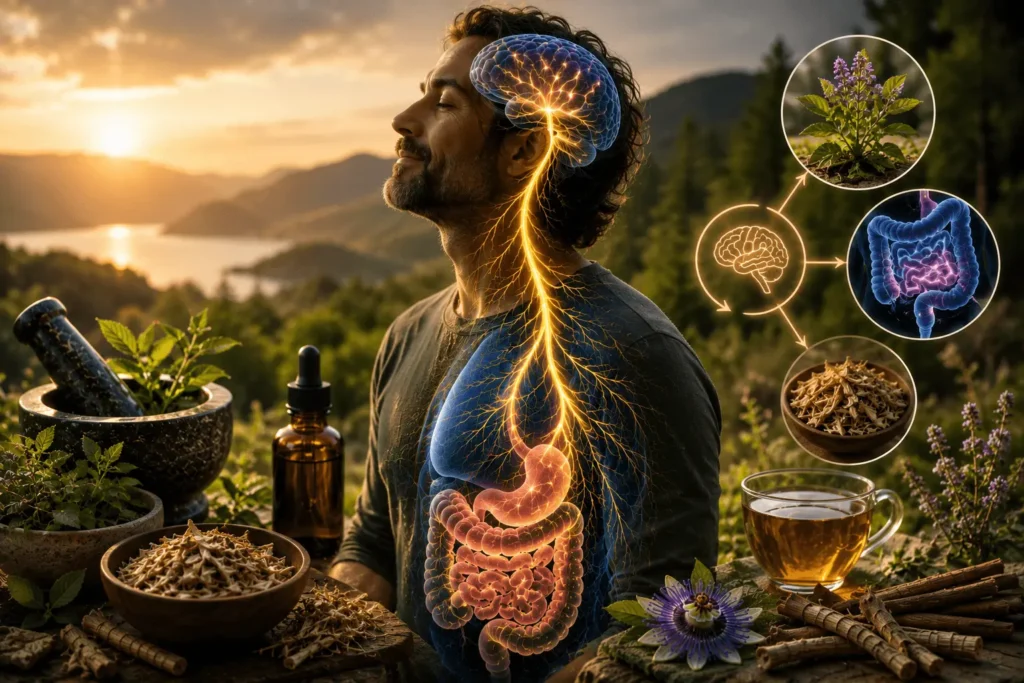
8) Botanicals To Strengthen the Gut-Brain Connection For Relaxation
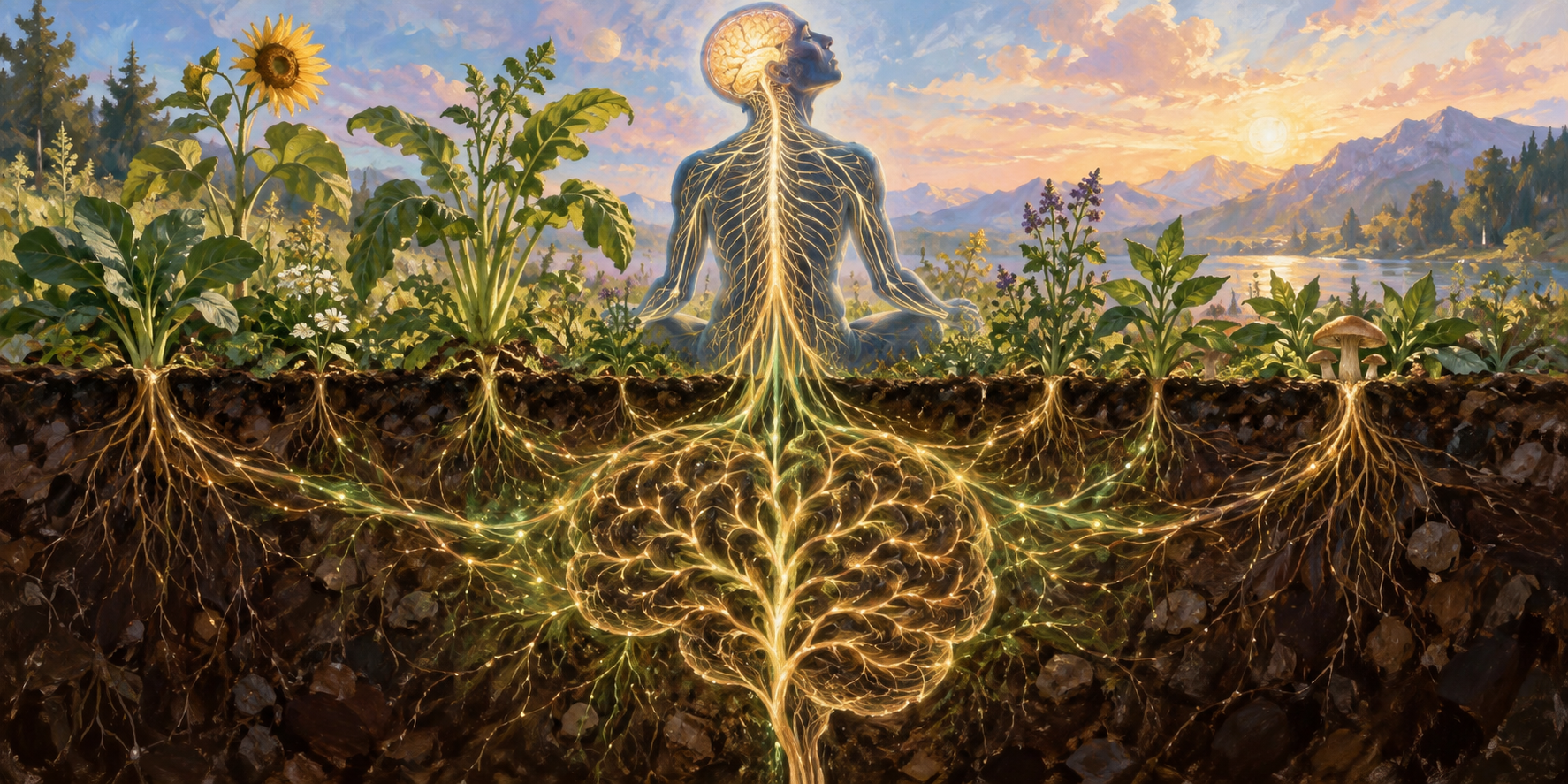
There are so many wonderful plants that influence parasympathetic tone, that the fourth and final part of this series will focus on this eighth method for strengthening the vagus nerve and reducing sympathetic overactivity.
Conclusion
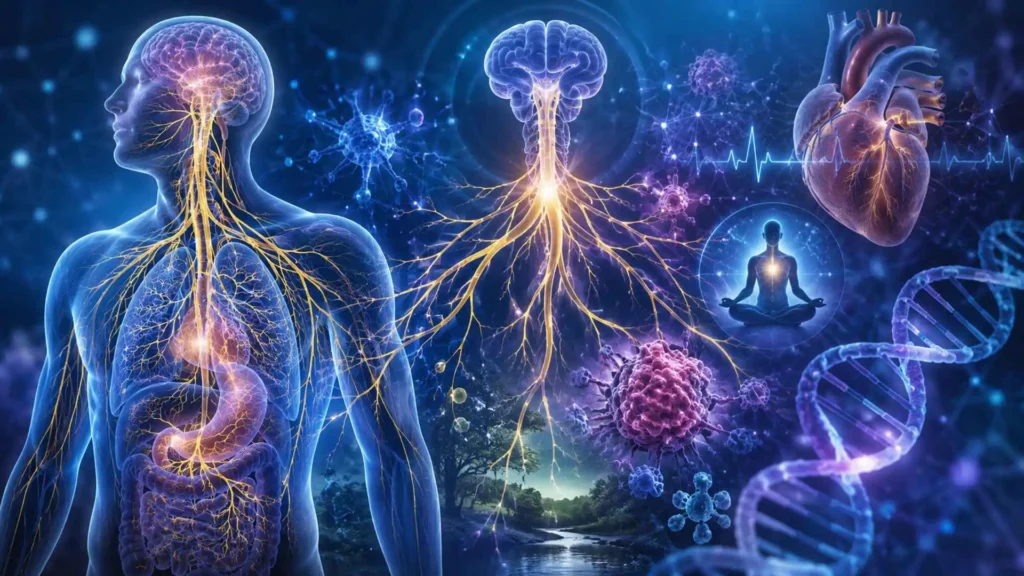
The vagus nerve is more than just an anatomical pathway, it is a bridge connecting the body, mind, and spirit. Strengthening vagal tone through simple, consistent practices such as prayer, meditation, deep breathing, laughter, chanting, and mindful stillness can profoundly influence physical health, emotional balance, and spiritual well-being. These activities activate the body’s parasympathetic (“rest and digest”) system, lowering stress, reducing inflammation, and improving immune function.
Modern research continues to affirm what ancient wisdom has long taught: love, compassion, gratitude, and connection to others and God, create a measurable impact on our physiology and our longevity. Practices that deepen spiritual awareness and inner peace, like meditation, loving-kindness, or quiet prayer, strengthen vagal function while fostering emotional resilience and purpose.
In the end, cultivating vagal health is about more than calming the nervous system, it’s about aligning our lives with rhythms of peace, kindness, and connection. By living with intentional stillness, humor, gratitude, and love, we activate the body’s natural healing capacity and awaken the deepest harmony between our spirit, mind, gut, and immune system.
In the 4th and final part of this series, we will cover the many plant medicines that can strengthen parasympathetic tone, the vagus nerve, and the gut-brain connection.

- Lewis CS. Mere Christianity. New York: HarperCollins; 2001.
- Salzberg S. Loving-Kindness: The Revolutionary Art of Happiness. Boston: Shambhala Publications; 1995.
- Kok BE, Coffey KA, Cohn MA, Catalino LI, Vacharkulksemsuk T, Algoe SB, et al. How positive emotions build physical health: perceived positive social connections account for the upward spiral between positive emotions and vagal tone. Psychol Sci. 2013;24(7):1123-32.
- Koenig HG. Religion, spirituality, and health: the research and clinical implications. ISRN Psychiatry. 2012;2012:278730.
- Keltner D, Haidt J, Shiota MN. Social functionalism and the evolution of emotions. In: Schaller M, Kenrick DT, Simpson JA, editors. Evolution and social psychology. New York: Psychology Press; 2006. p. 115-142.
- Stellar JE, Cohen A, Oveis C, Keltner D. Affective and physiological responses to the suffering of others: compassion and vagal activity. J Pers Soc Psychol. 2015;108(4):572-85.
- Kaliman P, Alvarez-López MJ, Cosín-Tomás M, Rosenkranz MA, Lutz A, Davidson RJ. Rapid changes in histone deacetylases and inflammatory gene expression in expert meditators. Psychoneuroendocrinology. 2014;40:96-107.
- Goyal M, Singh S, Sibinga EM, Gould NF, Rowland-Seymour A, Sharma R, et al. Meditation programs for psychological stress and well-being: a systematic review and meta-analysis. JAMA Intern Med. 2014;174(3):357-68.
- Kabat-Zinn J. Wherever You Go, There You Are: Mindfulness Meditation in Everyday Life. New York: Hyperion; 1994.
- Lyubomirsky S, King L, Diener E. The benefits of frequent positive affect: does happiness lead to success? Psychol Bull. 2005;131(6):803-55.
- Koenig HG, McCullough ME, Larson DB. Handbook of Religion and Health. New York: Oxford University Press; 2001.
- Vickhoff B, Malmgren H, Aström R, Nyberg G, Ekström SR, Engwall M, et al. Music structure determines heart rate variability of singers. Front Psychol. 2013;4:334.
- Bradt J, Dileo C, Grocke D, Magill L. Music interventions for improving psychological and physical outcomes in cancer patients. Cochrane Database Syst Rev. 2011;(8):CD006911
- Ma X, Yue ZQ, Gong ZQ, Zhang H, Duan NY, Shi YT, et al. The effect of diaphragmatic breathing on attention, negative affect and stress in healthy adults. Front Psychol. 2017;8:874.
- Foster GE, Sheel AW. The human diving response, its function, and its control. Scand J Med Sci Sports. 2005;15(1):3-12.
- Pulsetto Clinical Studies. Transcutaneous auricular vagus nerve stimulation: clinical applications and mechanisms. J Neural Transm. 2023;130:1-15.
- Burger AM, Verkuil B, Fenlon H, Thijs L, Cools L, Miller HC, et al. Mixed evidence for the potential of non-invasive transcutaneous vagal nerve stimulation to improve the symptoms of depression. J Affect Disord. 2020;263:740-750.
- Redgrave J, Day D, Leung H, Laud PJ, Ali A, Lindert R, et al. Safety and tolerability of Transcutaneous Vagus Nerve stimulation in humans; a systematic review. Brain Stimul. 2018;11(6):1225-1238.
- Clancy JA, Mary DA, Witte KK, Greenwood JP, Deuchars SA, Deuchars J. Non-invasive vagus nerve stimulation in healthy humans reduces sympathetic nerve activity. Brain Stimul. 2014;7(6):871-7.
- Badran BW, Mithoefer OJ, Summer CE, LaBate NT, Glusman CE, Badran AW, et al. Short trains of transcutaneous auricular vagus nerve stimulation (taVNS) have parameter-specific effects on heart rate. Brain Stimul. 2018;11(4):699-708.
- Frangos E, Ellrich J, Komisaruk BR. Non-invasive Access to the Vagus Nerve Central Projections via Electrical Stimulation of the External Ear: fMRI Evidence in Humans. Brain Stimul. 2015;8(3):624-36.
- García RG, Lin RL, Lee J, Kim J, Barbieri R, Sclocco R, et al. Modulation of brainstem activity and connectivity by respiratory-gated auricular vagal afferent nerve stimulation in migraine patients. Pain. 2017;158(8):1461-1472.
- VeRelief Clinical Data. Transcutaneous electrical stimulation of auricular acupoints: effects on autonomic nervous system. Complement Ther Med. 2022;65:102798.
- Silberstein SD, Calhoun AH, Lipton RB, Grosberg BM, Cady RK, Dorlas S, et al. Chronic migraine headache prevention with noninvasive vagus nerve stimulation: The EVENT study. Neurology. 2016;87(5):529-38.
- Svebak S, Kristoffersen B, Aasarød K. Sense of humor and survival among a county cohort of patients with end-stage renal failure: a two-year prospective study. Int J Psychiatry Med. 2006;36(3):269-81.
- Martin RA. The psychology of humor: An integrative approach. Burlington, MA: Elsevier Academic Press; 2007.
- Svebak S, Romundstad S, Holmen J. A 15-year follow-up study of sense of humor and causes of mortality: the Nord-Trøndelag Health Study. Psychosom Med. 2010;72(4):345-53.
- Bravo JA, Forsythe P, Chew MV, Escaravage E, Savignac HM, Dinan TG, et al. Ingestion of Lactobacillus strain regulates emotional behavior and central GABA receptor expression in a mouse via the vagus nerve. Proc Natl Acad Sci U S A. 2011;108(38):16050-5.
- Gopalakrishnan V, Spencer CN, Nezi L, Reuben A, Andrews MC, Karpinets TV, et al. Gut microbiome modulates response to anti-PD-1 immunotherapy in melanoma patients. Science. 2018;359(6371):97-103.
- Repetto MG, Llesuy SF. Antioxidant properties of natural compounds used in popular medicine for gastric ulcers. Braz J Med Biol Res. 2002;35(5):523-34.
- Mörkl, S., Narrath, M., Schlotmann, D., Sallmutter, M. T., Putz, J., Lang, J., Brandstätter, A., Pilz, R., Karl Lackner, H., Goswami, N., Steuber, B., Tatzer, J., Lackner, S., Holasek, S., Painold, A., Jauk, E., Wenninger, J., Horvath, A., Spicher, N., Barth, A., … Wagner-Skacel, J. (2025). Multi-species probiotic supplement enhances vagal nerve function – results of a randomized controlled trial in patients with depression and healthy controls. Gut microbes, 17(1), 2492377. https://doi.org/10.1080/19490976.2025.2492377
- Tsubokawa, M., Nishimura, M., Mikami, T., Ishida, M., Hisada, T., & Tamada, Y. (2022). Association of Gut Microbial Genera with Heart Rate Variability in the General Japanese Population: The Iwaki Cross-Sectional Research Study. Metabolites, 12(8), 730. https://doi.org/10.3390/metabo12080730
- Bravo JA, Forsythe P, Chew MV, Escaravage E, Savignac HM, Dinan TG, et al. Ingestion of Lactobacillus strain regulates emotional behavior and central GABA receptor expression in a mouse via the vagus nerve. Proc Natl Acad Sci U S A. 2011;108(38):16050‑5.
- Bercik P, Park AJ, Sinclair D, Khoshdel A, Lu J, Huang X, et al. The anxiolytic effect of Bifidobacterium longum NCC3001 involves vagal pathways for gut‑brain communication. Neurogastroenterol Motil. 2011;23(12):1132‑9.
- Önning G, Montelius C, Hillman M, Larsson N. Intake of Lactiplantibacillus plantarum HEAL9 improves cognition in moderately stressed subjects: a randomized controlled study. Nutrients. 2023;15(15):3466.
- Romijn AR, Rucklidge JJ, Kuijer RG, Frampton C. A double‑blind, randomized, placebo‑controlled trial of Lactobacillus helveticus and Bifidobacterium longum for the symptoms of depression. Aust N Z J Psychiatry. 2017;51(8):810‑21.