By Donnie Yance
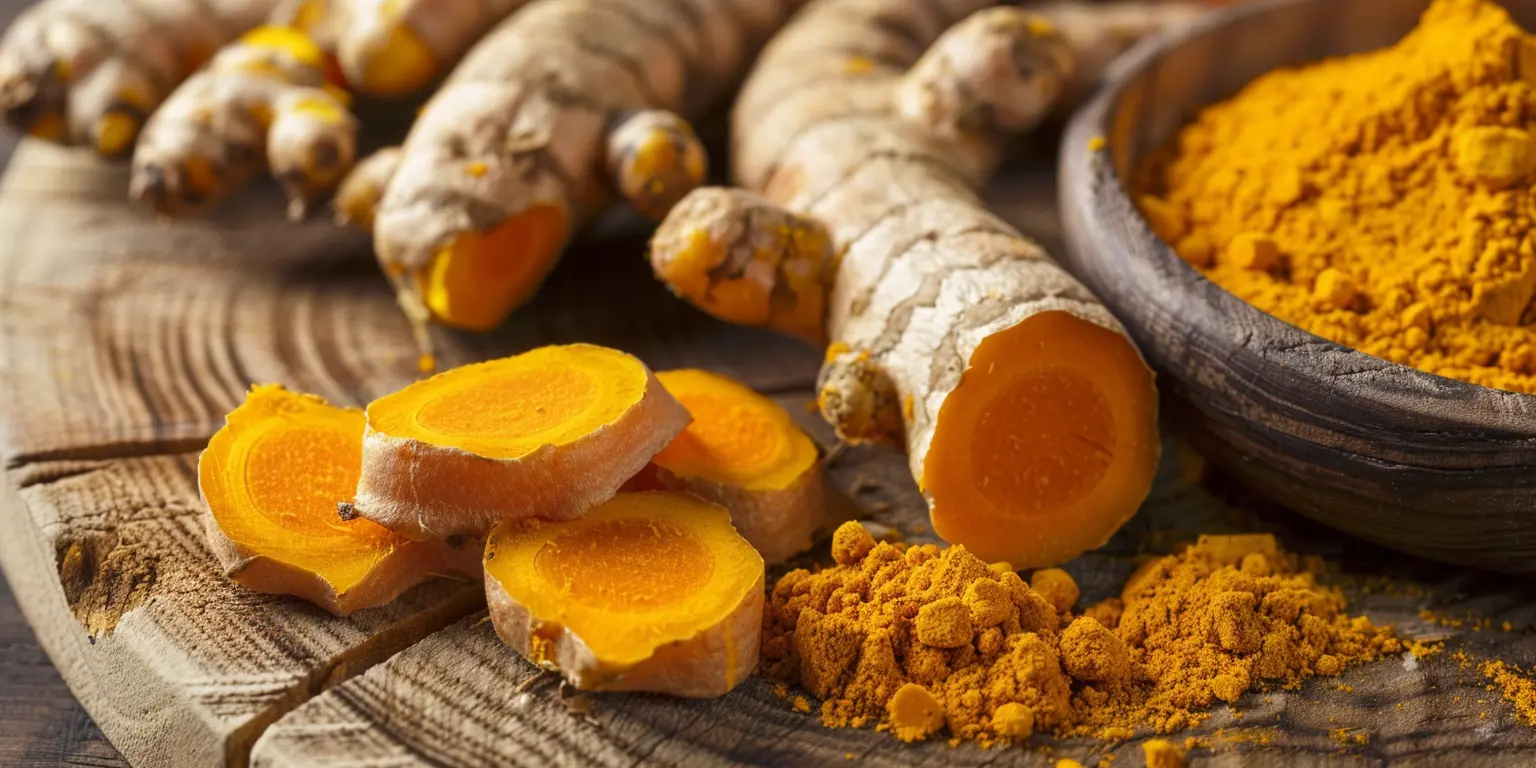
Turmeric (Curcuma longa), a vibrant yellow-orange spice commonly used in South Asian cuisine, contains several bioactive polyphenolic compounds including a group of curcuminoids made up of curcumin, demethoxycurcumin, and bisdemethoxycurcumin. These compounds, particularly curcumin, have garnered significant scientific interest for their potential anticancer properties. Sabinsa’s Curcumin C3 Complex® is the most studied curcumin product on the market, with over 80 research papers and 45 clinical studies. Curcumin 3C, the curcumin extract I use, is made up of all curcuminoids and the concentrated extract is 95% curcuminoids, with curcumin representing around 75% of the extract volume.1
Curcumin has emerged as one of the most extensively-studied natural compounds in prostate cancer research. It demonstrates remarkable anti-cancer properties through multiple mechanisms of action, making it a promising candidate for both prevention and intervention in prostate cancer management.
Numerous in vitro and in vivo studies have investigated the effects of curcumin on prostate cancer progression, demonstrating promising results across various experimental models. Research has examined curcumin’s therapeutic potential in both androgen-sensitive and androgen-insensitive prostate cancer cell lines, revealing multiple mechanisms through which this natural compound may: inhibit cancer cell proliferation, induce apoptosis, and suppress metastatic activity. The available in- vivo studies have shown that curcumin administration is able to inhibit the growth/volume, formation, development, proliferation, and angiogenesis of prostate cancer tumors.
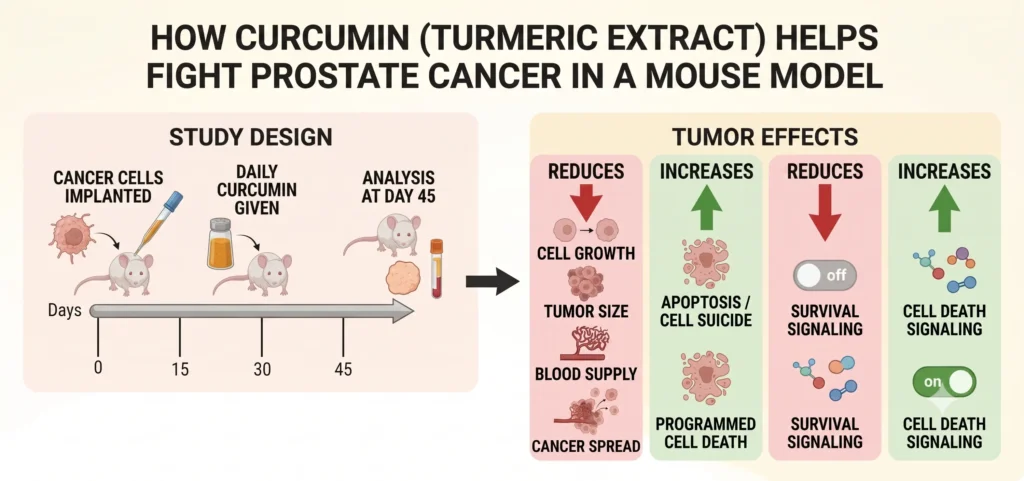
The figure was created by using BioRender.com.2 then recreated using Google Gemini
Research data suggest that turmeric-derived compounds can support prostate cancer prevention and serve as an adjunctive for the management of active prostate cancer.3
Primary Mechanisms of Action
1. Cell Cycle Arrest and Apoptosis Induction
Curcumin demonstrates potent anti-proliferative effects by arresting prostate cancer cells at the G2/M phase of the cell cycle, subsequently inducing programmed cell death (apoptosis).4 The compound effectively targets both androgen-dependent (LNCaP) and androgen-independent (PC3, DU-145) prostate cancer cell lines while showing minimal toxicity to normal prostate epithelial cells.5
Key apoptotic mechanisms include:
- Mitochondrial pathway activation: Curcumin promotes the translocation of pro-apoptotic proteins (Bax, p53) to mitochondria, leading to cytochrome c release and caspase-3 activation, which then lead to programmed cell suicide.6
- Bcl-2 family modulation: Downregulation of anti-apoptotic proteins (Bcl-2, Bcl-XL) and upregulation of pro-apoptotic proteins (Bax, Bak, PUMA, Noxa, Bim)7
- Epigallocatechin gallate (EGCG), from green tea combined with curcumin synergistically inhibit Bcl-2 against cancer 8
- p53 pathway enhancement: Curcumin increases p53 expression, phosphorylation at serine 15, and acetylation, thus strengthening the tumor suppressor response 9
2. Nuclear Factor-κB (NF-κB) Inhibition
One of curcumin’s most significant anti-cancer mechanisms involves the inhibition of NF-κB, a transcription factor that promotes inflammation, cancer cell survival, proliferation, and metastasis. Curcumin blocks NF-κB activation by:
- Preventing phosphorylation and degradation of IκBα 10,11
- Inhibiting IκB kinase (IKKβ) activity
- Disrupting the positive feedback loop between NF-κB and pro-inflammatory cytokines CXCL1 and CXCL2 12
This NF-κB inhibition enhances cancer cell sensitivity to death receptor-mediated apoptosis, particularly TRAIL-induced cell death in LNCaP cells.13 TRAIL= (TNF-related apoptosis-inducing ligand)
3. Androgen Receptor (AR) Pathway Suppression
Curcumin directly targets the androgen receptor signaling pathway, which is crucial for prostate cancer development and progression:
- AR expression reduction: Curcumin downregulates androgen receptor expression in prostate cancer cells14,15
- PSA suppression: Treatment significantly reduces prostate-specific antigen (PSA) expression and promoter activity16,17
- Enhanced AR degradation: Curcumin analogues, particularly ASC-J9, promote androgen receptor degradation 18
4. PI3K / Akt / mTOR Pathway Modulation
The PI3K-AKT-mTOR signaling pathway is frequently activated in prostate cancer, driving tumor growth and treatment resistance. This pathway also interacts with other cellular signaling networks, which accelerates cancer progression and affects how tumors respond to both new PI3K-AKT-mTOR inhibitors and established therapies like androgen-deprivation therapy.19
Curcumin inhibits the PI3K/Akt survival pathway, which is frequently hyperactivated in prostate cancer:
- Downregulates PI3K p110 and p85 subunits
- Reduces AKT phosphorylation at serine
- Enhances PTEN tumor suppressor function20
- Modulates mTOR signaling in combination therapies21
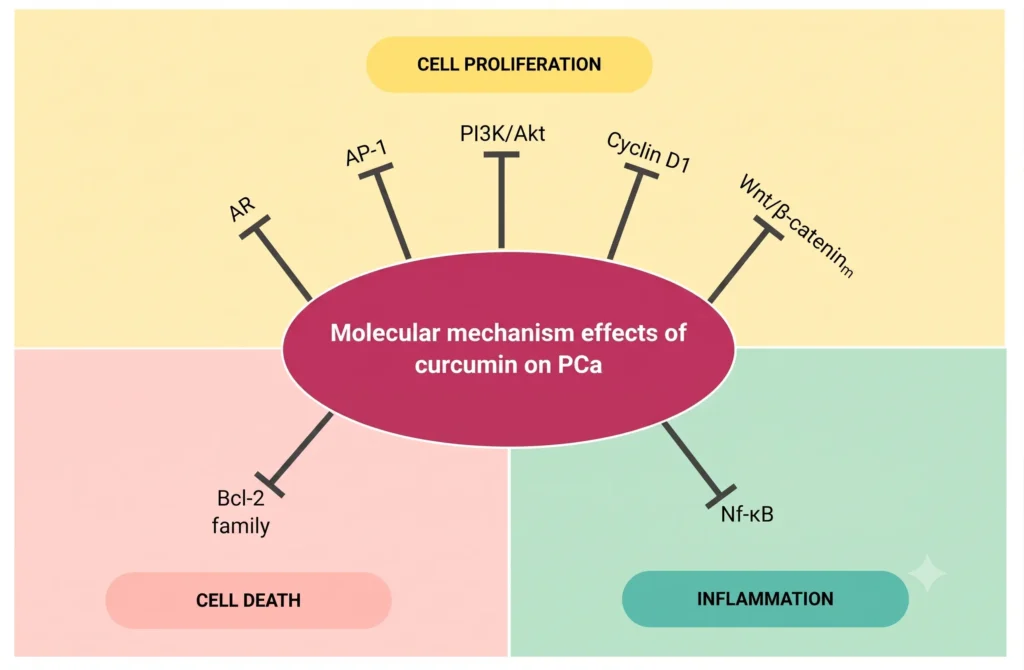
The key molecular targets of curcumin linked with inflammation, cell death, and cell proliferation in in vitro and in vivo models of PCa. The sign ⊣ indicated inhibition by curcumin. AR: Androgen receptor signalling; AP-1: Activating protein-1; PI3K/Akt/mTOR: Phosphatidylinositol 3-kinases/the serine/threonine kinase; Wnt/ß: Wingless (Wnt)/ß-catenin signalling, and molecular targets: NF-κB; Nuclear factor kappa-B; Bcl-2: B-cell lymphoma 2 and Cyclin D1.22
mTOR’s Role in Cellular Health
The mammalian target of rapamycin (mTOR) serves as a central regulatory enzyme controlling multiple critical cellular pathways, including autophagy (cellular housecleaning), cell proliferation, and programmed cell death (apoptosis). When mTOR signaling becomes disrupted, it can trigger a cascade of cellular abnormalities that contribute to various disease processes from neurodegenerative conditions and cancer to metabolic disorders like obesity and diabetes.
During periods of oxidative stress, mTOR plays a particularly important role in balancing cell death and survival mechanisms. It can shift cellular priorities toward tissue repair and recovery, helping maintain overall cellular health. This regulatory function becomes especially critical when cells face environmental challenges or age-related damage.
Network of Interconnected Pathways
mTOR doesn’t operate in isolation. Instead, it maintains intricate connections with numerous other signaling networks, including:
- NF-κB and JAK/STAT pathways (inflammation regulation)
- Akt and PI3K pathways (cell survival)
- MAPK and ERK1/2 pathways (growth signaling)
- GSK-3β and CREB/BDNF pathways (metabolic control and neuroplasticity)
- Nrf2 /HO-1 pathway (antioxidant defense)
Together, these interconnected pathways orchestrate fundamental cellular processes such as inflammation response, cell survival decisions, and oxidative stress management across different organ systems.23
Anti-Metastatic Properties
Angiogenesis Inhibition
Curcumin demonstrates potent anti-angiogenic effects through multiple pathways:
- Microvessel density reduction: Significant decrease in CD31 antigen staining indicates reduced blood vessel formation 24
- 12-LOX inhibition: Curcumin effectively blocks 12-lipoxygenase, reducing 12-HETE production and subsequent angiogenic signaling 25
- Cytoskeletal disruption: Alters actin microfilament organization, impacting cell migration and vessel formation 26
Matrix Metalloproteinase (MMP) Suppression
Curcumin significantly reduces the expression and activity of matrix metalloproteinases MMP-2 and MMP-9, which are essential for tumor invasion and metastasis. These are the enzymes that break down extracellular matrix (ECM) components to help cancer cells spread to other areas of the body. In DU-145 cells, curcumin treatment resulted in:
- Marked reduction in MMP-2 and MMP-9 expression
- Decreased invasive ability in vitro
- Significantly fewer metastatic nodules in vivo 27
Bone Metastasis Prevention
Prostate cancer frequently metastasizes to bone, and curcumin shows promise in preventing this deadly complication. The compound interferes with both osteoblastic and osteoclastic components of bone metastasis by:
- Disrupting growth factor collaboration between cancer cells and bone stromal cells
- Inhibiting NF-κB-mediated bone remodeling processes
- Targeting the C4-2B prostate cancer cell line’s bone-tropic properties 28
Anti-Inflammatory Mechanisms
Curcumin exhibits potent anti-inflammatory effects by enhancing mitogen-activated protein kinase phosphatase-5 (MKP5) expression, which subsequently decreases p38-dependent NF-κB activation. This mechanism:
- Reduces pro-inflammatory gene expression (COX-2, IL-6, IL-8)
- Decreases cytokine-induced inflammatory responses
- Functions effectively in both normal prostatic epithelial cells and cancer cell lines 29
Cytokine Modulation
Research demonstrates that curcumin can effectively control inflammatory cytokine production, particularly:
- Tumor necrosis factor (TNF)-α suppression. Curcumin enhances TRAIL-induced cytotoxicity in LNCaP prostate cancer cells by inhibiting nuclear factor-kappa beta (NF-KB) activation through blocking IkappaBalpha phosphorylation. TRAIL is a protein (Tumor Necrosis Factor-related Apoptosis-Inducing Ligand) that triggers programmed cell death or apoptosis. The combination of subtoxic curcumin and TRAIL concentrations effectively sensitizes resistant prostate cancer cells to apoptosis by overcoming NF-KB-mediated survival pathways.30
- Interleukin-1β (IL-1β) regulation 31
Molecular Target Modulation
Oncogene Suppression
Curcumin targets several key oncogenes involved in prostate cancer progression:
- MDM2 downregulation: Curcumin reduces MDM2 expression independent of p53 status, enhancing chemotherapy and radiation sensitivity in cancer cells32 MDM2 is a protein best known as a negative regulator of the tumor suppressor gene p53.
- Cyclin D1 suppression: Combination treatments effectively reduce cyclin D1 expression. Cyclin D1 is a regulatory protein that plays a key role in controlling cell division, specifically the transition from the G1 phase to S phase.
- EGFR modulation: Demethoxycurcumin (DMC) suppresses EGFR activation while enhancing its degradation33 EGFR is epidermal growth factor receptor. When it’s activated it stimulates unwanted cancer properties like cell growth, survival, division, and angiogenesis.
Metabolic Pathway Interference
Curcumin affects cancer cell metabolism through:
- AMPK activation: Demethoxycurcumin activates AMPK, leading to decreased lipogenic enzyme activity. AMPK stands for AMP-activated protein kinase and it can act as a tumor suppressor, partly by slowing fatty acid and protein synthesis.
- HSP-70 downregulation: Reduces heat shock protein 70 expression, enhancing apoptosis 34
- PKD1 activation: Curcumin activates protein kinase D1, affecting β-catenin signaling 35 PKD1 is involved in multiple cell signaling pathways, especially those regulating: cell survival, proliferation, differentiation, and migration.
- Curcumin appears to work by affecting two key molecules in the cells – it increases one (miR-30a-5p) while decreasing another (PCLAF). When researchers blocked the first molecule, curcumin became less effective, confirming this is partly how it fights cancer. Curcumin slows down cancer cell growth, prevents them from spreading, and helps kill them off. The higher the dose and the longer the treatment, the better it worked.36
- Androgen Receptor blocking: Curcumin inhibits androgen receptors through modulation of Wnt/β-catenin signaling in LNCaP prostate cancer cells37
Synergistic Combinations
Curcumin in Combination with PEITC (Phenethyl Isothiocyanate)
The combination of curcumin with PEITC, abundant in cruciferous vegetables, demonstrates remarkable synergistic effects:
- Enhanced prevention: Combined treatment significantly reduced prostate tumor incidence in mouse models 38, 39
- Therapeutic efficacy: While individual compounds showed limited effect on established tumors, combination therapy significantly reduced tumor growth 40
- Optimal dosing: Lower doses of both compounds in combination achieved superior results compared to higher doses of individual agents 41
Curcumin in Combination with Resveratrol
Liposomal formulations of curcumin combined with resveratrol show enhanced bioavailability and efficacy:
- Improved bioavailability: Molecular analysis revealed significantly increased curcumin levels when co-administered with resveratrol. Concentrations in the vicinity of the tumor increased, and a good therapeutic effect was observed without obvious side effects.42
- PTEN knockout model: Combination therapy significantly decreased prostatic adenocarcinoma in PTEN knockout mice 43
- Molecular targeting: Combined treatment effectively downregulated p-Akt, cyclin D1, mTOR, and androgen receptor proteins 44, 45
Curcumin in Combination with Soy Isoflavones
Clinical and preclinical studies demonstrate synergistic effects between curcumin and soy isoflavones:
- PSA reduction: Combined treatment markedly decreased PSA production in LNCaP Prostate cells
- Clinical efficacy: In men with elevated PSA (≥10 μg/ml), combination supplementation significantly reduced serum PSA levels
- Anti-androgen effects: Combined treatment suppressed androgen receptor expression46
Curcumin in Combination with Ginger
Research reveals synergistic interactions between the botanical cousins curcumin and ginger.
- Enhanced cytotoxicity: Ginger and turmeric extracts demonstrated notable synergistic cytotoxic effects on PC-3M cells47 This study found that when turmeric (C. longa) and ginger (Z. officinale) extracts were combined at the same concentrations, they showed significantly greater inhibitory effects on PC-3M prostate cancer cell colony formation than either extract alone. This synergistic interaction was much more pronounced than the individual effects of each plant extract.
- Binary combinations: Ginger phytochemicals (6-gingerol, 8-gingerol, 10-gingerol, 6-shogaol) showed synergistic antiproliferative effects with combination index values ranging from 0.03 to 0.88. 48 A combination index (CI) is a way of measuring how two or more compounds interact when used together. Any number lower than 1 means the compounds are synergistic (more powerful when used in combination).
- MKP5 upregulation: Both curcumin and gingerol compounds upregulate MKP5, providing anti-inflammatory benefits. 49 MKP5 is a “brake enzyme” that dampens stress and inflammation-related signaling pathways in cells.
Curcumin and EGCG-Rich Green Tea extract
Epigallocatechin-3-gallate (EGCG) is the most abundant catechin in green tea and comprises 50-80% of total catechin content and is widely recognized for its antioxidant, anti-inflammatory, and anticancer properties.50
Synergistic Interactions: Beyond Additive Effects: Recent investigations have revealed that combining EGCG and curcumin produces effects that significantly exceed what would be expected from their individual activities. This synergy appears to operate through:
- Complementary targeting of cancer hallmarks: While both compounds affect multiple cancer pathways, their combined action provides more comprehensive coverage of cancer’s hallmark characteristics.51
- Enhanced bioavailability: Evidence suggests co-administration may improve the absorption and stability of both compounds, addressing a key limitation of their individual use.52
- Potentiated apoptotic signaling: The combination demonstrates superior activation of both intrinsic and extrinsic apoptotic pathways compared to either compound alone.53
- Suppression of drug resistance mechanisms: EGCG and curcumin together more effectively inhibit drug efflux pumps and detoxification enzymes that contribute to treatment resistance.54
- Synergistic inhibition of inflammation and oxidative stress: The compounds work through complementary mechanisms to suppress inflammatory signaling and enhance cellular antioxidant capacity. 55
Curcumin in Combination with Quercetin
A study investigated the combined anticancer and anti-inflammatory effects of curcumin and quercetin using human prostate cancer cells (PC-3) and inflammation-stimulated immune cells (RAW 264.7). The combination significantly inhibited cancer cell growth, arrested cell division, and triggered cell death—showing stronger effects than either compound alone. The curcumin-quercetin combination also regulated key inflammatory pathways, helping protect cells from cancer-triggering molecular changes. Combining curcumin and quercetin could offer a safe, effective, and affordable approach to prostate cancer treatment.56
Curcumin in Combination with Ursolic Acid
- Curcumin and ursolic acid (found in herbs such as basil and sage)—could help slow down prostate cancer when added to the diet.
- In laboratory studies using mice, researchers found that combining these two compounds worked much better than using either one alone. The combination slowed tumor growth by targeting multiple processes that cancer cells need to survive and spread.
- The study tested this approach in two different types of genetically modified mice that develop prostate cancer. In both cases, mice that ate food enriched with both compounds had significantly slower cancer progression.57
Curcumin in Combination with Black Pepper
- The combination of turmeric with black pepper exemplifies this symbiotic enhancement through a remarkable bioavailability effect. Black pepper contains piperine, which increases curcumin absorption by up to 2,000%.58 This enhanced bioavailability significantly amplifies the anti-cancer properties of both compounds, with research demonstrating that turmeric and black pepper extracts are more effective at reducing cancer cell viability when used together compared to turmeric alone.59
- Studies have shown this combination can interrupt the self-renewal process of breast stem cells and demonstrate protective effects against multiple cancer types, including prostate, pancreatic, and colorectal cancers.60 Specifically regarding prostate cancer, researchers have found that turmeric and its extract curcumin may help prevent or treat prostate cancer, with the spice containing anticancer properties that may stop the spread and growth of cancerous cells. Clinical trials have demonstrated that curcumin supplementation shows beneficial effects on parameters related to prostate diseases, including prostate cancer.61
- Curcumin restored the equilibrium of the microbiota and regulated metabolites, thereby lowering the occurrence and progression of colorectal cancer, and similar mechanisms likely apply to prostate cancer prevention. Subjects taking curcumin displayed an average increase of 69% in detected probiotic species. The gut microbiota response to treatment was highly personalized.62
- Black pepper’s piperine doesn’t just enhance curcumin absorption, it facilitates optimal gut microbiome transformation, creating what I call nanonutrition partnerships where the combined effect transcends either plant alone.
Curcumin in Combination with Lactoferrin
Recent research demonstrates beneficial effects of combining curcumin with lactoferrin. Usually extracted from dairy, lactoferrin is a natural immune-support protein that inhibits bacteria, viruses, and fungi, balances inflammation, and also regulates iron.
- Dual cell line efficacy: Combination treatment reduced proliferation and migration in both DU145 and PC3 cell lines
- Enhanced apoptosis: Combined treatment upregulated death receptors and annexin V levels
- Integrin suppression: Integrins play a major role in allowing cancer cells to communicate with their environment, grow, and break away to form metastases. Combination therapy reduced integrin α3 and β1 gene expression thus reducing cancer cell spread 63
Curcumin in Combination with Dutasteride
Combining curcumin with the 5α-reductase inhibiting drug dutasteride shows promising results:
- Enhanced proliferation suppression: Combination treatment more effectively suppressed LNCaP cell proliferation
- Hormone level reduction: Combined therapy reduced both testosterone and dihydrotestosterone concentrations in cancer cells
- PSA suppression: Dose-dependent inhibition of PSA secretion 64
Safety Profile
Curcumin demonstrates an excellent safety profile with minimal toxicity to normal cells. Studies consistently show:
- Selective toxicity: Curcumin effectively kills cancer cells while sparing normal prostate epithelial cells 65
- Well-tolerated dosing: Clinical trials demonstrate good tolerance with minimal side effects at therapeutic doses 66
Chemotherapy Enhancement
- Curcumin, enhances chemotherapeutic drugs and radiotherapy through synergistic effects on cancer pathways. Curcumin’s synergistic effects have been well documented with multiple drugs and radiation therapy in inhibiting metastasis, invasion, and proliferation.
- A systematic review of MEDLINE/PubMed and Scopus articles over a five-year period shows that combination therapy with doxorubicin, 5-fluorouracil, paclitaxel, berberine, docetaxel, metformin, gemcitabine, and radiation effectively targets various metastatic pathways.67
Curcumin shows promise as an adjuvant therapy to enhance conventional treatments:
- MDM2 targeting: Enhanced sensitivity to gemcitabine and radiation therapy68
- Resistance prevention: May help prevent progression to hormone-refractory disease69
- Combination benefits: Synergistic effects with various therapeutic agents70
Personalized Medicine Applications
I never use curcumin alone, my preferred formulation is curcumin 3C combined with green tea, resveratrol, grape seed extract, quercetin, ginger, rosemary, amla, and black pepper. As a food, I often use turmeric powder in cooking, in curry mixtures, and you can also add ¼ to ½ tsp to just about any smoothie recipe.
Plant Compound Combination Can Help Reduce Unnecessary Prostate Procedures
When men have elevated blood PSA (prostate-specific antigen) levels, doctors often recommend a prostate biopsy to check for cancer. However, many of these biopsies turn out to be unnecessary, causing anxiety and discomfort for patients.
Researchers studied 142 men with higher-than-normal PSA levels over one year. They divided the men into two groups:
- Group A: Took a combination of turmeric (Curcuma Longa), boswellia, pine bark extract, and stinging nettle
- Group B: Took a saw palmetto extract
Both groups took their supplements for three months, then had follow-up PSA tests and MRI scans.
The multiple plant combination proved significantly more effective:
- 76% of men taking the four-plant blend saw their PSA levels drop, compared to 64% taking saw palmetto alone.
- Only 35% of the plant combination group needed biopsies, while 78% of the saw palmetto group still required the procedure.
What This Means for Men’s Health
This study suggests that specific plant compounds, particularly turmeric, boswellia, pine bark, and stinging nettle working together, may help men with elevated PSA levels avoid unnecessary medical procedures while supporting prostate health naturally.71
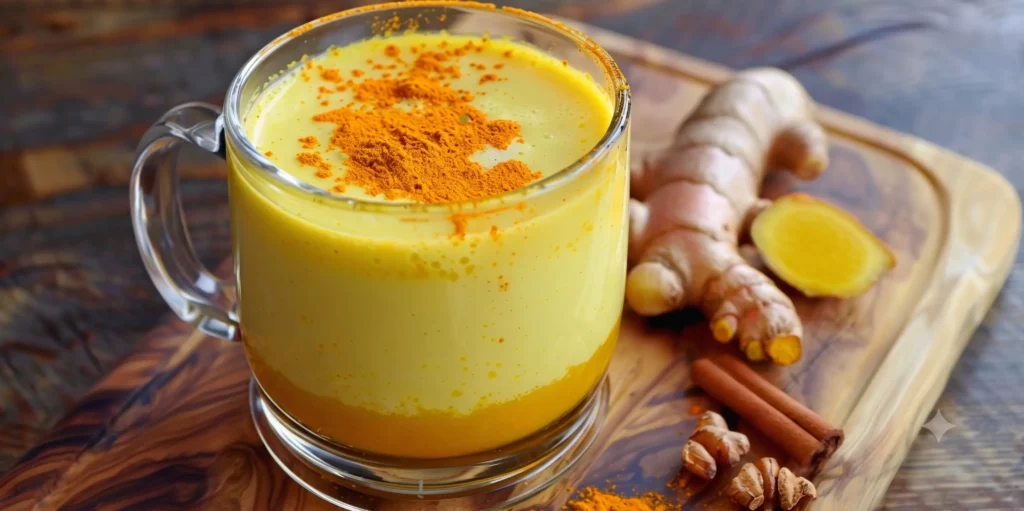
Donnie’s Golden Turmeric Milk
Ingredients
- 2 cups of milk of your choice of either coconut, nut milk (cashew, sesame, or almond all can be great), or whole organic goat or cow milk all work.
- 1 teaspoon Turmeric
- ½ teaspoon Cinnamon
- 1 -2 teaspoons raw honey or maple syrup or to taste (optional)
- Tiny piece of fresh, peeled and grated Ginger root or ¼ tsp ginger powder
- ½ tsp. of fresh grated Orange peel (optional)
- Pinch of Nutmeg and/or Cardamom
Instructions
- First, blend all ingredients in a high-speed blender until smooth.
- Then, pour into a small saucepan and heat for 3-5 minutes over medium heat until hot but not boiling.
- Best to drink immediately, or drink ½ and save the rest for your morning smoothie liquid.
Conclusion
The extensive body of research on curcumin and prostate cancer reveals a compound with remarkable therapeutic potential. Through its multi-targeted approach, curcumin addresses virtually every aspect of prostate cancer biology—from initial cell transformation through metastatic spread. It has the ability to:
- Induce apoptosis in cancer cells while sparing normal tissue
- Inhibit key survival pathways (NF-κB, PI3K/Akt)
- Suppress androgen receptor signaling
- Prevent angiogenesis and metastasis
- Enhance the efficacy of other natural compounds and conventional therapies
All these actions make curcumin a valuable component of integrative prostate cancer management strategies.
The synergistic effects observed with various natural compounds, particularly PEITC from cruciferous vegetables, soy isoflavones, resveratrol, and ginger, underscore the wisdom of whole-food approaches to cancer prevention and treatment. These findings support the concept that the anti-cancer benefits of plant foods arise from complex interactions among multiple bioactive compounds rather than individual agents alone.
Turmeric powder and curcuminoid-rich turmeric extract represents a promising, well-tolerated addition to comprehensive prostate cancer care protocols. Its dual role as both a preventive and therapeutic agent positions curcumin as a cornerstone compound in the emerging field of food as medicine for prostate cancer management.

- https://supplementsinreview.com/brand/curcumin-c3-complex/
- Termini D, Den Hartogh DJ, Jaglanian A, Tsiani E. Curcumin against Prostate Cancer: Current Evidence. Biomolecules. 2020 Nov 10;10(11):1536. doi: 10.3390/biom10111536. PMID: 33182828; PMCID: PMC7696488.
- Termini D, Den Hartogh DJ, Jaglanian A, Tsiani E. Curcumin against Prostate Cancer: Current Evidence. Biomolecules. 2020 Nov 10;10(11):1536. doi: 10.3390/biom10111536. PMID: 33182828; PMCID: PMC7696488.
- Guo H, Yu JH, Chen K, Ye ZQ., Curcumin-induced the expression of inhibitor kappaBalpha protein in human prostate cancer cells, Zhonghua Wai Ke Za Zhi. 2006 Sep 15;44(18):1256-9.
- Abd Wahab NA, Lajis NH, Abas F, Othman I, Naidu R. Mechanism of Anti-Cancer Activity of Curcumin on Androgen-Dependent and Androgen-Independent Prostate Cancer. Nutrients. 2020 Mar 2;12(3):679. doi: 10.3390/nu12030679. PMID: 32131560; PMCID: PMC7146610.
- Wang JB, Qi LL, Zheng SD, Wu TX. Curcumin induces apoptosis through the mitochondria-mediated apoptotic pathway in HT-29 cells. J Zhejiang Univ Sci B. 2009 Feb;10(2):93-102. doi: 10.1631/jzus.B0820238. PMID: 19235267; PMCID: PMC2644749.
- Simone Reuter, Serge Eifes, Mario Dicato, Bharat B. Aggarwal, Marc Diederich, Modulation of anti-apoptotic and survival pathways by curcumin as a strategy to induce apoptosis in cancer cells, Biochemical Pharmacology, Volume 76, Issue 11, 2008, Pages 1340-1351, ISSN 0006-2952, https://doi.org/10.1016/j.bcp.2008.07.031.
- Bahadar, N., Bahadar, S., Sajid, A. et al. Epigallocatechin gallate and curcumin inhibit Bcl-2: a pharmacophore and docking based approach against cancer. Breast Cancer Res 26, 114 (2024). https://doi.org/10.1186/s13058-024-01868-9
- Talib WH, Al-Hadid SA, Ali MBW, Al-Yasari IH, Ali MRA. Role of curcumin in regulating p53 in breast cancer: an overview of the mechanism of action. Breast Cancer (Dove Med Press). 2018 Nov 29;10:207-217. doi: 10.2147/BCTT.S167812. PMID: 30568488; PMCID: PMC6276637.
- Deeb D, Jiang H, Gao X, Hafner MS, Wong H, Divine G, Chapman RA, Dulchavsky SA, Gautam SC., Curcumin sensitizes prostate cancer cells to tumor necrosis factor-related apoptosis-inducing ligand/Apo2L by inhibiting nuclear factor-kappaB through suppression of IkappaBalpha phosphorylation. Mol Cancer Ther. 2004 Jul;3(7):803-12.
- P. H. Killian, E. Kronski, K. Michalik, O. Barbieri, S. Astigiano, C. P. Sommerhoff, U. Pfeffer, A. G. Nerlich, B. E. Bachmeier. Curcumin Inhibits Prostate Cancer Metastasis in vivo by Targeting the Inflammatory Cytokines CXCL1 and -2. Carcinogenesis, 2012
- P. H. Killian, E. Kronski, K. Michalik, O. Barbieri, S. Astigiano, C. P. Sommerhoff, U. Pfeffer, A. G. Nerlich, B. E. Bachmeier. Curcumin Inhibits Prostate Cancer Metastasis in vivo by Targeting the Inflammatory Cytokines CXCL1 and -2. Carcinogenesis, 2012
- Deeb D, Jiang H, Gao X, Hafner MS, Wong H, Divine G, Chapman RA, Dulchavsky SA, Gautam SC., Curcumin sensitizes prostate cancer cells to tumor necrosis factor-related apoptosis-inducing ligand/Apo2L by inhibiting nuclear factor-kappaB through suppression of IkappaBalpha phosphorylation. Mol Cancer Ther. 2004 Jul;3(7):803-12.
- Yang L, Zhang LY, Chen WW, Kong F, Zhang PJ, Hu XY, Zhang JY, Cui FA., Inhibition of the expression of prostate specific antigen by curcumin, Yao Xue Xue Bao. 2005 Sep;40(9):800-3
- Abd Wahab NA, Lajis NH, Abas F, Othman I, Naidu R. Mechanism of Anti-Cancer Activity of Curcumin on Androgen-Dependent and Androgen-Independent Prostate Cancer. Nutrients. 2020 Mar 2;12(3):679. doi: 10.3390/nu12030679. PMID: 32131560; PMCID: PMC7146610.
- Yang L, Zhang LY, Chen WW, Kong F, Zhang PJ, Hu XY, Zhang JY, Cui FA., Inhibition of the expression of prostate specific antigen by curcumin, Yao Xue Xue Bao. 2005 Sep;40(9):800-3
- Ide H, Tokiwa S, Sakamaki K, Nishio K, Isotani S, Muto S, Hama T, Masuda H, Horie S. Combined inhibitory effects of soy isoflavones and curcumin on the production of prostate-specific antigen, Prostate. 2010 Jul 1;70(10):1127-33.
- Hu H, Zhou H, Xu D. A review of the effects and molecular mechanisms of dimethylcurcumin (ASC-J9) on androgen receptor-related diseases. Chem Biol Drug Des. 2021 Apr;97(4):821-835. doi: 10.1111/cbdd.13811. Epub 2021 Jan 11. PMID: 33277796.
- Shorning BY, Dass MS, Smalley MJ, Pearson HB. The PI3K-AKT-mTOR Pathway and Prostate Cancer: At the Crossroads of AR, MAPK, and WNT Signaling. Int J Mol Sci. 2020 Jun 25;21(12):4507. doi: 10.3390/ijms21124507. PMID: 32630372; PMCID: PMC7350257.
- Zoi V, Kyritsis AP, Galani V, Lazari D, Sioka C, Voulgaris S, Alexiou GA. The Role of Curcumin in Cancer: A Focus on the PI3K/Akt Pathway. Cancers (Basel). 2024 Apr 18;16(8):1554. doi: 10.3390/cancers16081554. PMID: 38672636; PMCID: PMC11048628.
- Khayatan D, Razavi SM, Arab ZN, Nasoori H, Fouladi A, Pasha AVK, Butler AE, Karav S, Momtaz S, Abdolghaffari AH, Sahebkar A. Targeting mTOR with curcumin: therapeutic implications for complex diseases. Inflammopharmacology. 2025 Apr;33(4):1583-1616. doi: 10.1007/s10787-025-01643-y. Epub 2025 Feb 16. PMID: 39955697.
- Termini D, Den Hartogh DJ, Jaglanian A, Tsiani E. Curcumin against Prostate Cancer: Current Evidence. Biomolecules. 2020 Nov 10;10(11):1536. doi: 10.3390/biom10111536. PMID: 33182828; PMCID: PMC7696488.
- Tian T, Li X, Zhang J. mTOR Signaling in Cancer and mTOR Inhibitors in Solid Tumor Targeting Therapy. Int J Mol Sci. 2019 Feb 11;20(3):755. doi: 10.3390/ijms20030755. PMID: 30754640; PMCID: PMC6387042.
- Dorai B; Buttyan R; Katz AE, Therapeutic potential of curcumin in human prostate cancer. Curcumin inhibits proliferation, induces apoptosis, and inhibits angiogenesis of LNCaP prostate cancer cells in vivo. Prostate 2001 Jun 1;47(4):293-303.
- Jankun J, Aleem AM, Malgorzewicz S, Szkudlarek M, Zavodszky MI, Dewitt DL, Feig M, Selman SH, Skrzypczak-Jankun E. Synthetic curcuminoids modulate the arachidonic acid metabolism of human platelet 12-lipoxygenase and reduce sprout formation of human endothelial cells. Mol Cancer Ther. 2006 May;5(5):1371-82. doi: 10.1158/1535-7163.MCT-06-0021. PMID: 16731771.
- Holy J., Curcumin inhibits cell motility and alters microfilament organization and function in prostate cancer cells. Cell Motil Cytoskeleton. 2004 Aug;58(4):253-68.
- Hong JH, Ahn KS, Bae E, Jeon SS, Choi HY. The effects of curcumin on the invasiveness of prostate cancer in vitro and in vivo. Prostate Cancer Prostatic Dis. 2006 Jan 3.
- Dorai T, Diouri J, O’Shea O, Doty SB. Curcumin Inhibits Prostate Cancer Bone Metastasis by Up-Regulating Bone Morphogenic Protein-7 in Vivo. J Cancer Ther. 2014 Apr 1;5(4):369-386. doi: 10.4236/jct.2014.54044. PMID: 24949215; PMCID: PMC4060744.
- Nonn L, Duong D, Peehl DM. Chemopreventive anti-inflammatory activities of curcumin and other phytochemicals mediated by MAP kinase phosphatase-5 in prostate cells. Carcinogenesis. 2006 Dec 6.
- Deeb D, Jiang H, Gao X, Hafner MS, Wong H, Divine G, Chapman RA, Dulchavsky SA, Gautam SC. Curcumin sensitizes prostate cancer cells to tumor necrosis factor-related apoptosis-inducing ligand/Apo2L by inhibiting nuclear factor-kappaB through suppression of IkappaBalpha phosphorylation. Mol Cancer Ther. 2004 Jul;3(7):803-12. PMID: 15252141.
- Li S, Stöckl S, Lukas C, Herrmann M, Brochhausen C, König MA, Johnstone B, Grässel S. Curcumin-primed human BMSC-derived extracellular vesicles reverse IL-1β-induced catabolic responses of OA chondrocytes by upregulating miR-126-3p. Stem Cell Res Ther. 2021 Apr 29;12(1):252. doi: 10.1186/s13287-021-02317-6. PMID: 33926561; PMCID: PMC8082633.
- Li M, Zhang Z, Hill DL, Wang H, Zhang R. Curcumin, a dietary component, has anticancer, chemosensitization, and radiosensitization effects by down-regulating the MDM2 oncogene through the PI3K/mTOR/ETS2 pathway. Cancer Res. 2007 Mar 1;67(5):1988-96. doi: 10.1158/0008-5472.CAN-06-3066. PMID: 17332326.
- Hung CM, Su YH, Lin HY, Lin JN, Liu LC, Ho CT, Way TD. Demethoxycurcumin modulates prostate cancer cell proliferation via AMPK-induced down-regulation of HSP70 and EGFR. J Agric Food Chem. 2012 Aug 29;60(34):8427-34. doi: 10.1021/jf302754w. Epub 2012 Aug 16. PMID: 22849866.
- Li J, Wang X, Xue L, He Q. Exploring the therapeutic mechanism of curcumin in prostate cancer using network pharmacology and molecular docking. Heliyon. 2024 Jun 19;10(12):e33103. doi: 10.1016/j.heliyon.2024.e33103. PMID: 39022084; PMCID: PMC11253540.
- Hung CM, Su YH, Lin HY, Lin JN, Liu LC, Ho CT, Way TD. Demethoxycurcumin modulates prostate cancer cells proliferation via AMPK-induced down-regulation of HSP70 and EGFR. J Agric Food Chem. 2012 Jul 31.
- Pan L, Sha J, Lin W, Wang Y, Bian T, Guo J. Curcumin inhibits prostate cancer progression by regulating the miR-30a-5p/PCLAF axis. Exp Ther Med. 2021 Sep;22(3):969. doi: 10.3892/etm.2021.10401. Epub 2021 Jul 7. PMID: 34335911; PMCID: PMC8290411.
- Hong JH, Lee G, Choi HY. Effect of curcumin on the interaction between androgen receptor and Wnt/β-catenin in LNCaP xenografts. Korean J Urol. 2015 Sep;56(9):656-65. doi: 10.4111/kju.2015.56.9.656. Epub 2015 Aug 31. PMID: 26366279; PMCID: PMC4565901.
- Tin Oo Khor, Young-Sam Keum, Wen Lin, Jung-Hwan Kim, Rong Hu, Guoxiang Shen, Changjiang Xu, Avanthika Gopalakrishnan, Bandaru Reddy, Xi Zheng, Allan H. Conney and Ah-Ng Tony Kong, Combined Inhibitory Effects of Curcumin and Phenethyl Isothiocyanate on the Growth of Human PC-3 Prostate Xenografts in Immunodeficient Mice,” journal Cancer Research, 1/15/06, is available at cancerres.aacrjournals.org.
- Barve A, Khor TO, Hao X, Keum YS, Yang CS, Reddy B, Kong AN. Murine Prostate Cancer Inhibition by Dietary Phytochemicals-Curcumin and Phenyethylisothiocyanate. Pharm Res. 2008 Apr 25
- Tin Oo Khor, Young-Sam Keum, Wen Lin, Jung-Hwan Kim, Rong Hu, Guoxiang Shen, Changjiang Xu, Avanthika Gopalakrishnan, Bandaru Reddy, Xi Zheng, Allan H. Conney and Ah-Ng Tony Kong, Combined Inhibitory Effects of Curcumin and Phenethyl Isothiocyanate on the Growth of Human PC-3 Prostate Xenografts in Immunodeficient Mice,” journal Cancer Research, 1/15/06, is available at cancerres.aacrjournals.org.
- Barve A, Khor TO, Hao X, Keum YS, Yang CS, Reddy B, Kong AN. Murine Prostate Cancer Inhibition by Dietary Phytochemicals-Curcumin and Phenyethylisothiocyanate. Pharm Res. 2008 Apr 25
- Zheng Y, Jia R, Li J, Tian X, Qian Y. Curcumin- and resveratrol-co-loaded nanoparticles in synergistic treatment of hepatocellular carcinoma. J Nanobiotechnology. 2022 Jul 20;20(1):339. doi: 10.1186/s12951-022-01554-y. PMID: 35858935; PMCID: PMC9301856.
- Narayanan NK, Nargi D, Randolph C, Narayanan BA. Liposome encapsulation of curcumin and resveratrol in combination reduces prostate cancer incidence in PTEN knockout mice. Int J Cancer. 2009 Jul 1;125(1):1-8. doi: 10.1002/ijc.24336. PMID: 19326431.
- Wang Y, Romigh T, He X, Orloff MS, Silverman RH, Heston WD, Eng C. Resveratrol regulates the PTEN/AKT pathway through androgen receptor-dependent and -independent mechanisms in prostate cancer cell lines. Hum Mol Genet. 2010 Nov 15;19(22):4319-29. doi: 10.1093/hmg/ddq354. Epub 2010 Aug 20. PMID: 20729295; PMCID: PMC2957324.
- Narayanan NK, Nargi D, Randolph C, Narayanan BA. Liposome encapsulation of curcumin and resveratrol in combination reduces prostate cancer incidence in PTEN knockout mice. Int J Cancer. 2009 Jul 1;125(1):1-8. doi: 10.1002/ijc.24336. PMID: 19326431.
- Ide H, Tokiwa S, Sakamaki K, Nishio K, Isotani S, Muto S, Hama T, Masuda H, Horie S. Combined inhibitory effects of soy isoflavones and curcumin on the production of prostate-specific antigen, Prostate. 2010 Jul 1;70(10):1127-33.
- Kurapati KR, Samikkannu T, Kadiyala DB, Zainulabedin SM, Gandhi N, Sathaye SS, Indap MA, Boukli N, Rodriguez JW, Nair MP. Combinatorial cytotoxic effects of Curcuma longa and Zingiber officinale on the PC-3M prostate cancer cell line. J Basic Clin Physiol Pharmacol. 2012;23(4):139-46. doi: 10.1515/jbcpp-2012-0021. PMID: 23072849; PMCID: PMC4561547.
- Mao QQ, Xu XY, Cao SY, Gan RY, Corke H, Beta T, Li HB. Bioactive Compounds and Bioactivities of Ginger (Zingiber officinale Roscoe). Foods. 2019 May 30;8(6):185. doi: 10.3390/foods8060185. PMID: 31151279; PMCID: PMC6616534.
- Nonn L, Duong D, Peehl DM. Chemopreventive anti-inflammatory activities of curcumin and other phytochemicals mediated by MAP kinase phosphatase-5 in prostate cells. Carcinogenesis. 2006 Dec 6.
- Yang, C. S., Wang, X., Lu, G., & Picinich, S. C. (2009). Cancer prevention by tea: animal studies, molecular mechanisms and human relevance. Nature Reviews Cancer, 9(6), 429-439.
- Hanahan, D., & Weinberg, R. A. (2011). Hallmarks of cancer: the next generation. Cell, 144(5), 646-674.
- Zhou, D. H., Wang, X., Yang, M., Shi, X., Huang, W., & Feng, Q. (2017). Combination of low concentration of (−)-epigallocatechin gallate (EGCG) and curcumin strongly suppresses the growth of non-small cell lung cancer in vitro and in vivo through causing cell cycle arrest. International Journal of Molecular Sciences, 14(6), 12023-12036.
- Wang, S., Zhang, J., Chen, M., & Wang, Y. (2014). Delivering flavonoids into solid tumors using nanotechnologies. Expert Opinion on Drug Delivery, 10(10), 1411-1428.
- Yunos, N. M., Beale, P., Yu, J. Q., & Huq, F. (2011). Synergism from combinations of cisplatin and oxaliplatin with quercetin and thymoquinone in human ovarian carcinoma cell lines. Anticancer Research, 31(11), 3789-3797.
- Zhou, D. H., Wang, X., Yang, M., Shi, X., Huang, W., & Feng, Q. (2017). Combination of low concentration of (−)-epigallocatechin gallate (EGCG) and curcumin strongly suppresses the growth of non-small cell lung cancer in vitro and in vivo through causing cell cycle arrest. International Journal of Molecular Sciences, 14(6), 12023-12036.
- Pellegrino M, Bevacqua E, Frattaruolo L, Cappello AR, Aquaro S, Tucci P. Enhancing the Anticancer and Anti-Inflammatory Properties of Curcumin in Combination with Quercetin, for the Prevention and Treatment of Prostate Cancer. Biomedicines. 2023 Jul 18;11(7):2023. doi: 10.3390/biomedicines11072023. PMID: 37509660; PMCID: PMC10377667.
- Friedman CA, Saha A, Clark R, Wilder C, Wright J, DiGiovanni J. Synergistic Inhibition of Prostate Cancer Progression in Mice With a Combination of Curcumin and Ursolic Acid in the Diet. Mol Carcinog. 2025 Jul 6. doi: 10.1002/mc.70000. Epub ahead of print. PMID: 40618394.
- Hewlings SJ, Kalman DS. Curcumin: A Review of Its Effects on Human Health. Foods. 2017;6(10):92.
- Cho HK, Park CG, Lim HB. Construction of a Synergy Combination Model for Turmeric (Curcuma longa L.) and Black Pepper (Piper nigrum L.) Extracts: Enhanced Anticancer Activity against A549 and NCI-H292 Human Lung Cancer Cells. Curr Issues Mol Biol. 2024 Jun 1;46(6):5551-5560. doi: 10.3390/cimb46060332. PMID: 38921003; PMCID: PMC11201915.
- Hewlings SJ, Kalman DS. Curcumin: A Review of Its Effects on Human Health. Foods. 2017 Oct 22;6(10):92. doi: 10.3390/foods6100092. PMID: 29065496; PMCID: PMC5664031.
- Bagherniya M, Askari G, Alikiaii B, Abbasi S, Soleimani D, Sathyapalan T, Jamialahmadi T, Sahebkar A. Curcumin for the Treatment of Prostate Diseases: A Systematic Review of Controlled Clinical Trials. Adv Exp Med Biol. 2021;1291:345-362. doi: 10.1007/978-3-030-56153-6_20. PMID: 34331700.
- Peterson CT, Vaughn AR, Sharma V, Chopra D, Mills PJ, Peterson SN, Sivamani RK. Effects of Turmeric and Curcumin Dietary Supplementation on Human Gut Microbiota: A Double-Blind, Randomized, Placebo-Controlled Pilot Study. J Evid Based Integr Med. 2018 Jan-Dec;23:2515690X18790725. doi: 10.1177/2515690X18790725. PMID: 30088420; PMCID: PMC6083746.
- Costantini E, Di Nicola M, Marchioni M, Aielli L, Reale M, Ships L. Effects of Curcumin and Lactoferrin to Inhibit the Growth and Migration of Prostatic Cancer Cells. Int J Environ Res Public Health. 2022 Dec 3;19(23):16193. doi: 10.3390/ijerph192316193. PMID: 36498267; PMCID: PMC9737629.
- Nakayama A, Ide H, Lu Y, Takei A, Fukuda K, Osaka A, Arai G, Horie S, Okada H, Saito K. Effects of Curcumin Combined With the 5-alpha Reductase Inhibitor Dutasteride on LNCaP Prostate Cancer Cells. In Vivo. 2021 May-Jun;35(3):1443-1450. doi: 10.21873/invivo.12396. PMID: 33910821; PMCID: PMC8193285.
- Termini D, Den Hartogh DJ, Jaglanian A, Tsiani E. Curcumin against Prostate Cancer: Current Evidence. Biomolecules. 2020 Nov 10;10(11):1536. doi: 10.3390/biom10111536. PMID: 33182828; PMCID: PMC7696488.
- Salehi B, Stojanović-Radić Z, Matejić J, Sharifi-Rad M, Anil Kumar NV, Martins N, Sharifi-Rad J. The therapeutic potential of curcumin: A review of clinical trials. Eur J Med Chem. 2019 Feb 1;163:527-545. doi: 10.1016/j.ejmech.2018.12.016. Epub 2018 Dec 7. PMID: 30553144.
- Younes M, Mardirossian R, Rizk L, Fazlian T, Khairallah JP, Sleiman C, Naim HY, Rizk S. The Synergistic Effects of Curcumin and Chemotherapeutic Drugs in Inhibiting Metastatic, Invasive and Proliferative Pathways. Plants (Basel). 2022 Aug 17;11(16):2137. doi: 10.3390/plants11162137. PMID: 36015440; PMCID: PMC9414747.
- Li M, Zhang Z, Hill DL, Wang H, Zhang R. Curcumin, a dietary component, has anticancer, chemosensitization, and radiosensitization effects by down-regulating the MDM2 oncogene through the PI3K/mTOR/ETS2 pathway. Cancer Res. 2007 Mar 1;67(5):1988-96. doi: 10.1158/0008-5472.CAN-06-3066. PMID: 17332326.
- Mohajeri M, Bianconi V, Ávila-Rodriguez MF, Barreto GE, Jamialahmadi T, Pirro M, Sahebkar A. Curcumin: a phytochemical modulator of estrogens and androgens in tumors of the reproductive system. Pharmacol Res. 2020 Jun;156:104765. doi: 10.1016/j.phrs.2020.104765. Epub 2020 Mar 23. PMID: 32217147.
- Li M, Zhang Z, Hill DL, Wang H, Zhang R. Curcumin, a dietary component, has anticancer, chemosensitization, and radiosensitization effects by down-regulating the MDM2 oncogene through the PI3K/mTOR/ETS2 pathway. Cancer Res. 2007 Mar 1;67(5):1988-96. doi: 10.1158/0008-5472.CAN-06-3066. PMID: 17332326.
- Cai T, Tamanini I, Puglisi M, Bizzotto L, Rizzo M, Liguori G, Gallelli L, Palmieri A, Bjerklund Johansen TE. Phytotherapy Might Have a Role in Reducing Unnecessary Prostate Biopsies: Results from an Exploratory, Randomized Controlled Trial of Two Different Phytotherapeutic Agents. Clin Pract. 2024 Jan 23;14(1):188-197. doi: 10.3390/clinpract14010016. PMID: 38391402; PMCID: PMC10888467.