By Donnie Yance
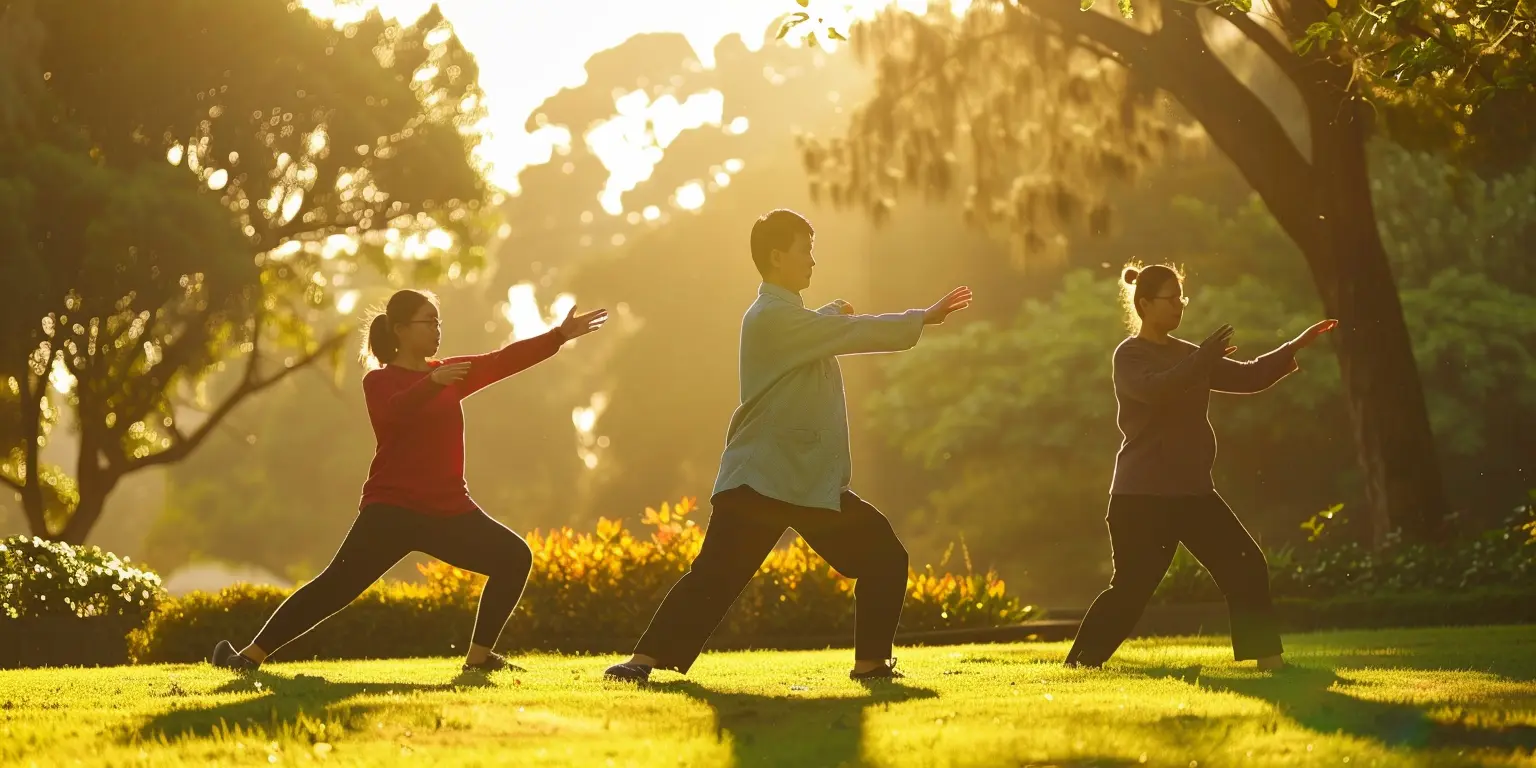
We live in an age obsessed with anti-aging creams, high-tech fitness gadgets, and biohacking shortcuts. Yet, nearly 5,000 years ago, the ancient Chinese developed a practice that requires none of these. You only need to be present with your body, your breath, and your mind. This practice is Qigong, a gentle yet profound system of movement, energy circulation, and awareness that not only calms the spirit but also rewires the body for resilience, balance, vitality, and longevity.
Legends tell of masters who lived vibrant, active lives well into their hundreds, sustained by daily Qigong practice. While such tales may sound like folklore, modern science is beginning to catch up with this ancient wisdom. Research into teachers like Duan Zhi Liang and Luo You Ming suggests that what once seemed mystical, restoring balance, energy, and vitality, has measurable effects on the brain, heart, and even the aging process itself.
Today, Qigong is no longer confined to mountaintops or monasteries. Physicians, longevity scientists, and wellness practitioners are recommending it as a safe, accessible, and surprisingly potent way to enhance health at every stage of life. From lowering blood pressure to improving memory and balance, Qigong offers a timeless prescription for modern health challenges.
What if the real anti-aging breakthrough isn’t in a pill or a lab, but in an ancient rhythm of breath and movement that anyone can practice?
You can find some simple Qigong routines here: https://www.qigongforvitality.com/
The Science of Qigong and Anti-Aging
Recent systematic reviews demonstrate that Qigong has measurable anti-aging effects, including regulation of mental and physical health, with doctors now recommending Qigong to increase vigor and vitality as well as prolong lifespan 1.
Research examining the physical and emotional benefits of Qigong is growing rapidly, with studies showing substantial health benefits, lowering of health costs, and safety of implementation across many populations 2.
Cardiovascular and Physical Health Benefits
One of the most consistent findings in Qigong research is significant blood pressure reduction, especially when compared to inactive control groups 3. Studies involving older adults show favorable cardiovascular and pulmonary outcomes, with participants generally being older adults (mean age 61) showing improvements in blood pressure, heart rate, blood lipids, and cardiopulmonary function 4.
Research demonstrates that Qigong exercise can stimulate physical metabolism, promote circulation, and regulate the flow of qi and blood, thus preventing and treating disorders of aging and promoting longevity 5. Studies show Qigong increases blood flow to the brain, with 158 subjects with cerebral arteriosclerosis showing improvements in memory, dizziness, insomnia, and other age-related symptoms after 1-6 months of practice 6.
Cognitive Function and Mental Health
A 2020 review of 13 studies involving 893 people with mild cognitive impairment found that Qigong improved cognition and memory after 3 and 6 months of practice 7. More recent research shows that Qigong practice changes the hippocampus and prefrontal cortex in ways that may support memory, spatial awareness, focus, and information processing 8.
Systematic reviews of older adults found that Qigong had significant positive effects on quality of life and helped improve mental and physical abilities, with potential positive effects on depression, balance, and daily functioning 9.
Physical Function and Balance
Qigong can help alleviate arthritis symptoms such as stiffness, swelling, and pain by promoting movement and relaxation, which are beneficial for joint health. A short daily practice can invigorate the body and activate healing responses.
Like other forms of intentional movement, Qigong improves balance and gait, reducing fall risk 10. Studies show Tai Chi and Qigong interventions applied for an average of 19.7 weeks are beneficial in improving physical function and slowing cognitive decline in older populations 11.
Meta-analysis demonstrates that Qigong exercise results in significantly improved physical ability compared with usual care, with the greatest effects seen in programs with three weekly sessions 12.
The Longevity Connection
The average Qigong practitioner seeks to reconnect with their energy body to increase concentration, health, and vitality while slowing aging 13. Clinical studies show increased levels of superoxide dismutase (SOD), a key antioxidant enzyme, in Qigong practitioners (about 2,700 μ/g Hb) compared to control groups (1,700 μ/g Hb) 14, suggesting enhanced cellular protection against aging.
Practical Applications
The slow, purposeful movements of Qigong are less challenging to balance while still enhancing mobility, coordination, and spatial awareness 15. Effective programs typically include 30-60 minute sessions three times per week 16, making it an accessible practice for older adults. However, I do a simple 5-8 minute routine 3x a week and find that even this little bit makes a world of difference.
5 minutes QiGong: https://www.qigongforvitality.com/
20 minutes for lower back: https://www.youtube.com/watch?v=CnLtsU1SWwg
Conclusion
The search for longevity often drives us to complex solutions, designer supplements, expensive therapies, and futuristic technologies. But the secret to graceful aging may be far simpler and far older than we imagine. Qigong is a reminder that the body already holds the blueprint for resilience and renewal; all it needs is the space, the breath, and the intention to activate it.
The science is clear: Qigong can lower blood pressure, sharpen memory, strengthen balance, and protect our cells from the wear and tear of aging. The tradition is even clearer: for thousands of years, countless practitioners have experienced a vitality that defies their chronological age.
We may never know if masters like Li Ching-Yuen, said to have lived over two centuries, are historical fact or myth. But what we do know is this: consistent Qigong practice, whether five minutes a day or a full hour, offers a reliable, proven path to greater vitality, calm, and joy in daily life.
In a world that constantly pushes us to move faster and do more, Qigong invites us to slow down, breathe deeply, and move with intention. That’s not just anti-aging—that’s living fully, right now.
So, the question isn’t whether Qigong can help us increase our health or age more gracefully. The real question is: why not begin today?

- Li, H., Ouyang, S., Cai, H., Wu, J., & Huang, Q. (2020). The efficacy and safety of health qigong for anti-aging: Protocol for a systematic review and meta-analysis. Medicine, 99(49), e23295. https://doi.org/10.1097/MD.0000000000023295
- Jahnke, R., Larkey, L., Rogers, C., Etnier, J., & Lin, F. (2010). A comprehensive review of health benefits of qigong and tai chi. American Journal of Health Promotion, 24(6), e1-e25. https://doi.org/10.4278/ajhp.081013-LIT-248
- Jahnke, R., Larkey, L., Rogers, C., Etnier, J., & Lin, F. (2010). A comprehensive review of health benefits of qigong and tai chi. American Journal of Health Promotion, 24(6), e1-e25. https://doi.org/10.4278/ajhp.081013-LIT-248
- Jahnke, R., Larkey, L., Rogers, C., Etnier, J., & Lin, F. (2010). A comprehensive review of health benefits of qigong and tai chi. American Journal of Health Promotion, 24(6), e1-e25. https://doi.org/10.4278/ajhp.081013-LIT-248
- National Center for Complementary and Integrative Health. (2022). Qigong: What you need to know. NCCIH. Retrieved from https://www.nccih.nih.gov/health/qigong-what-you-need-to-know
- National Center for Complementary and Integrative Health. (2022). Qigong: What you need to know. NCCIH. Retrieved from https://www.nccih.nih.gov/health/qigong-what-you-need-to-know
- Zou, L., Sasaki, J. E., Wang, H., Xiao, Z., Fang, Q., & Zhang, M. (2017). A systematic review and meta-analysis Baduanjin qigong for health benefits: Randomized controlled trials. Evidence-Based Complementary and Alternative Medicine, 2017, 4548706.
- Shin, J. C., Kim, J., & Grigsby-Toussaint, D. S. (2023). Effects of Tai Chi and Qigong on cognitive and physical functions in older adults: systematic review, meta-analysis, and meta-regression of randomized clinical trials. BMC Geriatrics, 23(1), 352. https://doi.org/10.1186/s12877-023-04070-2
- Zou, L., Sasaki, J. E., Wang, H., Xiao, Z., Fang, Q., & Zhang, M. (2017). A systematic review and meta-analysis Baduanjin qigong for health benefits: Randomized controlled trials. Evidence-Based Complementary and Alternative Medicine, 2017, 4548706.
- Shin, J. C., Kim, J., & Grigsby-Toussaint, D. S. (2023). Effects of Tai Chi and Qigong on cognitive and physical functions in older adults: systematic review, meta-analysis, and meta-regression of randomized clinical trials. BMC Geriatrics, 23(1), 352. https://doi.org/10.1186/s12877-023-04070-2
- Xiao, C. M., Zhuang, Y. C., & Zhao, N. (2020). Benefits of Qigong as an integrative and complementary practice for health: A systematic review. Revista Latino-Americana de Enfermagem, 28, e3317. https://doi.org/10.1590/1518-8345.3718.3317
- Chang, P. S., Knobf, T., Oh, B., & Funk, M. (2019). Physical and psychological health outcomes of qigong exercise in older adults: A systematic review and meta-analysis. American Journal of Geriatric Psychiatry, 27(3), 327-341.
- Qigong Institute. (2020). Anti-aging benefits of qigong. Retrieved from https://www.qigonginstitute.org/category/39/anti-aging-benefits-of-qigong
- National Center for Complementary and Integrative Health. (2022). Qigong: What you need to know. NCCIH. Retrieved from https://www.nccih.nih.gov/health/qigong-what-you-need-to-know
- Shin, J. C., Kim, J., & Grigsby-Toussaint, D. S. (2023). Effects of Tai Chi and Qigong on cognitive and physical functions in older adults: systematic review, meta-analysis, and meta-regression of randomized clinical trials. BMC Geriatrics, 23(1), 352. https://doi.org/10.1186/s12877-023-04070-2
- Zou, L., Sasaki, J. E., Wang, H., Xiao, Z., Fang, Q., & Zhang, M. (2017). A systematic review and meta-analysis Baduanjin qigong for health benefits: Randomized controlled trials. Evidence-Based Complementary and Alternative Medicine, 2017, 4548706.