
By Donnie Yance
Spermidine is a naturally occurring molecule called a polyamine that has recently emerged as a promising agent for cancer prevention and longevity enhancement. This compound reduces cancer-related mortality in humans through multiple mechanisms including autophagy enhancement, immune surveillance improvement, and cellular protection 1. Spermidine levels naturally decline with age, and increased dietary intake has been associated with reduced overall mortality from cardiovascular diseases and cancer 2.
Eating spermidine-rich foods reduces the risk of brain degeneration, metabolic diseases, heart problems, and cancer. Spermidine also activates the body’s natural cleaning process, which slows memory loss and thinking problems by clearing protein clumps in the brain. Spermidine also improves how cells produce energy and boost protein production. The cancer-fighting properties of spermidine are particularly important because it lowers cancer deaths in people. Whether spermidine helps or hurts cancer development depends on four things: how the body uses certain compounds, immune system activity, programmed cell death, and the body’s natural cleaning process. When cells take in more of these compounds, cancer growth slows down. Spermidine has direct effects on cancer cells and also helps the immune system work better. This leads to faster detection of cancer cell markers and eventually kills the cancer cells. Spermidine’s activation of the body’s natural cleaning process regulates programmed cell death in cancer cells and helps with tissue growth and cell specialization.
Spermidine and spermine are closely related polyamine molecules along the same metabolic pathway. Spermidine is a direct precursor to spermine, and both share overlapping biological functions, including regulation of autophagy (breaking down and recycling old cellular components), cell growth, and apoptosis. Findings related to spermine are therefore biologically relevant to spermidine, particularly in tissues such as the prostate.
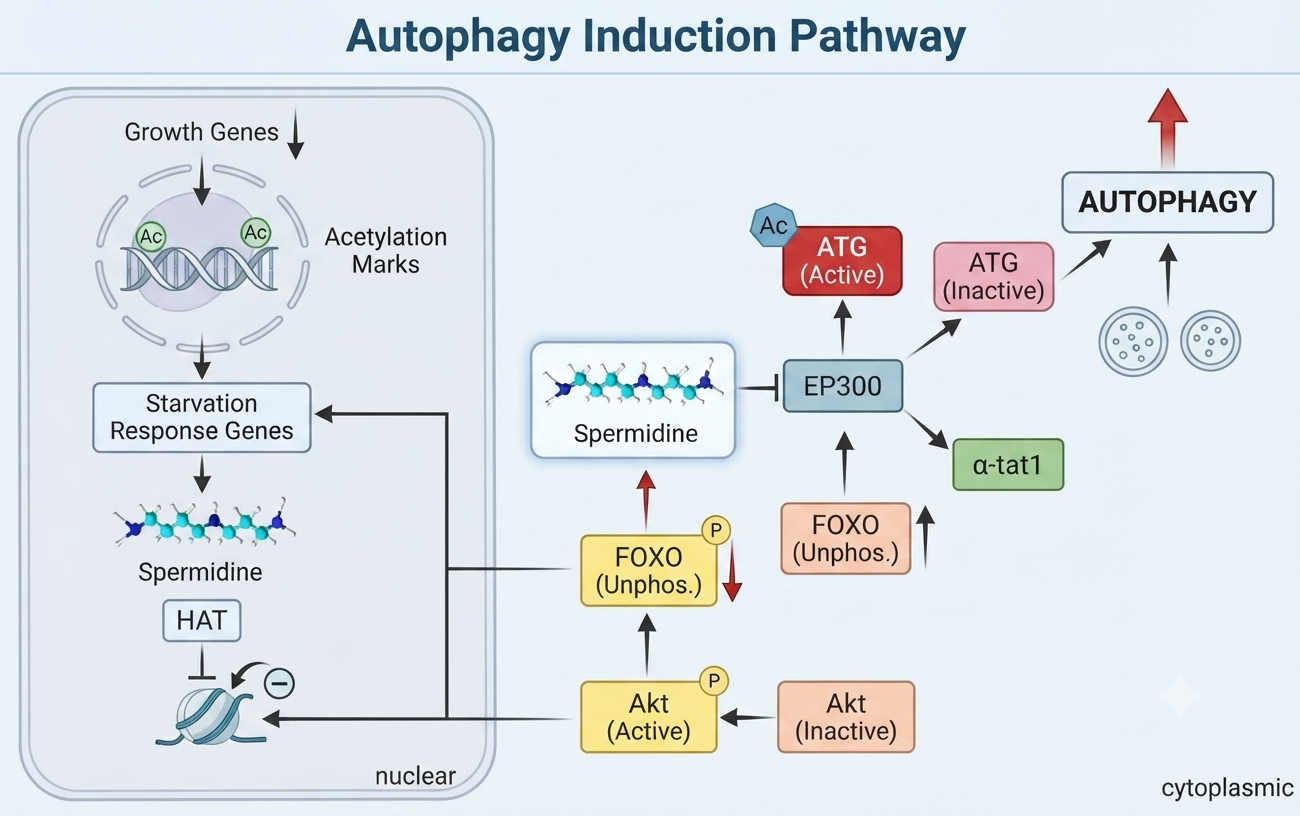
Mechanism of spermidine-induced autophagy. Abbreviations: FOXO: Fork-head transcription factors of the O class; Akt, Ak strain transforming; BNIP3, BCL2/adenovirus E1B 19 kDa protein-interacting protein 3; Ac, acylated; P, phosphorylated; HAT, histone acetyltransferase; EP300, E1A-associated protein p300; αtat1, α-tubulin acetyltransferase; CTSL, cathepsin L; ATG, autophagy related gene 3.
Spermidine and Prostate Cancer Prevention
Spermidine demonstrates significant potential against prostate cancer through multiple pathways, including apoptosis induction and synergistic effects when combined with established chemotherapeutics 4. Recent research shows that spermine inhibits both full-length androgen receptor (AR-FL) and androgen receptor splice variant 7 (AR-V7) signaling in castration-resistant prostate cancer, with supplementation restraining tumor growth in vivo 5.
Most evidence supports spermidine as a preventive and risk-modifying compound, with emerging data suggesting potential adjunctive cancer care benefits.
As a caloric restriction mimetic and autophagy inducer, spermidine reduces transplantable tumor growth, stimulates immune surveillance when combined with chemotherapy, and suppresses chemical-induced tumorigenesis through effects targeting oncogenes, immunity, autophagy, and apoptosis 6.
Clinical Relevance
Decreased spermine levels have been observed in prostate cancer tissue compared to healthy prostates, with urinary spermine concentrations serving as potential age-independent markers that are highly predictive of prostate cancer risk 7. Emerging research reveals that spermidine synthase acts as a transcriptional target with tumor suppressive effects, showing prognostic value in prostate cancer patients 8.
Longevity and Anti-Aging Benefits
Two prospective population-based studies involving healthy participants demonstrated that nutritional spermidine uptake is linked to reduced overall cardiovascular and cancer-related mortality in humans, representing an independent favorable prognostic parameter even after adjusting for confounding factors 9. Higher dietary spermidine intake is associated with 24% lower mortality rates, 27% reduction in cognitive impairment, 26% decrease in dementia, and 47% reduction in Alzheimer’s disease, along with decreased biological aging and reduced neurodegeneration 10.
Cellular Mechanisms
Six-month spermidine administration in aged mice significantly slowed signs of aging. Benefits included improved brain glucose metabolism, reduced cardiac inflammation, and decreased kidney pathology, with anti-aging effects associated with decreased telomere attrition 11. Spermidine stimulates mitochondrial biogenesis through the SIRT1/PGC-1α pathway, preventing cardiac function degradation during aging through its antioxidant, anti-inflammatory, and protein balancing properties 12.
Food Sources and Dietary Recommendations
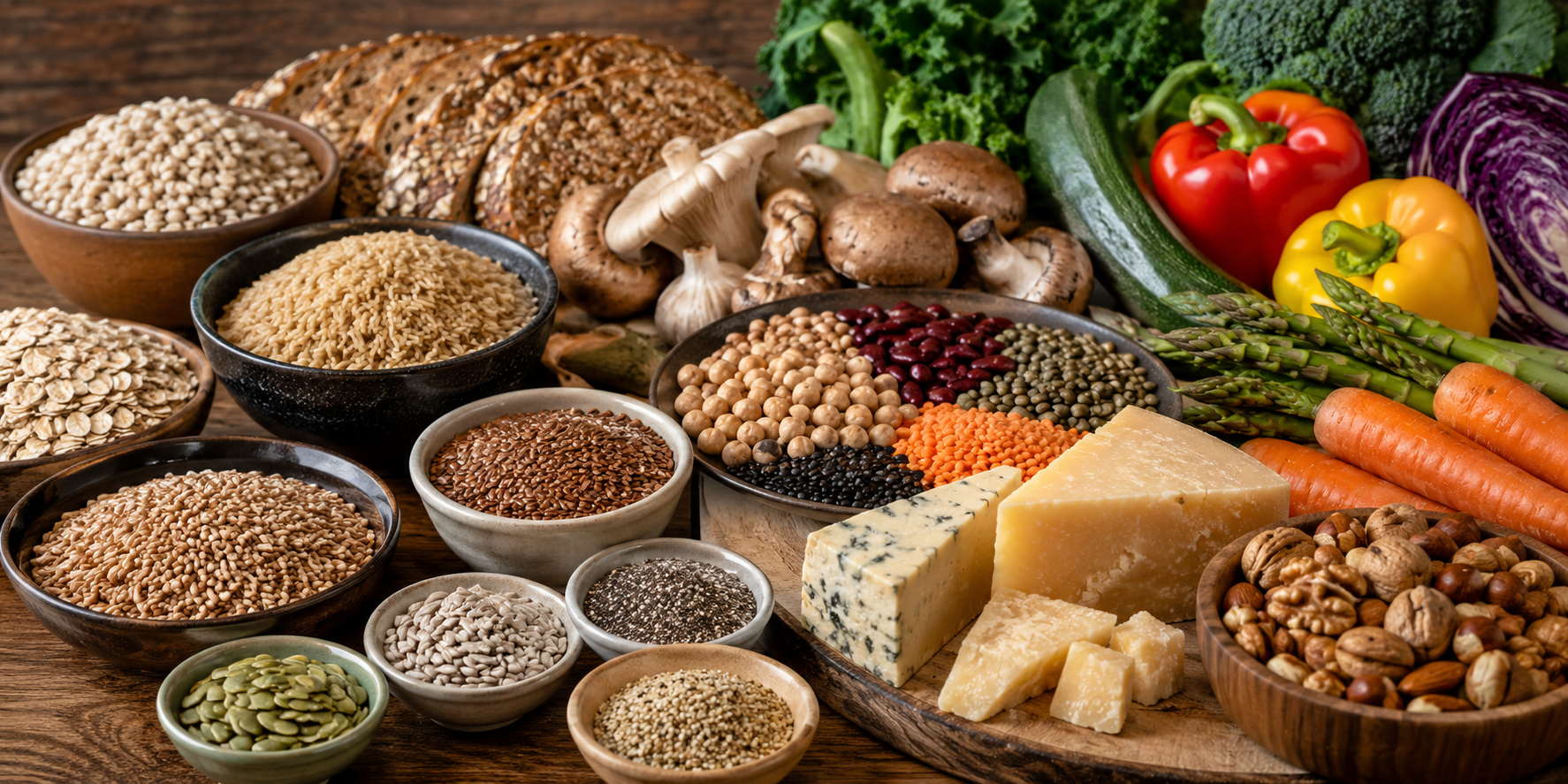
Spermidine is abundant in various foods, making dietary intake a practical approach to increasing levels. The average daily dietary intake of spermidine in Europe and the United States ranges from approximately 8 to 15 mg. Common supplements range in dosage from 5-10 mg per serving. The richest food sources include:
Grain Products
Wheat germ (from whole wheat) is the highest natural source. Wheat germ contains about 24-35 mg of spermidine per 100 grams (a little less than 1 cup).
Vegetables and Legumes
- Soybeans and soy products
- Mushrooms (various types)
- Broccoli and cauliflower
- Peppers
- Corn
- Beans and legumes
- Peas
Fruits
- Apples and pears
- Mangos
- Citrus fruits
Other Sources
- Aged cheese (particularly high in spermidine)
- Natto at 11–20 mg per 100 grams is the 2nd richest source but who can eat that much? Nobody!
- Nuts, especially peanuts
- Seeds 13
The optimal approach to benefiting from spermidine may be consuming spermidine-rich foods that also contain other longevity-associated nutrients like polyphenols and fiber, while maintaining a healthy gut microbiome since spermidine is also produced by beneficial gut bacteria 14.
Gut Microbiome Enhancement
Spermidine levels can be increased through probiotic supplementation, particularly Bifidobacterium lactis found in yogurt, which has been shown to increase spermidine levels in the gut of healthy adults. These effects can be enhanced when combined with arginine supplementation, a polyamine precursor that may act as a prebiotic for stimulating intestinal spermidine synthesis 15.
Future Implications
Genetic investigations show that lifelong oral spermidine administration extends lifespan in mice by 25%, with effects dependent on MAP1S-induced autophagy 16. While spermidine-rich diets and supplements show promise for healthy aging and longevity, more research is needed to define the risks and benefits of long-term administration before clinical guidelines can be established 17.
Side Effects
As with all bioactive compounds, some people supplementing with higher dose (over 5 mg) spermidine have had mild transient side effects such as nausea, headache, or loose stools. Therefore, I always recommend getting spermidine from the whole food sources discussed above. Food sources are almost always safer and healthier since they contain so many other nutrients like vitamins, minerals, polyphenols, and fiber.
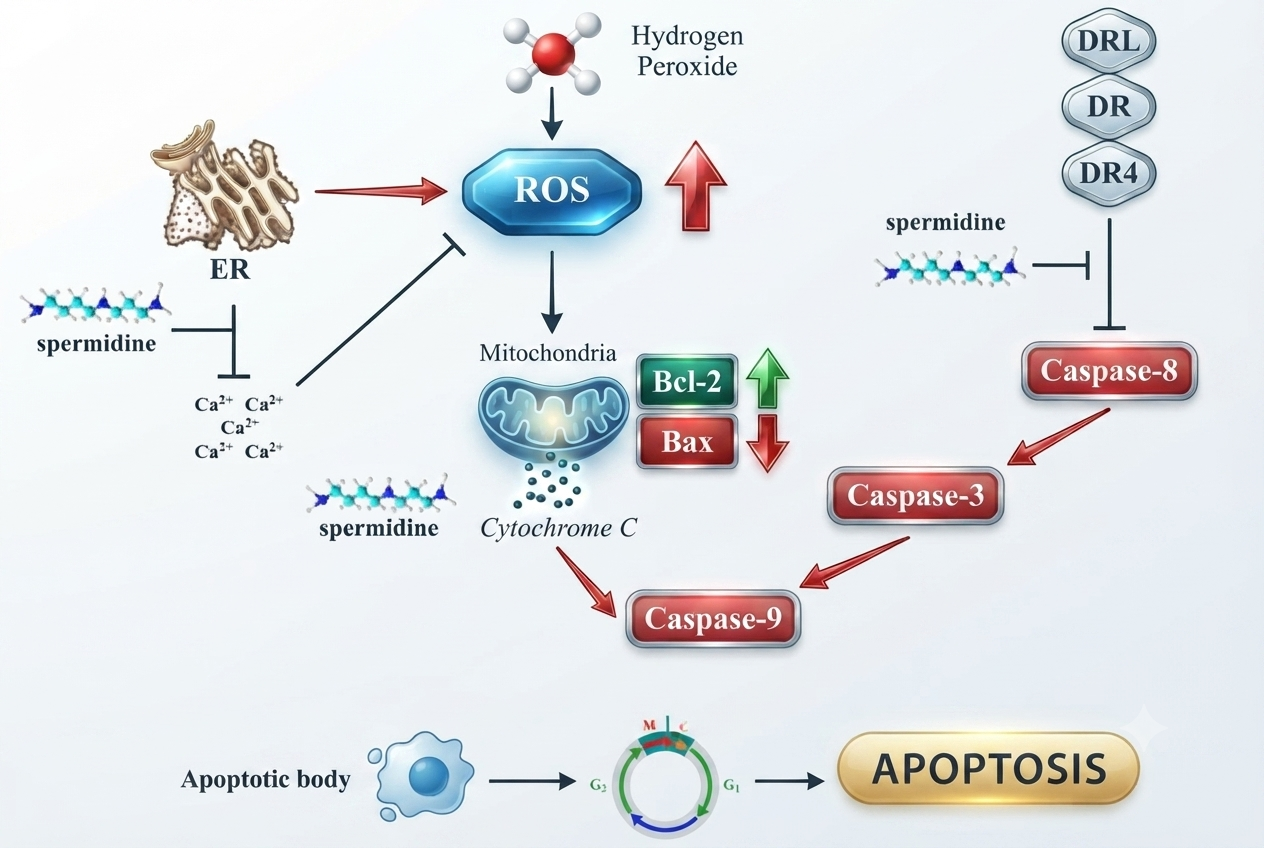
Mechanism of apoptosis induction by spermidine. Abbreviations: ROS, reactive oxygen species; Bax, Bcl-2 associated X protein; DR4, death receptor 4 18.
Conclusion
Spermidine is an exciting natural compound that may play an important role in supporting healthy aging and reducing the risk of prostate cancer. Research suggests that it works by promoting autophagy, improving immune function, protecting cells from damage, and supporting healthy mitochondria. Higher dietary intake has also been linked to lower rates of cardiovascular disease, cognitive decline, dementia, and overall mortality.
Although the research is promising, scientists are still learning about the long-term benefits and safety of spermidine supplementation. For now, the best approach is to eat a healthy diet that includes natural sources of spermidine, such as whole grains, mushrooms, legumes, vegetables, aged cheeses, nuts, and seeds. Combined with regular exercise, quality sleep, stress management, and other healthy lifestyle habits, a spermidine-rich diet can help support long-term health, resilience, and healthy aging while potentially lowering the risk of prostate cancer and other age-related diseases.

- Pietrocola F, Castoldi F, Kepp O, Carmona-Gutierrez D, Madeo F, Kroemer G. Spermidine reduces cancer-related mortality in humans. Autophagy. 2019;15(2):362-365. doi:10.1080/15548627.2018.1539592
- Madeo F, Bauer MA, Carmona-Gutierrez D, Kroemer G. Spermidine: a physiological autophagy inducer acting as an anti-aging vitamin in humans? Autophagy. 2019;15(1):165-168. doi:10.1080/15548627.2018.1530929
- Prasher P, Sharma M, Singh SK, Gulati M, Chellappan DK, Rajput R, Gupta G, Ydyrys A, Kulbayeva M, Abdull Razis AF, Modu B, Sharifi-Rad J, Dua K. Spermidine as a promising anticancer agent: Recent advances and newer insights on its molecular mechanisms. Front Chem. 2023 Apr 6;11:1164477. doi: 10.3389/fchem.2023.1164477. PMID: 37090250; PMCID: PMC10117651.
- Prasher P, Sharma M, Singh SK, et al. Spermidine as a promising anticancer agent: Recent advances and newer insights on its molecular mechanisms. Front Chem. 2023;11:1164477. doi:10.3389/fchem.2023.1164477
- Li F, Liu S, Xu H, et al. Spermine is a natural suppressor of AR signaling in castration-resistant prostate cancer. Cell Rep. 2023;42(7):112694. doi:10.1016/j.celrep.2023.112694
- Arruabarrena-Aristorena A, Zabala-Letona A, Carracedo A. Spermidine as a target for cancer therapy. Life Sci Alliance. 2021;4(2):e202000841. doi:10.26508/lsa.202000841
- Tse RT, Wong CY, Chiu PK, Ng CF. The Emerging Clinical Role of Spermine in Prostate Cancer. Int J Mol Sci. 2021;22(9):4382. doi:10.3390/ijms22094382
- Schaub-Clerigué A, Hermanova I, Pintor-Rial A, et al. Secreted spermidine synthase reveals a paracrine role for PGC1α-induced growth suppression in prostate cancer. Cell Death Dis. 2025;16(1):40. doi:10.1038/s41419-025-07639-4
- Carmona-Gutierrez D, Bauer MA, Zimmermann A, et al. Spermidine delays aging in humans. Aging (Albany NY). 2018;10(8):2209-2211. doi:10.18632/aging.101517
- Kiechl S, Pechlaner R, Willeit P, Notdurfter M, Paulweber B, Willeit K, Werner P, Ruckenstuhl C, Iglseder B, Weger S, Mairhofer B, Gartner M, Kedenko L, Chmelikova M, Stekovic S, Stuppner H, Oberhollenzer F, Kroemer G, Mayr M, Eisenberg T, Tilg H, Madeo F, Willeit J. Higher spermidine intake is linked to lower mortality: a prospective population-based study. Am J Clin Nutr. 2018 Aug 1;108(2):371-380. doi: 10.1093/ajcn/nqy102. PMID: 29955838.
- Hofer SJ, Simon AK, Kroemer G, et al. Novel aspects of age-protection by spermidine supplementation are associated with preserved telomere length. GeroScience. 2021;43(2):673-690. doi:10.1007/s11357-020-00310-0
- Fan J, Yang X, Li J, et al. New Insights into the Roles and Mechanisms of Spermidine in Aging and Age-Related Diseases. Aging Dis. 2021;12(8):1948-1963. doi:10.14336/AD.2021.0603
- Muñoz-Esparza NC, Latorre-Moratalla ML, Comas-Basté O, Toro-Funes N, Veciana-Nogués MT and Vidal-Carou MC (2019) Polyamines in Food. Front. Nutr. 6:108. doi: 10.3389/fnut.2019.00108
- NAD Team. Spermidine: A Promising Nutrient for Brain Health and Cognitive Aging. NAD.com. Accessed 2024.
- Madeo F, Bauer MA, Carmona-Gutierrez D, Kroemer G. Spermidine: a physiological autophagy inducer acting as an anti-aging vitamin in humans? Autophagy. 2019;15(1):165-168. doi:10.1080/15548627.2018.1530929
- Eisenberg T, Abdellatif M, Schroeder S, Primessnig U, Stekovic S, Pendl T, Harger A, Schipke J, Zimmermann A, Schmidt A, Tong M, Ruckenstuhl C, Dammbrueck C, Gross AS, Herbst V, Magnes C, Trausinger G, Narath S, Meinitzer A, Hu Z, Kirsch A, Eller K, Carmona-Gutierrez D, Büttner S, Pietrocola F, Knittelfelder O, Schrepfer E, Rockenfeller P, Simonini C, Rahn A, Horsch M, Moreth K, Beckers J, Fuchs H, Gailus-Durner V, Neff F, Janik D, Rathkolb B, Rozman J, de Angelis MH, Moustafa T, Haemmerle G, Mayr M, Willeit P, von Frieling-Salewsky M, Pieske B, Scorrano L, Pieber T, Pechlaner R, Willeit J, Sigrist SJ, Linke WA, Mühlfeld C, Sadoshima J, Dengjel J, Kiechl S, Kroemer G, Sedej S, Madeo F. Cardioprotection and lifespan extension by the natural polyamine spermidine. Nat Med. 2016 Dec;22(12):1428-1438. doi: 10.1038/nm.4222. Epub 2016 Nov 14. PMID: 27841876; PMCID: PMC5806691.
- Heshmati H, Shaw V. Role of spermidine in longevity. Endocr Abstr. 2025;110:EP989. doi:10.1530/endoabs.110.EP989
- Yue F, Li W, Zou J, et al. Spermidine prolongs lifespan and prevents liver fibrosis and hepatocellular carcinoma by activating MAP1S-mediated autophagy. Cancer Res. 2017;77(11):2938-2951. doi:10.1158/0008-5472.CAN-16-3462