

By Donnie Yance
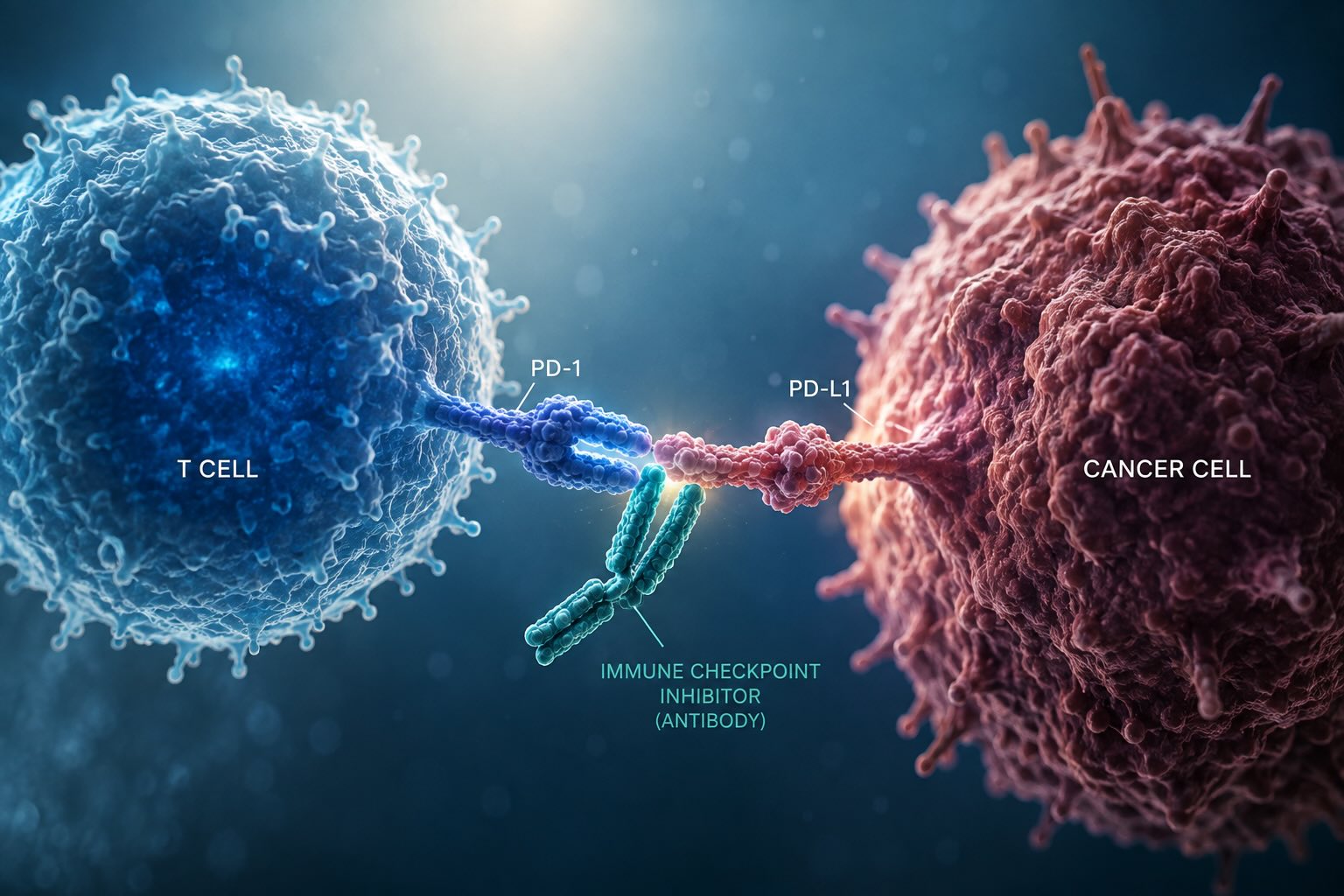
Immune checkpoint inhibitors (ICIs, also known as ICBs) have revolutionized cancer treatment by offering durable responses across multiple tumor types. However, these breakthrough therapies come with significant challenges: high costs that limit global access, substantial toxicity profiles, and mounting evidence that currently approved doses may be higher than necessary for optimal therapeutic benefit 1 2. This review synthesizes evidence from multiple studies demonstrating that lower doses of immune checkpoint inhibitors, particularly pembrolizumab and nivolumab, maintain therapeutic efficacy while offering improved safety profiles and dramatically reduced costs.
Target Saturation at Lower Doses
The fundamental principle supporting dose reduction lies in the pharmacokinetic properties of immune checkpoint inhibitors. In phase 1 studies, these drugs have shown efficacy at lower doses than those approved, with no evidence of a dose–response relationship, while also showing prolonged bioavailability and target binding 3. Pembrolizumab showed full target engagement at doses of 1 mg kg⁻¹ every 3 weeks or higher, with no differences in response rates between 2 and 10 mg kg⁻¹ 4. Trials of nivolumab did not report differences in response, survival, or target-binding using doses between 0.1 and 10 mg kg⁻¹ every 2 weeks 5.
Receptor occupancy is maximized at low dose levels: peripheral PD-1 receptor occupancy is saturated with 0.3 mg/kg nivolumab, greater than 90% with 0.5 mg/kg pembrolizumab, 4 mg/kg atezolizumab, 3 mg/kg avelumab, and the soluble PD-L1 receptor was completely suppressed when durvalumab ≥ 0.3 mg/kg 6.
Dose-Response Plateau
For most ICIs (except ipilimumab), there is no clear relationship between dose and efficacy or safety 7. The dose-response and exposure-response curves showed an obvious plateau, implying that increasing doses do not contribute to tumor control and that lower-dose ICIs may produce the same effect 8. Agrawal et al. found that the exposure-response relationship reached a plateau with nivolumab doses ≥1 mg/kg in melanoma and renal cell carcinoma, suggesting that low-dose regimens could be tried in high-immunogenic tumors 9.
Clinical Evidence for Dose Reduction
A systematic review of dose optimization studies reveals compelling evidence for lower doses across multiple cancer types 10. Dose optimization studies on ICIs are limited, focusing on nivolumab, pembrolizumab, and ipilimumab. The inclusion criteria encompassed retrospective and prospective studies of these three ICIs that included off-label dosing regimens, whether monotherapy or combined therapy, and whether directly comparing different dosing regimens or simply including cohorts with off-label dosing regimens.
Pembrolizumab Dose Reduction Studies
The largest real-world evidence comes from a Singapore study examining 114 patients with advanced NSCLC 11. Sixty five patients (57%) received pembrolizumab 100mg every 3 weeks (Pem100) while forty nine patients (43%) received the standard 200mg dose (Pem200). The median patient weight was 59 kg, making the 100mg dose approximately equivalent to 1.85 mg/kg.
Key Findings:
- Progression-free survival: 6.8 vs 4.2 months (HR 0.60, 95% CI 0.30-1.22, P = 0.16) for Pem100 vs Pem200
- Overall survival: 14.3 vs 19.8 months (HR 1.08, 95% CI 0.48-2.41, P = 0.86)
- Response rates: No statistically significant difference between groups
- Cost savings: The total cost savings was $4,290,912 Singapore Dollars (SGD) with an estimated savings of $39,942 SGD per patient.
NVALT-30 Trial: Prospective Evidence
Recent findings from the NVALT-30 trial showed the 1-year survival difference between patients with stage IV non-small cell lung cancer (NSCLC) treated with either a standard or reduced dose of pembrolizumab met the established criteria for continued enrollment 12. The 1-year overall survival rate was 57.7% (95% CI, 49.5%-67.3%) in the standard-dose group and 55.0% (95% CI, 47.0%-64.4%) in the reduced dose group.
Median overall survival was 17.0 months (95% CI, 11.8-23.2) in the standard-dose group and 13.9 months (95% CI, 10.8-16.9) in the reduced-dose group. The median cumulative dose of pembrolizumab was 1600 mg in the standard-dose arm compared with 1200 mg in the reduced-dose arm. 34% of patients assigned the standard dose arm were still on treatment after 1 year compared with 28% assigned the reduced dose 13.
Extended Dosing Intervals
Prolonging dosing intervals maintains pharmacodynamic parameters at effective levels 14. Simulated administration of nivolumab at 240mg Q4W/480mg Q8W regimen and pembrolizumab at 200mg Q6W regimen revealed that serum drug concentrations remained above the minimum effective concentration in more than 95% of patients 15.
The Canadian Agency of Drugs and Technologies in Health simulated dosing regimens of pembrolizumab 4 mg/kg Q6W in patients weighing 70, 100, and 150 kg, all with trough target engagement above 97% 16. Comparison of the standard regimen of atezolizumab with several extended interval regimens showed that the predicted efficacy and safety of 1680 mg Q8W/1200 mg Q6W was not inferior to the standard 1200 mg Q3W 17.
Weight-Based Dosing Analysis
A European analysis of 391 patients receiving pembrolizumab in 2021 examined adverse drug reactions between fixed and weight-based dosing 18. Patients under 80 kg experienced higher toxicity rates with fixed dosing (34.8% vs 28.0% in patients over 80 kg), supporting the rationale for weight-based or lower fixed doses in smaller patients. For a 50 kg patient, weight-based dosing would require only 100mg (half the fixed dose), providing approximately 26% cost savings, as well as untold potential quality-of-life savings.
Current Treatment Paradigm and De-escalation Rationale
Currently, one-dose-fits-all maximalist regimens are considered the standard of care, with ICBs administered at flat doses regardless of patients’ weight 19. Treatment duration with ICBs is often arbitrary across stages, ranging from a fixed time point, to until disease progression, or unacceptable toxicity. However, the pharmacokinetic and pharmacodynamic properties of ICBs differ significantly from those of traditional cytotoxic drugs, and the approved doses based on the maximum tolerated dose are often overestimated as there is limited evidence supporting a direct relationship between therapeutic dose intensity and outcomes 20.
This can lead to overtreatment of patients, resulting in an increased risk of toxicity without enhanced efficacy. Additionally, the use of these drugs is associated with significant costs that burden the global healthcare system and exacerbate disparities in access to care 21.
Reduced Toxicity with Lower Doses
The evidence consistently shows that lower doses maintain efficacy while reducing adverse events 22 23. In the Singapore study, G3 or higher immune-related adverse events occurred in 17% vs 22% for Pem100 vs Pem200 (P = 0.5) 24. In gynecologic cancers, incidence of immune-related adverse events (irAEs) of any grade was observed in 13 patients (33.3%), with 3 individuals (7.7%) experiencing grade 3 or 4 events. Low-dose pembrolizumab may be a cost-effective and safe treatment option without compromising clinical outcomes 25.
Toxicity Patterns
Adverse events in >20% of patients receiving PD-1 inhibitors include fatigue, rash, itching, cough, diarrhea, decreased appetite, constipation, and joint pain. Treatment-related adverse events with PD-1 inhibitors are predominantly grade 1 or 2 in severity 26.
A Crisis of Cost-Effectiveness
Immune checkpoint inhibitors such as pembrolizumab or nivolumab have greatly improved survival for many patients with cancer, but are prohibitively expensive and unattainable for most of the global cancer population 27. Financial toxicity of newer oncology drugs has become a considerable issue for patients and health systems, with access being limited in many countries because of cost 28.
As real-world examples from South America, less than 5% of the population has coverage for PD-1 checkpoint inhibitors in Peru and less than 10% in Chile, the richest country in the region. This problem is not restricted to South America, as even the United States, the country with the world’s largest per capita drug spending, is facing the issue of spiraling drug costs 29.
Implementation Urgency
Optimized dosing, with a reduced unit dose, less frequent schedule and/or shorter duration of treatment could reduce costs and toxicity, thereby improving global access to effective cancer therapy 30. Substantial evidence suggests that immune checkpoint inhibitors are being administered at doses that exceed the minimum dose required for maximum anti-tumor efficacy. Therefore, investigating and implementing the most cost-effective dosing strategies for immune checkpoint inhibitors are urgently necessary 31.
Practical Dosing Recommendations
Based on the evidence, practical approaches include:
- Pembrolizumab 100mg every 3 weeks for patients ≤70kg 32
- Extended interval dosing (200mg every 6 weeks instead of 200mg every 3 weeks) 33 34
- Weight-based dosing at 2mg/kg every 3 weeks 35
Current Dosing Options
There are several current standard-of-care doses of Keytruda (Pembrolizumab), including 200 mg every 3 weeks, 400 mg every 6 weeks, and 150 mg every 3 weeks, among others. “But could we improve on this dosing and, thereby, for instance, reduce healthcare costs and maybe redundant exposure to pembrolizumab?” 36.
Study Limitations and Future Directions
While the evidence is compelling, several limitations must be acknowledged:
- Most studies are retrospective with relatively small sample sizes
- Patient populations vary between studies
- Long-term outcomes require further validation in randomized controlled trials
The mounting evidence supports several critical research priorities:
- Large-scale randomized controlled trials comparing reduced doses to standard doses
- Development of personalized dosing algorithms based on patient characteristics
- Implementation of therapeutic drug monitoring for individualized dosing
- Global policy initiatives to improve access through optimized dosing strategies
Conclusion
The evidence overwhelmingly supports that lower doses of immune checkpoint inhibitors maintain therapeutic efficacy while providing improved safety profiles and dramatic cost reductions 37 38 39 40. Both drugs have shown similar response rates across a wide range of doses, some much lower than currently approved schedules. The current approved doses appear to be based on historical precedent rather than optimal biological activity, representing a significant opportunity for healthcare optimization.
For pembrolizumab specifically, doses as low as 100mg every 3 weeks (approximately 1.7mg/kg for average-weight patients) demonstrate equivalent efficacy to standard 200mg dosing while reducing costs by up to 50% and maintaining acceptable safety profiles 41. Similarly, extended dosing intervals (every 6 weeks instead of every 3 weeks) provide practical alternatives that reduce healthcare burden without compromising outcomes 42 43.
De-escalation strategies with immune checkpoint blockers may help reduce treatment inequalities and improve drug access worldwide 44. The implementation of evidence-based dose optimization represents one of the most impactful opportunities to improve global cancer care accessibility while maintaining therapeutic excellence.
Healthcare providers, policymakers, and pharmaceutical companies must collaborate to implement these findings into clinical practice, ensuring that life-saving immune checkpoint inhibitor therapy becomes accessible to cancer patients worldwide without compromising therapeutic outcomes.

- Jiang M, Hu Y, Lin G, Chen C. Dosing Regimens of Immune Checkpoint Inhibitors: Attempts at Lower Dose, Less Frequency, Shorter Course. Front Oncol. 2022;12:906251. doi: 10.3389/fonc.2022.906251
- Hirsch I, Goldstein DA, Tannock IF, et al. Optimizing the dose and schedule of immune checkpoint inhibitors in cancer to allow global access. Nat Med. 2022;28:2236–2237. doi: 10.1038/s41591-022-02029-1
- Jiang M, Hu Y, Lin G, Chen C. Dosing Regimens of Immune Checkpoint Inhibitors: Attempts at Lower Dose, Less Frequency, Shorter Course. Front Oncol. 2022;12:906251. doi: 10.3389/fonc.2022.906251
- Low JL, Huang Y, Sooi K, et al. Low-dose pembrolizumab in the treatment of advanced non-small cell lung cancer. Int J Cancer. 2021;149:169-176. doi: 10.1002/ijc.33534
- Jiang M, Hu Y, Lin G, Chen C. Dosing Regimens of Immune Checkpoint Inhibitors: Attempts at Lower Dose, Less Frequency, Shorter Course. Front Oncol. 2022;12:906251. doi: 10.3389/fonc.2022.906251
- Jiang M, Hu Y, Lin G, Chen C. Dosing Regimens of Immune Checkpoint Inhibitors: Attempts at Lower Dose, Less Frequency, Shorter Course. Front Oncol. 2022;12:906251. doi: 10.3389/fonc.2022.906251
- Jiang M, Hu Y, Lin G, Chen C. Dosing Regimens of Immune Checkpoint Inhibitors: Attempts at Lower Dose, Less Frequency, Shorter Course. Front Oncol. 2022;12:906251. doi: 10.3389/fonc.2022.906251
- Jiang M, Hu Y, Lin G, Chen C. Dosing Regimens of Immune Checkpoint Inhibitors: Attempts at Lower Dose, Less Frequency, Shorter Course. Front Oncol. 2022;12:906251. doi: 10.3389/fonc.2022.906251
- Agrawal S, Feng Y, Roy A, et al. Nivolumab dose selection: challenges, opportunities, and lessons learned for cancer immunotherapy. J Immunother Cancer. 2016;4:72. doi: 10.1186/s40425-016-0177-2
- Jiang M, Hu Y, Lin G, Chen C. Dosing Regimens of Immune Checkpoint Inhibitors: Attempts at Lower Dose, Less Frequency, Shorter Course. Front Oncol. 2022;12:906251. doi: 10.3389/fonc.2022.906251
- Low JL, Huang Y, Sooi K, et al. Low-dose pembrolizumab in the treatment of advanced non-small cell lung cancer. Int J Cancer. 2021;149:169-176. doi: 10.1002/ijc.33534
- Van den Heuvel M, Van der Noort V, Ter Heine R, et al. Low dose versus standard dose pembrolizumab for treatment of stage IV non-small cell lung carcinoma: Results of the pre-planned interim analysis of the NVALT-30 clinical trial. Ann Oncol. 2024;35(suppl_2):S1258. doi: 10.1016/j.annonc.2024.08.1315
- Van den Heuvel M, Van der Noort V, Ter Heine R, et al. Low dose versus standard dose pembrolizumab for treatment of stage IV non-small cell lung carcinoma: Results of the pre-planned interim analysis of the NVALT-30 clinical trial. Ann Oncol. 2024;35(suppl_2):S1258. doi: 10.1016/j.annonc.2024.08.1315
- Jiang M, Hu Y, Lin G, Chen C. Dosing Regimens of Immune Checkpoint Inhibitors: Attempts at Lower Dose, Less Frequency, Shorter Course. Front Oncol. 2022;12:906251. doi: 10.3389/fonc.2022.906251
- Jiang M, Hu Y, Lin G, Chen C. Dosing Regimens of Immune Checkpoint Inhibitors: Attempts at Lower Dose, Less Frequency, Shorter Course. Front Oncol. 2022;12:906251. doi: 10.3389/fonc.2022.906251
- Canadian Agency for Drugs and Technologies in Health. CADTH Canadian Drug Expert Committee Final Recommendation: Pembrolizumab (Keytruda). Ottawa: CADTH; 2017.
- Canadian Agency for Drugs and Technologies in Health. CADTH Canadian Drug Expert Committee Final Recommendation: Pembrolizumab (Keytruda). Ottawa: CADTH; 2017.
- Fortuna M, Kovačevič M. Fixed vs weight-based dosing of pembrolizumab for patients under 80 kg, based on observed ADRs in one cancer setting. Eur J Hosp Pharm. 2023;30:A123.
- Remon J, Hendriks LE, Cardona AF, et al. De-Escalation Strategies With Immune Checkpoint Blockers in Non–Small Cell Lung Cancer: Do We Already Have Enough Evidence? J Clin Oncol. 2024;42:JCO-24-02347. doi: 10.1200/JCO-24-02347
- Remon J, Hendriks LE, Cardona AF, et al. De-Escalation Strategies With Immune Checkpoint Blockers in Non–Small Cell Lung Cancer: Do We Already Have Enough Evidence? J Clin Oncol. 2024;42:JCO-24-02347. doi: 10.1200/JCO-24-02347
- Remon J, Hendriks LE, Cardona AF, et al. De-Escalation Strategies With Immune Checkpoint Blockers in Non–Small Cell Lung Cancer: Do We Already Have Enough Evidence? J Clin Oncol. 2024;42:JCO-24-02347. doi: 10.1200/JCO-24-02347
- Jiang M, Hu Y, Lin G, Chen C. Dosing Regimens of Immune Checkpoint Inhibitors: Attempts at Lower Dose, Less Frequency, Shorter Course. Front Oncol. 2022;12:906251. doi: 10.3389/fonc.2022.906251
- Low JL, Huang Y, Sooi K, et al. Low-dose pembrolizumab in the treatment of advanced non-small cell lung cancer. Int J Cancer. 2021;149:169-176. doi: 10.1002/ijc.33534
- Low JL, Huang Y, Sooi K, et al. Low-dose pembrolizumab in the treatment of advanced non-small cell lung cancer. Int J Cancer. 2021;149:169-176. doi: 10.1002/ijc.33534
- Oaknin A, Tinker AV, Gilbert L, et al. Clinical activity, safety, and biomarker results from a phase Ib study of atezolizumab in advanced/recurrent endometrial cancer. Ann Oncol. 2020;31:956-961.
- Brahmer JR, Lacchetti C, Schneider BJ, et al. Management of immune-related adverse events in patients treated with immune checkpoint inhibitor therapy: American Society of Clinical Oncology Clinical Practice Guideline. J Clin Oncol. 2018;36:1714-1768.
- Hirsch I, Goldstein DA, Tannock IF, et al. Optimizing the dose and schedule of immune checkpoint inhibitors in cancer to allow global access. Nat Med. 2022;28:2236–2237. doi: 10.1038/s41591-022-02029-1
- Hirsch I, Goldstein DA, Tannock IF, et al. Optimizing the dose and schedule of immune checkpoint inhibitors in cancer to allow global access. Nat Med. 2022;28:2236–2237. doi: 10.1038/s41591-022-02029-1
- Renner A, Burotto M, Rojas C. Immune checkpoint inhibitor dosing: can we go lower without compromising clinical efficacy? J Glob Oncol. 2019;5:1-5. doi: 10.1200/JGO.19.00142
- Hirsch I, Goldstein DA, Tannock IF, et al. Optimizing the dose and schedule of immune checkpoint inhibitors in cancer to allow global access. Nat Med. 2022;28:2236–2237. doi: 10.1038/s41591-022-02029-1
- Hirsch I, Goldstein DA, Tannock IF, et al. Optimizing the dose and schedule of immune checkpoint inhibitors in cancer to allow global access. Nat Med. 2022;28:2236–2237. doi: 10.1038/s41591-022-02029-1
- Low JL, Huang Y, Sooi K, et al. Low-dose pembrolizumab in the treatment of advanced non-small cell lung cancer. Int J Cancer. 2021;149:169-176. doi: 10.1002/ijc.33534
- Jiang M, Hu Y, Lin G, Chen C. Dosing Regimens of Immune Checkpoint Inhibitors: Attempts at Lower Dose, Less Frequency, Shorter Course. Front Oncol. 2022;12:906251. doi: 10.3389/fonc.2022.906251
- Canadian Agency for Drugs and Technologies in Health. CADTH Canadian Drug Expert Committee Final Recommendation: Pembrolizumab (Keytruda). Ottawa: CADTH; 2017.
- Fortuna M, Kovačevič M. Fixed vs weight-based dosing of pembrolizumab for patients under 80 kg, based on observed ADRs in one cancer setting. Eur J Hosp Pharm. 2023;30:A123.
- Van den Heuvel M, Van der Noort V, Ter Heine R, et al. Low dose versus standard dose pembrolizumab for treatment of stage IV non-small cell lung carcinoma: Results of the pre-planned interim analysis of the NVALT-30 clinical trial. Ann Oncol. 2024;35(suppl_2):S1258. doi: 10.1016/j.annonc.2024.08.1315
- Jiang M, Hu Y, Lin G, Chen C. Dosing Regimens of Immune Checkpoint Inhibitors: Attempts at Lower Dose, Less Frequency, Shorter Course. Front Oncol. 2022;12:906251. doi: 10.3389/fonc.2022.906251
- Hirsch I, Goldstein DA, Tannock IF, et al. Optimizing the dose and schedule of immune checkpoint inhibitors in cancer to allow global access. Nat Med. 2022;28:2236–2237. doi: 10.1038/s41591-022-02029-1
- Low JL, Huang Y, Sooi K, et al. Low-dose pembrolizumab in the treatment of advanced non-small cell lung cancer. Int J Cancer. 2021;149:169-176. doi: 10.1002/ijc.33534
- Van den Heuvel M, Van der Noort V, Ter Heine R, et al. Low dose versus standard dose pembrolizumab for treatment of stage IV non-small cell lung carcinoma: Results of the pre-planned interim analysis of the NVALT-30 clinical trial. Ann Oncol. 2024;35(suppl_2):S1258. doi: 10.1016/j.annonc.2024.08.1315
- Low JL, Huang Y, Sooi K, et al. Low-dose pembrolizumab in the treatment of advanced non-small cell lung cancer. Int J Cancer. 2021;149:169-176. doi: 10.1002/ijc.33534
- Jiang M, Hu Y, Lin G, Chen C. Dosing Regimens of Immune Checkpoint Inhibitors: Attempts at Lower Dose, Less Frequency, Shorter Course. Front Oncol. 2022;12:906251. doi: 10.3389/fonc.2022.906251
- Canadian Agency for Drugs and Technologies in Health. CADTH Canadian Drug Expert Committee Final Recommendation: Pembrolizumab (Keytruda). Ottawa: CADTH; 2017.
- Remon J, Hendriks LE, Cardona AF, et al. De-Escalation Strategies With Immune Checkpoint Blockers in Non–Small Cell Lung Cancer: Do We Already Have Enough Evidence? J Clin Oncol. 2024;42:JCO-24-02347. doi: 10.1200/JCO-24-02347