
By Donnie Yance
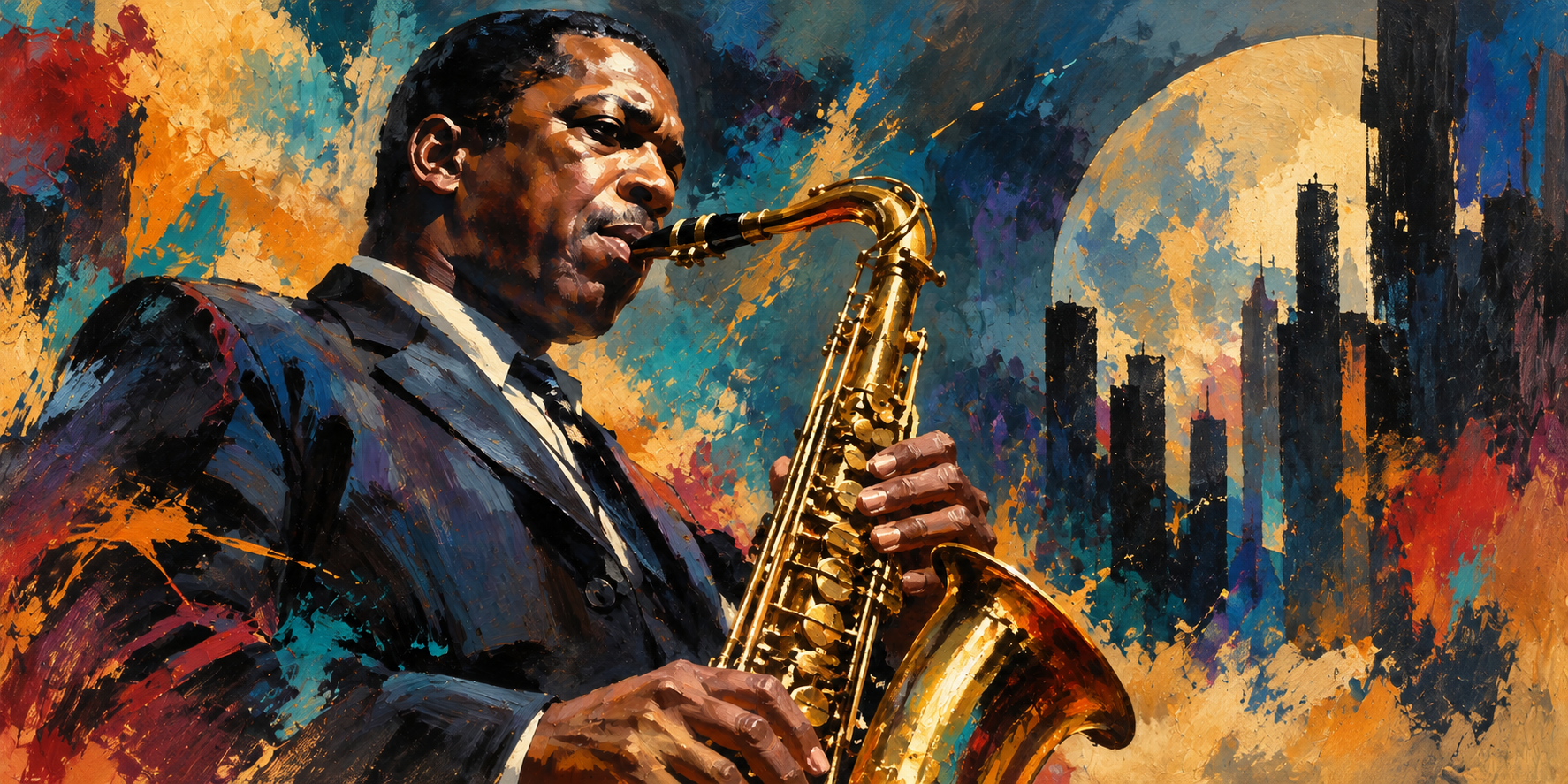
Every year as September 23 approaches, I find myself drawn back to the recordings of John Coltrane (sometimes called “Trane”). For musicians, “Trane” remains a titan of technique, harmony, and unyielding exploration. For spiritual seekers, he is something more: a pilgrim who transformed his saxophone into an instrument of devotion, turning sound into an offering.
On September 23rd, we celebrate this iconic jazz pioneer’s 100th birthday and honor the extraordinary musical legacy that transformed the genre.
In my life as both a musician and a clinician practicing integrative medicine, I have spent decades contemplating the intersection of sound, nature, and the human spirit. People often ask whether music can truly be considered a healing modality. The answer is yes, but only if we understand what healing actually means. At its highest expression, music acts as a purifying bath for the soul. It engages the whole person—mind, body, emotions, and spirit—reorienting our awareness toward harmony, wholeness, and the Divine.
Coltrane understood this at the deepest possible level. As we celebrate his birthday, his life, and masterpiece A Love Supreme (Recorded all in one session on December 9th, 1964), they all invite us to discover how deep, intentional listening can become a profound doorway to inner restoration.
Music as Prayer: The 1957 Awakening
Coltrane’s journey was not without darkness. In his early career, he wrestled with severe addiction and personal turmoil. In 1957, however, he experienced a profound spiritual awakening. In his own words, he experienced “by the grace of God, a spiritual awakening which was to lead me to a richer, fuller, more productive life.” In gratitude, he humbly asked to be granted the means and the privilege to make others happy through music.
That commitment became the governing compass of his life. For Coltrane, music ceased to be mere entertainment or technical display; it became a homily, a spiritual discipline, and an ongoing communion with natural and divine laws. He recognized that jazz, at its root, seeks eternity within the present moment. In improvisation, the musician must cultivate absolute technical mastery and then surrender it completely to the movement of the Spirit, responding authentically to the demands of the instant.
In many traditional systems of healing, including traditional Chinese medicine, sound and music have always been viewed as intrinsic to physiological and emotional harmony. Ancient traditions recognized that specific tones, rhythms, and intentions resonate with our vital energy (Qi) and organ networks, bridging our internal emotional landscape with the external world. When Coltrane lifted his horn, he was operating within this timeless lineage—acting as a vessel through which cosmic order and human longing could meet.
Consider your heartbeat—that steady pulse beneath your ribs—and recognize it for what it truly is: a beat. From this fundamental rhythm, everything about how our bodies function emerges, organized around the principles of music itself. The heartbeat serves as the foundation, and from it extends an intricate symphony of melodies and harmonies that animate every living system within us.
The Journey of “A Love Supreme”
Recorded in a single evening in December 1964 and released in 1965, A Love Supreme stands as Coltrane’s definitive spiritual declaration. Structured as a four-part suite with his classic quartet—McCoy Tyner on piano, Jimmy Garrison on bass, and Elvin Jones on drums—it mirrors the classic stages of spiritual transformation:
- Acknowledgement: The suite opens with a sweeping gong and a fanfaric tenor invocation before Garrison establishes the foundational four-note bass motif. Coltrane explores every permutation of this simple phrase, eventually chanting the words “A Love Supreme” over and over. It is an act of recognizing our place within the vastness of creation—an admission of dependence on a higher love.
- Resolution: Driven by an assertive, surging pulse, this movement embodies spiritual resolve and discipline. It reflects the inner commitment required to confront one’s own limitations, step forward in faith, and dedicate one’s life to purposeful service.
- Pursuance: Here, the rhythm section ignites with fierce energy. The music does not avoid tension, struggle, or intensity; instead, it plunges directly into the fire of purification. True healing is rarely passive comfort; it often requires walking through the emotional and spiritual crucible to reach clarity.
- Psalm: The intensity subsides into a contemplative, prayerful recitation. Coltrane’s saxophone literally “speaks” the syllables of a devotional poem he included in the album’s liner notes. Breath becomes homily, ending in an ethereal, multi-layered release of gratitude and surrender.
When we listen to A Love Supreme, we are not simply hearing notes; we are participating in an arc of struggle, purification, and peace.
What Modern Research Reveals About Sound and Recovery
While the spiritual dimension of music transcends measurement, contemporary clinical science is increasingly uncovering the physiological pathways through which sound influences our biology.
Recent scientific investigations offer fascinating glimpses into these mechanisms:
- Facilitating Stress Recovery: In a 20261 study evaluating 120 healthy volunteers exposed to the stress of a difficult math problem, researchers observed that listening to relaxing music after the stressor significantly accelerated physiological recovery compared to listening to neutral water sounds. Participants listening to music showed faster reductions in heart rate and skin conductance (sweating), greater improvements in positive mood, and lower salivary cortisol levels. Neuroimaging indicated altered functional connectivity between the auditory cortex, the insular cortex (which processes bodily awareness), and the thalamus. Crucially, the benefits were most pronounced during the recovery window after stress, illustrating that music helps the autonomic nervous system return to equilibrium.
- Easing Clinical Anxiety: A 20242 randomized controlled trial involving 100 cancer patients undergoing their first course of radiotherapy found that introducing 10 to 15 minutes of selected background music during treatment was associated with meaningful reductions in anxiety and favorable stabilization of physiological parameters. While the intervention was brief and music choices were structured, it demonstrated that sound can provide a calming anchor during intimidating medical procedures.
- Modulating the Experience of Pain: In a 20253 experimental pain study with 60 participants, researchers observed that listening to music reduced experimentally induced pain perception more effectively than silence. Interestingly, the greatest analgesic effect occurred when the musical tempo was individualized to match each listener’s spontaneous natural rhythm (their internal motor tempo). While this does not represent a universal prescription, it suggests that our physiological resonance with rhythmic tempo can modulate sensory and emotional processing.
A Necessary Perspective on Music and Medicine
It is vital to maintain clear boundaries. Music is an extraordinary supportive and complementary modality; it enhances resilience, quiets autonomic overactivity, fosters emotional release, and enriches spiritual well-being. It is not a replacement for medical diagnosis, standard therapies, or appropriate clinical care. Coltrane’s music does not cure physical pathology, but it can expand our capacity to meet suffering with courage, dignity, and inner stillness.
A Practice of Deep Listening with A Love Supreme
To experience music as a healing practice, we must move beyond casual background consumption and engage in active, receptive listening. Around Coltrane’s birthday on September 23, consider setting aside 33 uninterrupted minutes for this simple ritual:
- Create the Sanctuary: Choose a quiet, comfortable space free from screens, notifications, and multitasking. Use quality headphones or good speakers at a moderate volume.
- Arrive in Your Body: Sit upright with your feet grounded. Take three slow, deep diaphragmatic breaths. Release any obvious tension held in your shoulders, neck, and jaw.
- Listen Without Demanding Instant Comfort: Begin A Love Supreme. As the music moves from the quiet chanting of Acknowledgement to the fierce turbulence of Pursuance, observe any urge to resist the complex harmonies. Allow dissonance and resolution to wash over you naturally.
- Follow the Breath of Psalm: During the final movement, pay attention to Coltrane’s phrasing. Let your own breathing slow down in resonance with the horn’s prayerful cadence.
- Silent Integration: When the music finishes, sit in complete silence for two minutes. Before returning to your day, write down one sentence in a journal describing what shifted within your mind, heart, or body.
Embracing the Gift
John Coltrane gave everything he had to every note he played. He viewed his talent not as personal property, but as a consecrated stewardship entrusted to him for the upliftment of humanity.
As we mark his birthday, let us receive his music as it was intended: as a prayer, a sanctuary, and an invitation to open our hearts to the boundless love at the center of all creation. When we allow sound to quiet our distractions and soften our defenses, we become more available to healing, more attuned to each other, and more fully alive.
References
- You, S., et al. (2026). The structural dynamics of music drive acute stress recovery through functional reorganization of stress-regulation networks. Proceedings of the National Academy of Sciences. https://doi.org/10.1073/pnas.26115
- Yang, H. F., Chang, W. W., Chou, Y. H., et al. (2024). Impact of background music listening on anxiety in cancer patients undergoing initial radiation therapy: A randomized clinical trial. Radiation Oncology, 19(1), 73. https://doi.org/10.1186/s13014-024-02460-3
- Yi, W., et al. (2025). Individualizing musical tempo to spontaneous rates maximizes music-induced hypoalgesia. Pain. https://doi.org/10.1097/j.pain.0000000000003513