
By Donnie Yance
Introduction
Conventional medicine has maintained a cautious, often skeptical stance toward traditional herbal medicine, particularly regarding potential interactions between herbs and pharmaceutical drugs. However, this caution disproportionately emphasizes negative interactions while overlooking the significant positive synergies that can occur when herbs and drugs are intelligently combined.

“I have no data yet. It is a capital mistake to theorize before one has data. Insensibly one begins to twist facts to suit theories instead of theories to suit facts.” — Sir Arthur Conan Doyle, Sherlock Holmes
Much of the concern appears to be theoretical rather than evidence-based, potentially influenced by institutional bias against complementary medicine within conventional healthcare systems. Meanwhile, several important facts receive considerably less attention: the limited efficacy of many cancer drugs, their significant toxicity profiles, the cancer risk associated with frequent CT scans (contributing to approximately 5% of all cancers according to recent research),1 and the clinically significant drug-drug interactions that can compromise treatment efficacy.
A few of my blog posts I recommend reading:
Unlocking the Power of Herbal Medicine through Synergy and Network Pharmacology, February 27, 2024
Traditional Herbal Medicine: A Systems Wide Approach and Why Synergism Is Key, AUGUST 11, 2022
Curcumin in Combination with Chemotherapy: A Positive Interaction, MARCH 23, 2022,
Synergistic Effects of Herb Extracts and How They Might Assist in Cancer Drug Therapies, AUGUST 31, 2020
Botanical Medicine: How Herbs Represent A Symphony in Harmony Against Cancer, DECEMBER 10, 2014,
Defining Interactions
Interaction refers to the action or influence that occurs between two or more entities, such as: people, groups, herb/herb, drug/drug, or herb/drug, where they communicate or react to each other. These interactions can be negative (increasing toxicity or decreasing effectiveness), neutral, or positive—and sometimes uniquely synergistic, where two herbs together offer benefits far greater than either one alone. Perhaps most remarkably, combining pharmaceutical drugs with herbal medicine can create a unified therapeutic approach that achieves outcomes neither the drug nor the herbal formula could accomplish independently.
Sometimes the drugs and the biologically active plant metabolites directly compete for a particular target (e.g., receptor, enzyme), but often the reaction is more indirect and involves interference with physiological mechanisms. If two drugs that have the same or similar pharmacological effect are given together, the effects can be additive and, in many cases, even potentiating.2
This integrative philosophy forms the foundation of Mederi Care. By systematically harnessing these beneficial interactions, Mederi Care creates personalized treatment protocols that address not only symptoms but underlying imbalances. This approach acknowledges the complex interplay between conventional and traditional medicine, recognizing that optimal healing often occurs at this intersection. Through careful consideration of each patient’s unique biochemistry and health circumstances, Mederi Care practitioners can craft therapeutic regimens that maximize synergistic benefits while minimizing potential antagonistic effects, ultimately providing more comprehensive and effective care.
The Matrix Effect in Herbal Medicine
The matrix effect refers to the synergistic interactions between multiple phytochemical constituents present within whole herbs and botanical preparations. Unlike pharmaceutical models that isolate single active compounds, herbal medicine’s therapeutic efficacy often depends on this complex interplay. For integrative practitioners, understanding this phenomenon explains why whole-plant extracts frequently demonstrate enhanced bioavailability, improved therapeutic outcomes, and reduced side effects compared to isolated constituents. This synergy emerges from compounds that may potentiate primary actives, improve absorption, moderate adverse effects, or address multiple physiological targets simultaneously — creating therapeutic actions greater than the sum of individual components. Recent advances in metabolomics and systems pharmacology have begun quantifying these interactions, providing scientific validation for traditional herbal medicine approaches that have long emphasized whole-plant preparations.
A Case of Misplaced Concern
The disproportionate concern about herb-drug interactions becomes particularly striking when compared to the relative nonchalance regarding drug-drug interactions. Consider this common scenario: patients frequently receive multiple prescriptions from different specialists, creating complex pharmaceutical combinations that have rarely been studied together. The research on multi-drug interactions remains woefully inadequate despite their widespread occurrence.
Meanwhile, herbal medicines—which generally demonstrate significantly better safety profiles than pharmaceuticals and operate through fundamentally different mechanisms—are often prohibited entirely. This prohibition persists despite emerging evidence supporting their complementary benefits when properly administered.
Consider the culinary world, where individual ingredients combine to create flavors more complex and satisfying than any single component.
Or in music, where musicians in an ensemble blend their distinct sounds to produce harmonies and a unified sound impossible for a solo performer. In herbal medicine, this synergy explains why traditional formulations often contain multiple herbs working in concert rather than in isolation.
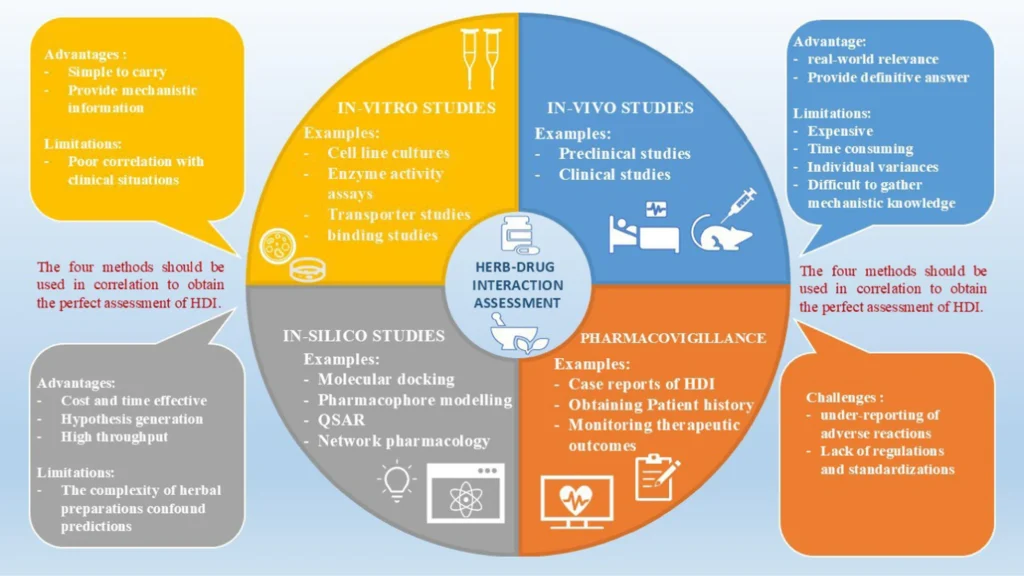
Assessment of Herbal Interactions
Understanding Synergy in Herbal Cancer Treatment
As Buckminster Fuller observed in 1968, “Universe is synergetic. Life is synergetic.“3 This profound insight particularly applies to herbal medicine, where synergy—the cooperative interaction producing effects greater than individual components—offers promising pathways for enhancing conventional cancer treatments.
Defining Synergy in Medicine
Synergy, from the Greek “synergos” meaning “working together,” occurs when two or more therapeutic agents combine to create enhanced healing effects.4 The McGraw-Hill Concise Dictionary of Modern Medicine describes this as “the cooperative interaction between components of a system, producing combined effects greater than the sum of each part.”
In cancer treatment, this principle becomes particularly relevant when considering how herbal medicines might work alongside conventional therapies. Rather than competing with standard treatments, certain herbs can potentially enhance their effectiveness while reducing side effects.
Herbal Synergy in Cancer Care
Mosby’s Dictionary of Complementary and Alternative Medicine specifically addresses herbal synergy, defining it as the combined effects of whole plant medicines that create “new and different effects than individual components.” 5 This whole-plant approach contrasts with isolating single active compounds, suggesting that nature’s complexity offers therapeutic advantages.
The mathematical framework for understanding these interactions comes from pioneering researchers like Berenbaum, whose isobole method provides quantitative measures of synergistic effects.6, 7 Additional methodologies, including Loewe’s isobologram method, 8 Webb’s fractional product method, 9 and the Chou-Talalay combination index, help researchers evaluate when herbal medicines truly enhance conventional cancer treatments versus merely adding effects. 10
St. John’s Wort (Hypericum perforatum)
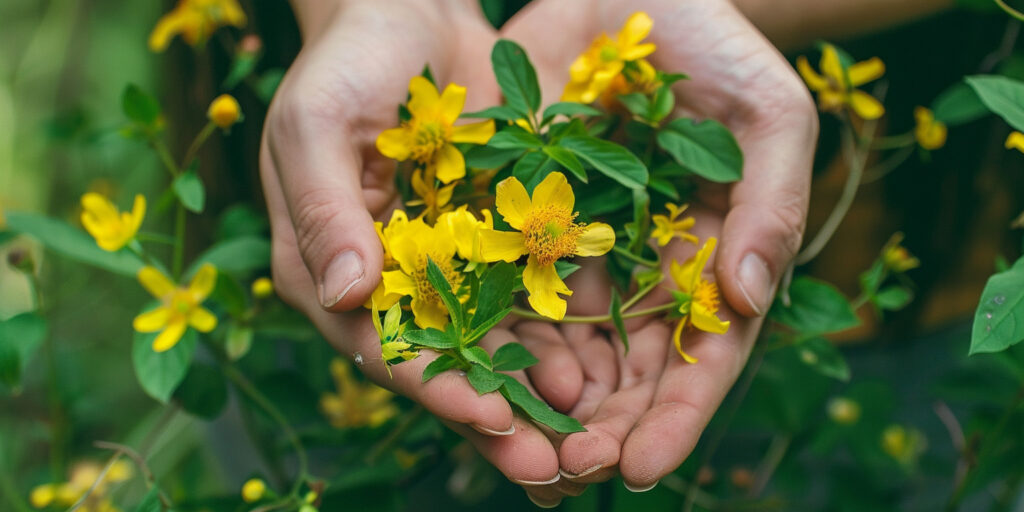
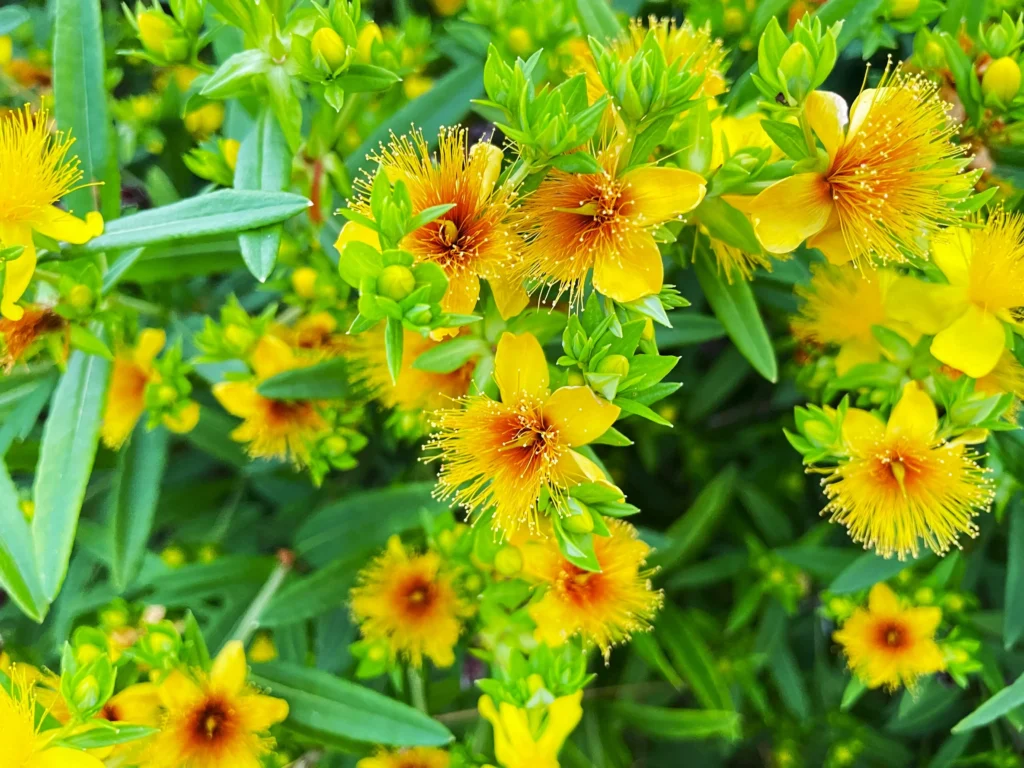
Hypericum perforatum, commonly known as St. John’s wort (SJW), has been utilized in traditional medicine for centuries to treat various conditions, particularly depressive disorders.11 Named for its characteristic blooming period around the feast day of John the Baptist (June 24th), this plant grows prolifically throughout southern Oregon, especially along roadsides and in meadows. The bright yellow, five-petaled flowers resemble a halo, and when pressed, release a crimson liquid that early Christians interpreted as symbolizing the spilled blood of their beloved St. John.
As a cornerstone of herbal healing traditions, SJW continues to play a prominent role in contemporary botanical medicine. I often characterize this herb as a “neurological adaptogen”—a natural stress-reliever and mood balancer.12
Beyond its modern applications, I employ SJW based on traditional uses including nerve tissue regeneration, neuroprotection, and pain relief. As a neurological restorative agent, St. John’s wort ranks among the most effective treatments for nerve damage. Today, St. John’s wort extract (SJWE) is widely used for mild to moderate depression, functioning energetically to restore and uplift the “Vital Spirit” while clearing hepatic heat and toxins. Topically, I frequently employ hypericum oil combined with other herbs and essential oils for various applications, including neuropathy treatment.
I did a blog post on St. John’s wort and depression several years ago that you may want to review entitled:
“Antidepressants May Be No More Effective Than Placebo: But What About St. John’s Wort and Other Herbal Medicines?” (July 12, 2021)
I also did a blog specifically on St. John’s wort’s anticancer actions entitled:
“St. John’s Wort: An Ally Against Cancer” ( May 2, 2013)
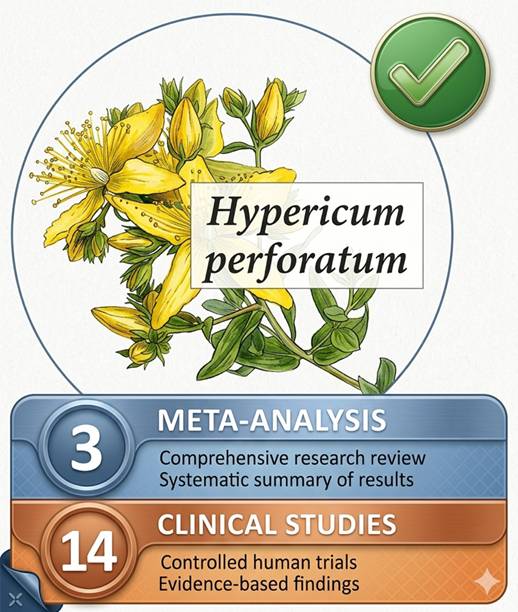
In an era where conventional antidepressants dominate the treatment landscape, a humble yellow flower continues to demonstrate remarkable therapeutic potential. St. John’s Wort (Hypericum perforatum) has emerged from centuries of traditional use to become one of the most researched botanical medicines for mood support—and the science is compelling.
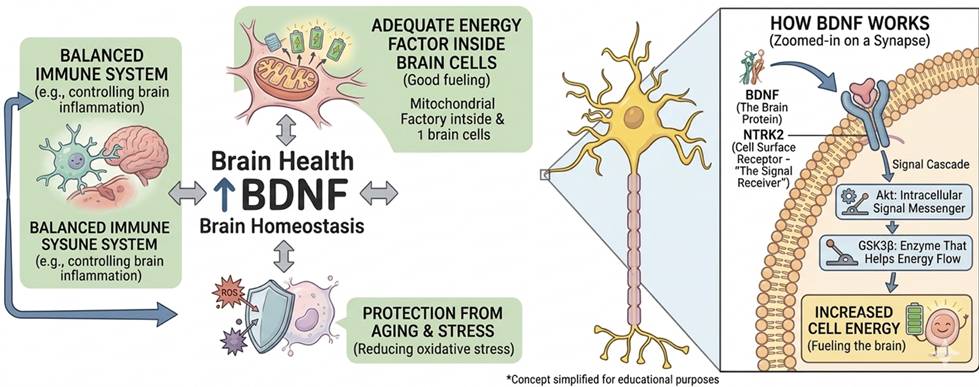
Hypericum perforatum has shown clinically significant benefits on depression-related outcomes. Hyperforin and hypericin, are proposed to induce a dualistic modulation of the activity of cholinergic signaling and increase brain-derived neurotrophic factor (BDNF) or activate its signaling pathway.
BDNF is a protein that supports the survival, growth, and differentiation of neurons in the brain and spinal cord.
The volume of clinical research and meta-analytic data reinforces the fact that Hypericum perforatum is probably the most studied, safe, and effective, adaptogenic herbal extract that might be recommended to practitioners as part of an integral clinical treatment to reduce depressive symptoms.13
The Research Speaks Volumes: Clinical Efficacy Profile – Highly Effective for Mild to Moderate depression
A recent comprehensive meta-analysis of 14 randomized clinical trials involving 2,270 depression patients published between 2000 and 2022 revealed something remarkable: St. John’s Wort extract was highly effective at reducing depression according to the Hamilton Depression Rating Scale, while demonstrating fewer risks and side effects than conventional SSRIs.14
This isn’t just another “natural alternative” story—this is evidence-based medicine at work.
According to the 2008 Cochrane report on major depression, available evidence indicates that hypericum extracts: (a) demonstrate superiority over placebo in patients with major depression, (b) show similar effectiveness to standard antidepressants, and (c) produce fewer side effects than conventional antidepressants.15
A one-year safety study of 440 outpatients with mild to moderate depression found that St. John’s wort extract Ze 117 (500 mg daily) is both safe and effective for long-term treatment. While 49% of patients reported adverse events, only 6% were treatment-related, primarily involving gastrointestinal and skin complaints.
The study showed no safety concerns across age groups or changes in clinical chemistry, ECG, or Body Mass Index over the treatment period. Depression scores improved significantly, with HAM-D scores dropping from 20.58 to 11.18 and CGI scores decreasing from 3.99 to 2.19 by week 52, suggesting Ze 117 is suitable for relapse prevention in depression treatment.16
A meta-analysis examined 14 clinical trials involving 2,270 depression patients to compare the effectiveness of St. John’s wort (SJW) extract against SSRIs and placebo treatments. The research found that SJW demonstrated significant therapeutic benefits, with a pooled odds ratio of 2.44 (95% CI: 1.33-4.45, p = 0.004). Notably, SJW not only reduced depressive symptoms as measured by Hamilton Depression Rating Scale scores, but also showed fewer side effects compared to conventional SSRI medications. These findings suggest that St. John’s wort may serve as a viable alternative treatment option for adults with depression, offering comparable efficacy with improved safety profiles.17
A review study that analyzed 34 controlled, double-blind clinical trials involving approximately 3,000 patients with mild to moderate depression, was conducted through spring 2002.
Extract Types & Dosages:
- 50-60% ethanol extracts: 300-1050 mg daily (10 studies)
- 80% methanol extracts: 450-1200 mg daily (12 studies)
Efficacy Results:
- All 5 placebo-controlled studies with ethanol extracts showed Hypericum significantly superior to placebo
- 4 out of 6 placebo-controlled studies with methanol extracts demonstrated significant superiority over placebo
- Performance matched or exceeded synthetic antidepressants (imipramine, fluoxetine) in most comparisons
Clinical Recommendations:
- Threshold dose: ~300 mg daily for symptom relief
- Therapeutic dose: 500-900 mg daily for medical treatment
St John’s Wort extracts demonstrate clinically significant antidepressant effects in mild to moderate depression, with efficacy comparable to conventional treatments and superior safety profiles.18
An Iranian randomized controlled trial examined the effectiveness of St. John’s wort in treating menopausal symptoms and depression in postmenopausal women. The study involved 80 women aged 45-60, with participants receiving either St. John’s wort extract (270-330 μg three times daily) or placebo for two months.
The results were compelling: women taking St. John’s wort experienced significant reductions in hot flash frequency and intensity, overall menopausal symptoms (measured by the Kupperman scale), and depression scores compared to the placebo group. Most notably, 80% of women in the treatment group were depression-free by the end of the study, compared to only 5.7% in the control group.
This research adds to the growing body of evidence supporting St. John’s wort as a natural alternative for managing common postmenopausal challenges, offering hope for women seeking non-pharmaceutical treatment options for hot flashes and mood-related symptoms during this life transition.19
How St. John’s Wort Might Work Through Your Gut Bacteria
Scientists are discovering that the bacteria living in our intestines play a surprising role in mental health, including depression. This raises an important question: could natural antidepressants like St. John’s Wort work partly by affecting these gut bacteria?
To find out, researchers tested a clinically-proven St. John’s wort extract by simulating what happens when it travels through the digestive system. They used gut bacteria samples from ten healthy volunteers to capture the natural variety in people’s microbiomes.
The results were striking. While the extract remained largely unchanged in the stomach and small intestine, the bacteria in the large intestine dramatically transformed it. Some compounds stayed stable, but others were quickly converted into new forms—suggesting these original compounds might work like “inactive ingredients” that become active only after gut bacteria modify them.
This transformation created several new compounds that are known to help the gut communicate with the brain. Even more interesting, the St. John’s wort extract changed the composition of the gut bacteria themselves, particularly increasing types of bacteria that tend to be lower in people with depression.
This research suggests that St. John’s wort may work as an antidepressant not just through direct brain effects, but also by positively influencing the complex conversation between our gut bacteria and our brain—opening up new possibilities for understanding natural treatments for depression. 20
Conclusion
The story of St. John’s Wort is emblematic of the broader conversation around herbal medicine and its place in healthcare today. While conventional medicine often emphasizes caution—sometimes to the point of alarmism—regarding herb-drug interactions, the scientific literature increasingly points to a more nuanced reality: that synergy, not danger, is often the dominant theme when herbs are used with discernment. St. John’s Wort exemplifies this principle, demonstrating robust clinical efficacy, especially in treating mild to moderate depression, with a safety profile superior to many pharmaceutical alternatives.
Moreover, emerging research on the gut-brain axis and the microbiome reveals that this humble plant may exert far-reaching effects beyond what we once imagined. Rather than being dismissed as risky or unscientific, botanical medicines like St. John’s Wort deserve to be studied and applied within a harmonious framework—one that respects both tradition and evidence. As part of a personalized, systems-based approach such as that employed in Mederi Care, herbs can enhance the efficacy of conventional treatments, reduce side effects, and support the body’s innate healing intelligence.
In Part 2, we will discuss St John’s Wort and drug interactions more in depth as well as SJW applications in cancer treatment studies.

- Smith-Bindman R, et al. Projected Lifetime Cancer Risks From Current Computed Tomography Imaging. JAMA Internal Medicine (2025). DOI: 10.1001/jamainternmed.2025.0505
- Czigle S, Nagy M, Mladěnka P, Tóth J; OEMONOM.. Pharmacokinetic and pharmacodynamic herb-drug interactions-part I. Herbal medicines of the central nervous system. PeerJ. 2023 Nov 15;11:e16149. doi: 10.7717/peerj.16149. PMID: 38025741; PMCID: PMC10656908.
- Buckminster Fuller R. Operating Manual for Spaceship Earth. 1st ed. Lars Muller; Baden, Switzerland: 2008. p. 152
- Tennakoon P.L.K. Master’s Thesis. University of Agriculture Sciences; Dharwad (Institute), Karnataka, India: 2007. Studies on Plant Growth Promoting Rhizomicroorganisms of Tea (Camellia sinensis (L.) kuntze) Plants.
- Jonas W.B. Mosby’s Dictionary of Complementary & Alternative Medicine. 1st ed. Elsevier Mosby; St. Louis, MO, USA: 2005.
- Berenbaum M.C. Synergy, additivism and antagonism in immunosuppression. A critical review. Clin. Exp. Immunol. 1977;28:1–18.
- Berenbaum M.C. Criteria for analyzing interactions between biologically active agents. Adv. Cancer Res. 1981;35:269–335. doi: 10.1016/s0065-230x(08)60912-4
- Loewe S. The problem of synergism and antagonism of combined drugs. Arzneimittel-Forschung. 1953;3:285–290
- Leyden Webb J. Enzyme and Metabolic Inhibitors. Academic Pres; New York, NY, USA: London, UK: 1963
- Pezzani R, Salehi B, Vitalini S, Iriti M, Zuñiga FA, Sharifi-Rad J, Martorell M, Martins N. Synergistic Effects of Plant Derivatives and Conventional Chemotherapeutic Agents: An Update on the Cancer Perspective. Medicina (Kaunas). 2019 Apr 17;55(4):110. doi: 10.3390/medicina55040110. PMID: 30999703; PMCID: PMC6524059.
- Linde K, Mulrow CD, Berner M, Egger M. St John’s wort for depression. Cochrane Database Syst Rev. 2005 Apr 18;(2):CD000448.
- Naunyn
Schmiedebergs, BMC Complementary and Alternative Medicine 2011, 11:7
http://www.biomedcentral.com/1472-6882/11/7, Arch Pharmacol. 2011 Apr;383(4):415-22. Epub 2011 Feb 19 - Sánchez IA, Cuchimba JA, Pineda MC, Argüello YP, Kočí J, Kreider RB, Petro JL, Bonilla DA. Adaptogens on Depression-Related Outcomes: A Systematic Integrative Review and Rationale of Synergism with Physical Activity. Int J Environ Res Public Health. 2023 Mar 28;20(7):5298. doi: 10.3390/ijerph20075298. PMID: 37047914; PMCID: PMC10094590.
- Zhao X, Zhang H, Wu Y , Yu C. The efcacy and safety of St. John’s wort extract indepression therapy compared to SSRIs in adults: A meta-analysis of randomized clinical trials. Adv Clin Exp Med. 2023 Feb;32(2):151-161. doi: 10.17219/acem/152942. PMID: 36226689.
- Linde K, Berner MM, Kriston L. St John’s wort for major depression. Cochrane Database Syst Rev. 2008 Oct 8;(4):CD000448.
- Brattström A. Long-term effects of St. John’s wort (Hypericum perforatum) treatment: a 1-year safety study in mild to moderate depression. Phytomedicine. 2009 Apr;16(4):277-83. doi: 10.1016/j.phymed.2008.12.023. Epub 2009 Mar 18. PMID: 19299116.
- Zhao X, Zhang H, Wu Y, Yu C. The efficacy and safety of St. John’s wort extract in depression therapy compared to SSRIs in adults: A meta-analysis of randomized clinical trials. Adv Clin Exp Med. 2023 Feb;32(2):151-161. doi: 10.17219/acem/152942. PMID: 36226689.
- Schulz V. Clinical trials with hypericum extracts in patients with depression–results, comparisons, conclusions for therapy with antidepressant drugs. Phytomedicine. 2002 Jul;9(5):468-74. doi: 10.1078/09447110260571742. PMID: 12222670.
- Eatemadnia A, Ansari S, Abedi P, Najar S. The effect of Hypericum perforatum on postmenopausal symptoms and depression: A randomized controlled trial, Complement Ther Med. 2019 Aug;45:109-113. doi: 10.1016/j.ctim.2019.05.028. Epub 2019 May 31.
- Grafakou ME, Pferschy-Wenzig EM, Aziz-Kalbhenn H, Kelber O, Moissl-Eichinger C, Bauer R. Bidirectional interactions between St. John´s wort and gut microbiome: Potential implications on gut-brain-axis. Biomed Pharmacother. 2025 Jun;187:118111. doi: 10.1016/j.biopha.2025.118111. Epub 2025 May 5. PMID: 40327993.