
Key takeaways
- Peptides are short amino acid chains — roughly 2 to 100 — that act as the body’s chemical messengers. Proteins are longer chains that fold into complex structures.
- Plants have been making peptides for over 450 million years. Families such as defensins and knottins are held rigid by dense networks of internal disulfide bonds.
- Digestion is the real hurdle. Stomach acid and proteases break most peptides down into amino acids before absorption, though knotted plant peptides resist heat, pH shifts and digestive enzymes in laboratory models.
- Lab results are not the same as a cup of tea. Isolated plant peptides show antimicrobial, antioxidant and signaling effects in dish and animal studies, but human clinical trials are still needed.
- Patent economics, not better evidence, drive the synthetic market. Isolated synthetic peptides offer far stronger patent exclusivity than whole-plant preparations.
- Gray-market self-injection carries real risk: manufacture outside validated GMP standards, bacterial endotoxin contamination, incorrect molecular sequences, and sub- or super-potent dosing.
Walk into almost any wellness space today—whether it is a biohacking forum, your local gym’s supplement aisle, or a wellness influencer’s social media feed—and you are guaranteed to encounter one word over and over: peptides.
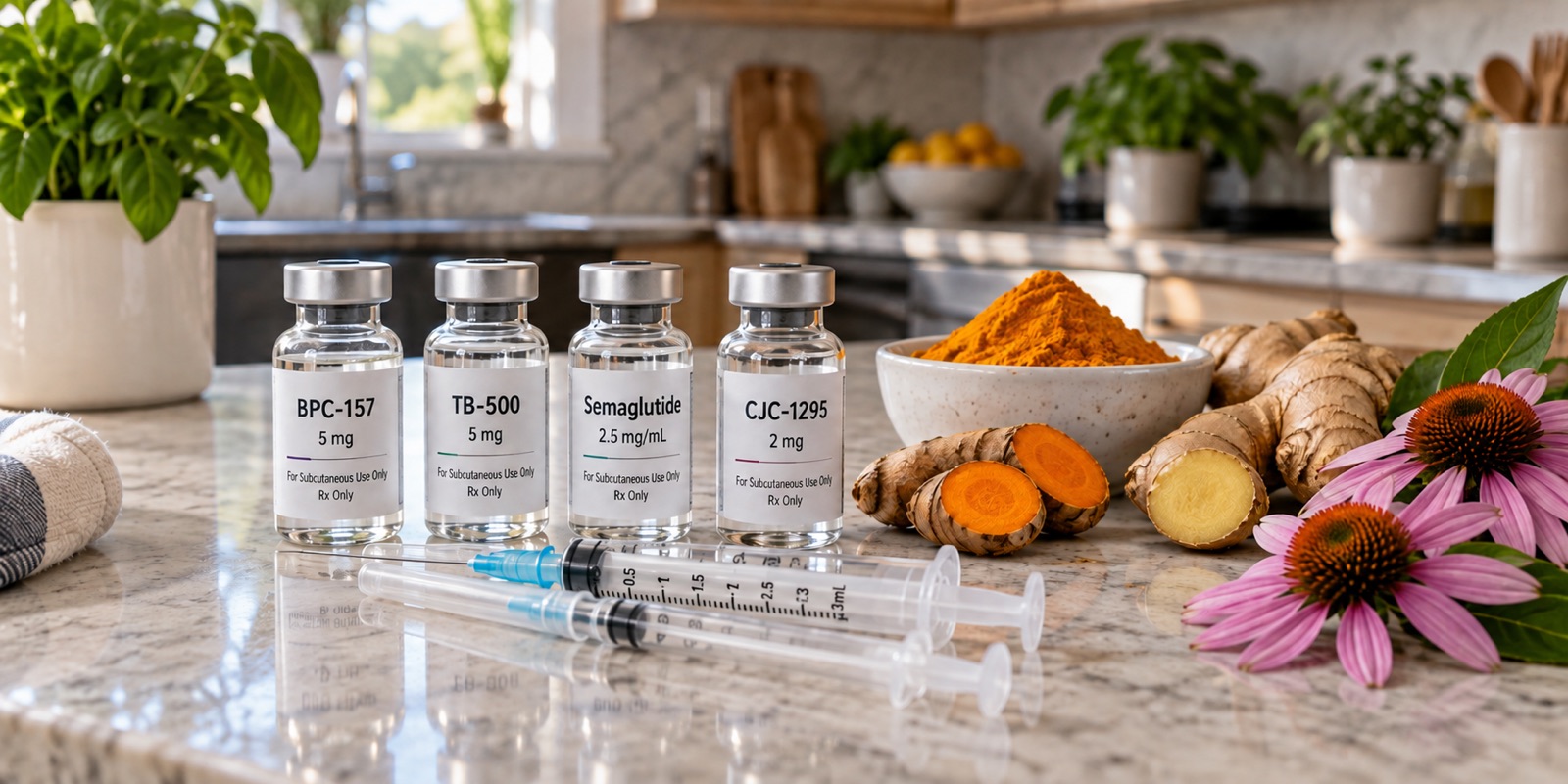
You hear about collagen peptides for glowing skin, BPC-157 for tendon and gut repair, and thymosin for immune modulation. The commercial synthetic peptide market has exploded into a multi-million-dollar industry. High-performance athletes, tech executives, and casual gym-goers alike are spending hundreds of dollars a month on lab-engineered amino acid chains, hoping to optimize everything from deep sleep to cellular longevity.
Yet, amid all the hype surrounding synthetic isolates, there is a fascinating biochemical reality that rarely makes it into biohacking podcasts: nature has been synthesizing, refining, and deploying peptides for over 450 million years.
Long before modern laboratories synthesized their first amino acid sequence, the botanical kingdom was operating the most sophisticated peptide laboratory on Earth. Familiar culinary herbs and medicinal staples—the turmeric sitting in your spice cabinet, the fresh ginger steeped in your morning tea, and the echinacea tincture on your shelf—produce an astonishing variety of structurally complex peptides. Each of these molecules has been honed through hundreds of millions of years of evolutionary adaptation.
Today, consumers are frequently told that the frontier of health lies almost exclusively in isolated molecules synthesized in sterile laboratories and supported by preliminary data. Meanwhile, the rich, evolutionary peptide architecture built right into whole plants is often overlooked.
To understand where real therapeutic value lies—and where marketing outpaces science—we need to examine what peptides actually are, how botanical peptides function, and why the current craze for unregulated synthetic injectables presents serious clinical and regulatory concerns.
What Are Peptides, Anyway? (And What Aren’t They?)
To cut through the marketing jargon, we have to start with foundational biochemistry. Peptides are short chains of amino acids, which are the fundamental building blocks of proteins.
A common question naturally follows: If both peptides and proteins are made of amino acids, what actually separates them?
In biochemistry, there is no rigid, universally agreed-upon dividing line. Peptides vs. Proteins: What’s the Difference?
Generally, peptides are shorter chains—ranging from just 2 to roughly 100 amino acids linked together by peptide bonds. Proteins, by contrast, are typically much longer, higher-molecular-weight polymers that fold into complex three-dimensional structures to perform structural, transport, and enzymatic work. If proteins are complex novels, peptides are compact, focused short stories.
The Biological Pathway
To see how they fit together in the body, follow the progression from basic building blocks to complex machinery:
- Amino Acids — the building blocksThe fundamental units that join together.
- Peptides — chemical messengersShort chains acting as fast-acting signals and regulators.
- Proteins — structural & enzymatic workhorsesLarge, folded structures executing complex biological tasks.
What Do Peptides Actually Do?
In your body, peptides act like precision text messages and master switches. They help coordinate vital tasks like:
- Cell Chat: Helping your cells talk to each other.
- Energy Balance: Managing your metabolism and blood sugar levels.
- Healing: Calming inflammation and helping tissue repair.
- Body Balance: Supporting your immune system and fine-tuning hormones.
Take insulin as the gold standard of peptide medicine. Insulin is a 51-amino-acid peptide hormone that instructs muscle and adipose cells to absorb glucose from the bloodstream while signaling the liver to store glycogen. We understand insulin’s exact dosing, side-effect profile, and therapeutic window because it has undergone over a century of laboratory investigation, extensive animal models, and rigorous human clinical trials, culminating in thorough FDA review and standardized pharmaceutical manufacturing.
Lab-synthesized pharmaceuticals, however, are only one part of the broader peptide landscape.
How Plants Became Peptide Masters
Imagine being a plant. You are rooted to a single spot for your entire life cycle. You cannot run from herbivores, migrate away from a fungal spore cloud, or escape bacterial pathogens in the soil. When an environmental stressor or pathogen arrives, you have one primary defense mechanism: biochemistry.
Over 450 million years of evolutionary pressure, plants developed sophisticated chemical signaling and defense networks. Central to these networks are specialized plant peptides.
According to researchers at KU Leuven and Ghent University who mapped the plant peptide landscape, these molecules “fulfill diverse roles in plant growth, development, reproduction, and defense responses.” Far from being inert byproducts, peptides are vital to botanical survival.
Major Plant Peptide Families
| Family | Primary Biological Function |
|---|---|
| RALF Peptides | Rapid alkalinization factors; coordinate stress responses and growth. |
| CLE Peptides | Regulate stem cell differentiation and developmental signaling. |
| Plant Defensins (PDFs) | Act as potent antimicrobial and antifungal defense molecules. |
| Knottin Peptides | Structurally reinforced with disulfide knots, offering exceptional thermal and enzymatic stability. |
| HEVEIN-like Peptides | Bind to chitin in fungal cell walls to disrupt and neutralize invading pathogens. |
Compared with peptides of animal or microbial origin, plant peptides stand out for their abundance in sustainable botanical sources, generally low allergenic potential, and distinctive structural traits—such as enrichment in hydrophobic and aromatic residues.
As noted in a landmark review, “the total number of peptides in plants as well as the diversity of various peptide types is underestimated” (Tavormina et al., 2015). We are only scratching the surface of what the plant peptidome contains.
Consider plant defensins and knottins. These compact peptides are stabilized by dense networks of internal disulfide bonds—chemical bridges that tie the amino acid sequence into a rigid, structural “knot.” In the plant, defensins target invading fungi by binding to specific lipids in fungal membranes and disrupting cellular integrity. When an insect damages a leaf, systemic stress-response peptides trigger alarm signals across the entire plant, prompting distant tissues to synthesize defensive secondary metabolites.
The Digestion Hurdle: What Happens When You Ingest Plant Peptides?
A central question in pharmacology and nutrition is: If you consume these peptides in food or herbal preparations, do they actually survive human digestion?
In general, the human gastrointestinal tract is designed to break down proteins and peptides. Stomach acid (hydrochloric acid) denatures folded chains, while digestive proteases like pepsin, trypsin, and chymotrypsin cleave peptide bonds, reducing most proteins to single amino acids, dipeptides, and tripeptides before absorption.
What Happens to Plant Peptides When You Eat Them?
When you consume plant peptides, they face the digestive system and split into two distinct pathways depending on their structure:
1. The Standard Digestion Path (Nutritional Building Blocks)
- Stomach Breakdown: Stomach acid and digestive enzymes (proteases) break down standard peptides.
- The Result: They are cleaved into amino acids and dipeptides that serve as basic nutritional building blocks.
- Bioactive Effects: This process can yield bioactive hydrolysates and cryptides that show interesting physiological effects in early research.
2. The Resistant Path (Built to Survive)
However, the reality of botanical peptides is a bit more nuanced:
- Built to Survive: Thanks to tight molecular knots, certain plant peptides (like knottins and defensins) can withstand high heat, shifting pH levels, and digestive juices in laboratory models.
- Action in the Gut: Even when larger plant proteins get partially broken down, the leftover fragments—often called cryptides—can still interact with local gut receptors and influence your microbiome.
- Context Matters: Whether an intact plant peptide actually reaches systemic circulation depends heavily on its unique structure, how the food or herb was prepared, and individual digestion.
While laboratory studies show exciting antimicrobial, antioxidant, and signaling effects for isolated plant peptides, we have to keep a balanced perspective: lab dish and animal studies don’t prove that drinking an herbal tea delivers active peptides straight to your joints or bloodstream. Botanical peptides are a fascinating frontier in nutrition science, but they operate through complex pathways that still need to be verified in human clinical trials.
Whole-Plant Complexity: The Orchestra vs. The Soloist
When modern pharmaceutical or supplement developers identify a bioactive peptide in a botanical source, standard protocol is to isolate that single sequence, synthesize it in high concentrations, and evaluate it as a standalone compound.
These companion compounds do not sit idle. In botanical chemistry, secondary metabolites frequently act in concert: some enhance compound solubility, others delay enzymatic degradation, and others modulate cellular pathways simultaneously.
Traditional Use as an Empirical Guide
Humans have consumed culinary and medicinal plants for thousands of years. This long history of traditional use provides valuable empirical observations regarding safety, general tolerability, and preparation methods.
However, traditional use is a guide for hypothesis generation, not a substitute for modern clinical trials. Traditional lore cannot definitively establish pharmacokinetic parameters, precise receptor binding, or therapeutic efficacy for complex modern diseases. True scientific progress requires combining traditional botanical knowledge with rigorous clinical validation.
The Economic Reality: Why Synthetic Isolates Dominate the Market
If plants contain such rich peptide chemistry, why does the biohacking industry focus almost exclusively on synthetic, injectable products?
The answer lies primarily in intellectual property and commercial incentives, which shape how products are developed and marketed:
Comparison: Whole Plants vs. Synthetic Peptides
| Feature | Whole Plants / Foods | Synthetic Peptides / Isolates |
|---|---|---|
| Intellectual Property | Naturally occurring; difficult to patent. | Novel synthetic sequences or delivery mechanisms can be patented. |
| Commercial Margins | Modest commercial margins for standard extracts. | High margins support extensive influencer marketing, telehealth clinics, and markups. |
| Research & Funding | Researched primarily via academic and public grants. | Driven by venture capital, compounding labs, and direct-to-consumer advertising. |
While standardized herbal preparations and proprietary extracts can be patented and commercialized, isolated synthetic peptides offer significantly stronger patent exclusivity. This economic engine drives aggressive marketing campaigns, podcast sponsorships, and private longevity clinics—leaving whole-food botanical research comparatively under-represented in popular media.
The Rise of the Gray Market and Self-Injection Risks
This commercial enthusiasm has created a volatile consumer environment. In the mid-2010s, synthetic peptide experimentation began in niche bodybuilding forums for muscle growth and injury recovery. It quickly migrated into the mainstream biohacking community:
Dave Asprey: By now, you’ve probably heard of peptides. They’ve been a part of my biohacking practice for a long time.
The craze accelerated dramatically following the public emergence of GLP-1 receptor agonists (such as semaglutide and tirzepatide). The legitimate success of these FDA-approved diabetes and obesity medications led many consumers to believe that all peptides were miracle solutions for weight loss, tissue repair, and anti-aging.
The Unregulated Supply Chain of Wellness Peptides
When standard clinical channels restricted access to unapproved peptide compounds—particularly after the FDA raised safety and manufacturing concerns regarding compounded peptides in 2023—a sprawling gray market emerged to meet consumer demand.
Step-by-Step Supply Chain
- Step 1: Overseas Chemical Synthesis
- Production occurs overseas with variable quality control.
- Step 2: Online Sales
- Products are sold online as “Research Chemicals / Not for Human Use”.
- Step 3: Direct Shipping
- Items are shipped as lyophilized powders directly to consumers.
- Step 4: Home Reconstitution
- The consumer reconstitutes the powder with bacteriostatic water at home.
- Step 5: Administration
- Involves unsupervised subcutaneous injection into the body.
Instead of relying on dietary sources or supervised, approved prescriptions, individuals began buying vials of unverified white powder online, reconstituting them with bacteriostatic water at home, and self-injecting them subcutaneously.
The medical risks here are profound. Many of these products are manufactured in facilities without validated Good Manufacturing Practice (GMP) standards, creating real risks of:
- Chemical impurities and incorrect molecular sequences
- Bacterial endotoxin contamination
- Sub-potent or super-potent dosing
- Unknown long-term immunogenic reactions
For comparison, consider standard pharmaceutical development: FDA-approved drugs and widely distributed vaccines undergo massive, multi-phase clinical trials involving tens of thousands of participants and oversight by independent safety monitoring boards. It is a striking contradiction that consumers who express deep skepticism toward thoroughly tested, FDA-approved pharmaceuticals are often willing to inject unverified research chemicals purchased from unregulated websites.
Celebrity Endorsements and the Evidence Gap
Social media and high-profile podcasts have played a major role in normalizing unapproved peptide use, often outpacing the underlying clinical evidence :
Jenny McCarthy: I’ve been enjoying my peptides.Podcaster: What is your stack of peptides?Josh Duhamel: NAD [nicotinamide adenine dinucleotide], ipamorelin, and tesamorelin—the Wolverine stack. And I’ll tell you exactly what’s in it. I can never remember.Hailey Bieber: I love peptides.Jeremy Renner: BPC-157, MOTS-c…Podcaster 2: I love MOTS-c. MOTS-c is great.
When unstudied or preclinical molecules are promoted through celebrity testimonials, it creates an uphill battle for evidence-based medicine. This tension was highlighted during a national broadcast on Fox News:
Fox News Host: A lot of people talk about injectable peptides.Dr. Varshavski: They make promises like faster muscle healing, tendon repair, gut health rejuvenation, but we don’t have the evidence to say that actually works.
The medical critique is straightforward: we need rigorous human data. If a specific synthetic or botanical peptide proves safe, stable, and effective in well-controlled human clinical trials for a defined medical condition, it should be welcomed into clinical practice. But marketing a compound as a proven therapeutic before completing those trials puts consumer health at risk.
The Regulatory Battleground: RFK Jr., the PCAC, and the 503A Loophole
The debate surrounding peptides has moved directly into federal health policy. Robert F. Kennedy Jr., prior to becoming HHS Secretary, publicly advocated for broader access to peptides based on his personal use:
Robert F. Kennedy Jr.: I’m a big fan of peptides. I’ve used them myself and used them with really good effect.
Following these high-level discussions, the Pharmacy Compounding Advisory Committee (PCAC)—the advisory panel that counsels the FDA on compounded therapeutics—convened to re-evaluate specific peptides:
PCAC Member: Good morning, everybody. It’s 8:00 a.m., so let’s get going. Welcome.
The PCAC was not evaluating whether peptides like BPC-157 or TB-500 should receive formal FDA drug approval. Rather, the question was whether these substances should be added to the FDA’s 503A bulks list.
Section 503A of the Federal Food, Drug, and Cosmetic Act allows licensed compounding pharmacies to use certain bulk drug substances to prepare customized medications for individual patients when an approved commercial drug cannot meet their medical needs (such as removing a preservative for an allergic patient or compounding a liquid form for someone unable to swallow pills).
Inclusion on the 503A bulks list is not an FDA endorsement of safety or clinical efficacy. Using the 503A bulks list to distribute unapproved, mass-marketed wellness peptides bypasses the essential clinical trial process that protects public health.
Conclusion: Balancing Botanical Science with Clinical Discipline
Peptide science sits at an important crossroads.
On one side is the synthetic wellness trend—an industry full of theoretical promise, but currently compromised by gray-market distribution, unverified injectable compounds, celebrity hype, and regulatory shortcuts.
On the other side is the natural peptide library found in culinary and medicinal plants. Over hundreds of millions of years, plants have developed complex, structurally resilient peptide families like defensins and knottins. When consumed as part of a varied diet and sensible botanical use, these whole plants offer a complex array of peptides, polyphenols, and companion metabolites that work together within natural biological systems.
Moving forward responsibly requires a commitment to two clear principles:
- Recognize the biochemical sophistication of whole foods and herbs. We should continue researching plant peptides and whole-food matrices to understand how evolutionary chemistry supports human physiology.
- Demand rigorous clinical evidence. We should insist that any therapeutic compound—whether isolated from a plant or synthesized in a laboratory—demonstrate its safety, bioavailability, and clinical efficacy in well-designed human trials before it is recommended or injected.
You do not need to buy unverified research chemicals online to benefit from peptide biology. The world of peptides is already part of our daily lives—hiding in plain sight within the foods, culinary herbs, and botanical traditions that have sustained human health for generations.
I have spent my adult life providing herbal medicine as the root to health and healing, and I will continue to bear witness to the great miracles I see and my enduring love for God’s pharmacy in the plant world.
Frequently asked questions
What is a peptide, and how is it different from a protein?
Peptides are short chains of amino acids, generally from 2 to roughly 100, linked by peptide bonds. Proteins are much longer, higher-molecular-weight polymers that fold into complex three-dimensional structures to do structural, transport and enzymatic work. There is no rigid, universally agreed dividing line between the two.
Do plants contain peptides?
Yes. Plants produce a wide range of structurally complex peptides, including defensin and knottin families stabilised by internal disulfide bonds. These molecules serve plant growth, development, reproduction and defense — for example, defensins disrupt fungal membranes, and stress-response peptides signal alarm across the plant when a leaf is damaged.
Do plant peptides survive human digestion?
Most do not reach circulation intact. Stomach acid denatures folded chains and proteases such as pepsin, trypsin and chymotrypsin cleave peptide bonds down to amino acids and di- and tripeptides. Some tightly knotted plant peptides withstand heat, pH shifts and digestive juices in laboratory models, and partially broken fragments called cryptides can still interact with gut receptors and the microbiome. Whether an intact peptide reaches systemic circulation depends on its structure, how the food or herb was prepared, and individual digestion.
Why does the supplement industry focus on synthetic peptides?
Largely intellectual property. While standardised herbal preparations can be patented, isolated synthetic peptides offer significantly stronger patent exclusivity. That economic incentive funds marketing campaigns, podcast sponsorships and longevity clinics, leaving whole-food botanical research comparatively under-represented in popular media.
What are the risks of gray-market peptide injections?
Many gray-market products are made in facilities without validated Good Manufacturing Practice standards. The documented risks include chemical impurities and incorrect molecular sequences, bacterial endotoxin contamination, sub-potent or super-potent dosing, and unknown long-term immunogenic reactions. Products are commonly sold as “research chemicals, not for human use” and reconstituted and injected at home without supervision.
Does inclusion on the FDA’s 503A bulks list mean a peptide is approved?
No. Section 503A allows licensed compounding pharmacies to prepare customised medications for individual patients when an approved commercial drug cannot meet their needs. Inclusion on the bulks list is not an FDA endorsement of safety or clinical efficacy, and it is not the same as formal drug approval.







One Response
Thanks so much for this concise article(as usual!). I have been trying to to get this information across to clients ever since this craze started. I would love to share this as much as possible.
I see you didn’t post it on LinkedIn or anywhere else I can see (and share). This information needs to get out there!!
💚Anne