


Pterocarpus marsupium (P. marsupium) is an important medicinal plant belonging to the Fabaceae (bean and pea) family and is commonly called Indian Kino tree, Bijasal, Venga, or Vijayasara. It is a large deciduous tree widely distributed in the central, western, and southern regions of India. It is known in Hindi as Vijaysar and is a significant medicinal plant used as a folk medicine to treat diabetes. Because of its therapeutic and laxative effects, it is well-known in the Ayurvedic system of medicine.
Traditional Uses in Medicine
P. marsupium is commonly used in Ayurveda, Homeopathy, and Unani (Persian) systems of medicine. Traditionally, this plant has been used to treat a wide variety of health conditions, including diarrhea, toothache, fever, urinary tract and skin infections, rheumatoid arthritis, gout, diabetic anemia, indigestion, asthma, cough, discoloration of hair, bronchitis, ophthalmic complications, elephantiasis, and erysipelas.
Active Compounds
Pterocarpus is a rich source of tannins, flavonoids, and other polyphenolic compounds, contributing to its traditional use as an astringent, anodyne, cooling, and tissue-regenerating agent. Its phytochemical constituents include pterosupin, marsupin, pterostilbene, epicatechin, liquiritigenin, isoliquiritigenin, kinoin, kinotannic acid, kino-red, β-eudesmol, carsupin, marsupol, and marsupinol, as well as glycosides such as pteroside and pteroisoauroside. These diverse constituents contribute to the plant’s pharmacological properties and underlie many of its traditionally recognized therapeutic effects.
Pterostilbene is a natural stilbene compound closely related to resveratrol, often highlighted for its superior bioavailability and promising health-promoting potential. P. marsupium extract demonstrates several distinctive properties, which include beta-cell-protective and regenerative properties as well as blood-glucose-lowering activity. The Pterocarpus marsupium extract I use is standardized to a minimum of 5% pterostilbene.
What Are Stilbenes?
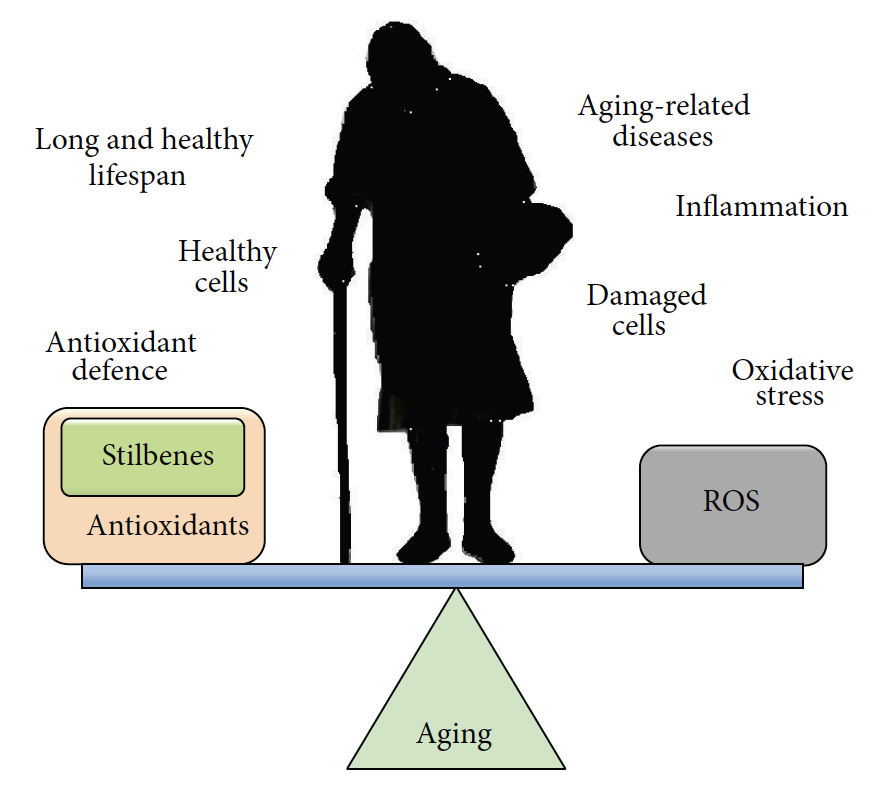
Stilbenes are a family of natural defense polyphenols widely distributed throughout the plant kingdom. Resveratrol, for example, is found in small fruits such as grapes and Vaccinium berries, peanuts, and Polygonum species, while related stilbene compounds occur in various other foods and medicinal plants. Plants biosynthesize these secondary metabolites as phytoalexins—protective compounds that accumulate in response to biotic stress (such as fungal infections) and abiotic stress (including UV radiation, physical injury, and chemical exposure like hydrogen peroxide).1
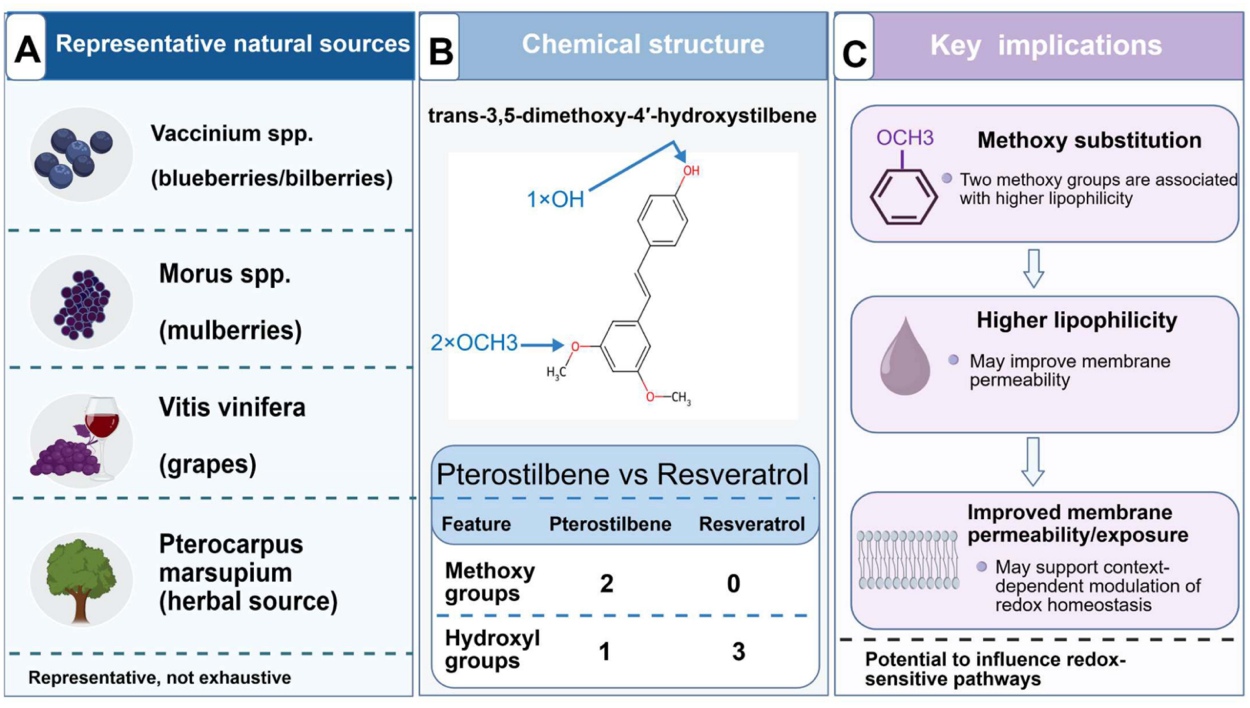
Representative natural sources, chemical structure, and pharmacokinetic implications of pterostilbene. This figure summarizes representative natural sources and structural features of pterostilbene. (A) shows selected plant sources in which pterostilbene has been reported, including Vaccinium spp. (blueberries/bilberries), Morus spp. (mulberries), Vitis vinifera (grapes), and Pterocarpus marsupium; these examples are representative and not exhaustive. (B) illustrates the chemical structure of pterostilbene, trans-3,5-dimethoxy-4′-hydroxystilbene, and compares key structural features with resveratrol. Compared with resveratrol, pterostilbene contains two methoxy groups and one phenolic hydroxyl group, a structural pattern associated with increased lipophilicity and altered pharmacokinetic behavior. (C) summarizes the main implication of methoxy substitution: higher lipophilicity may improve membrane permeability and systemic exposure, thereby supporting context-dependent modulation of redox-sensitive pathways. Figure artwork was created with BioGDP.com under academic license.2
In medicinal chemistry, stilbenes are frequently described as “privileged structures”—molecular frameworks capable of binding to multiple distinct protein and receptor targets. This versatility allows stilbenes to elicit diverse biological responses and interact with complex biochemical pathways.3
By engaging these multi-target pathways, stilbenes help support self-regulating internal cellular networks, reinforcing adaptive signaling mechanisms and helping cells maintain homeostasis under stress.
Pterostilbene influences several key processes related to cellular stress and balance, including activating antioxidant defenses (through the Nrf2 pathway), calming inflammation tied to cellular stress, managing stress in cellular energy centers (mitochondria), regulating metabolism, and controlling cell death pathways. Evidence from models of osteoarthritis, neurodegenerative diseases, cognitive dysfunction, tissue damage from blocked and restored blood flow (ischemia–reperfusion injury), metabolic diseases, and cancer shows that its effects vary widely depending on the disease. In non-cancerous degenerative, blood-flow, and metabolic conditions, pterostilbene generally protects tissues by lowering markers of oxidative stress, inflammation, and cellular injury. In contrast, in certain cancer models, it can disrupt the stress defenses tumor cells use to survive and trigger forms of programmed cell death.4
Following its traditional uses, many bioactive compounds have been isolated from P. marsupium and have been found to have potential health benefits. Numerous studies have been conducted on PM to understand its diverse biological activities. Various biological activities of P. marsupium are described below.
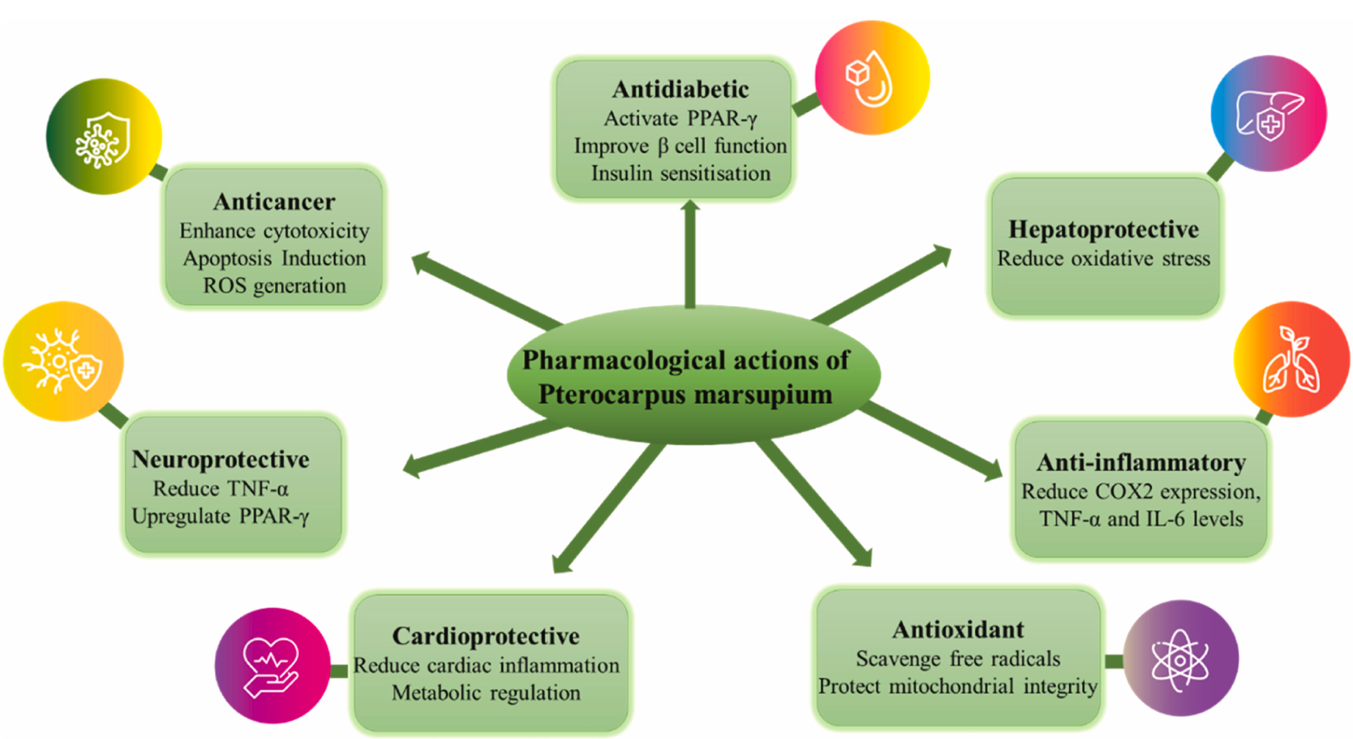
Pharmacological benefits of P. marsupium: therapeutic properties and corresponding molecular targets.
Conceptual framework linking pterostilbene-associated redox-related processes, disease contexts, and representative experimental readouts
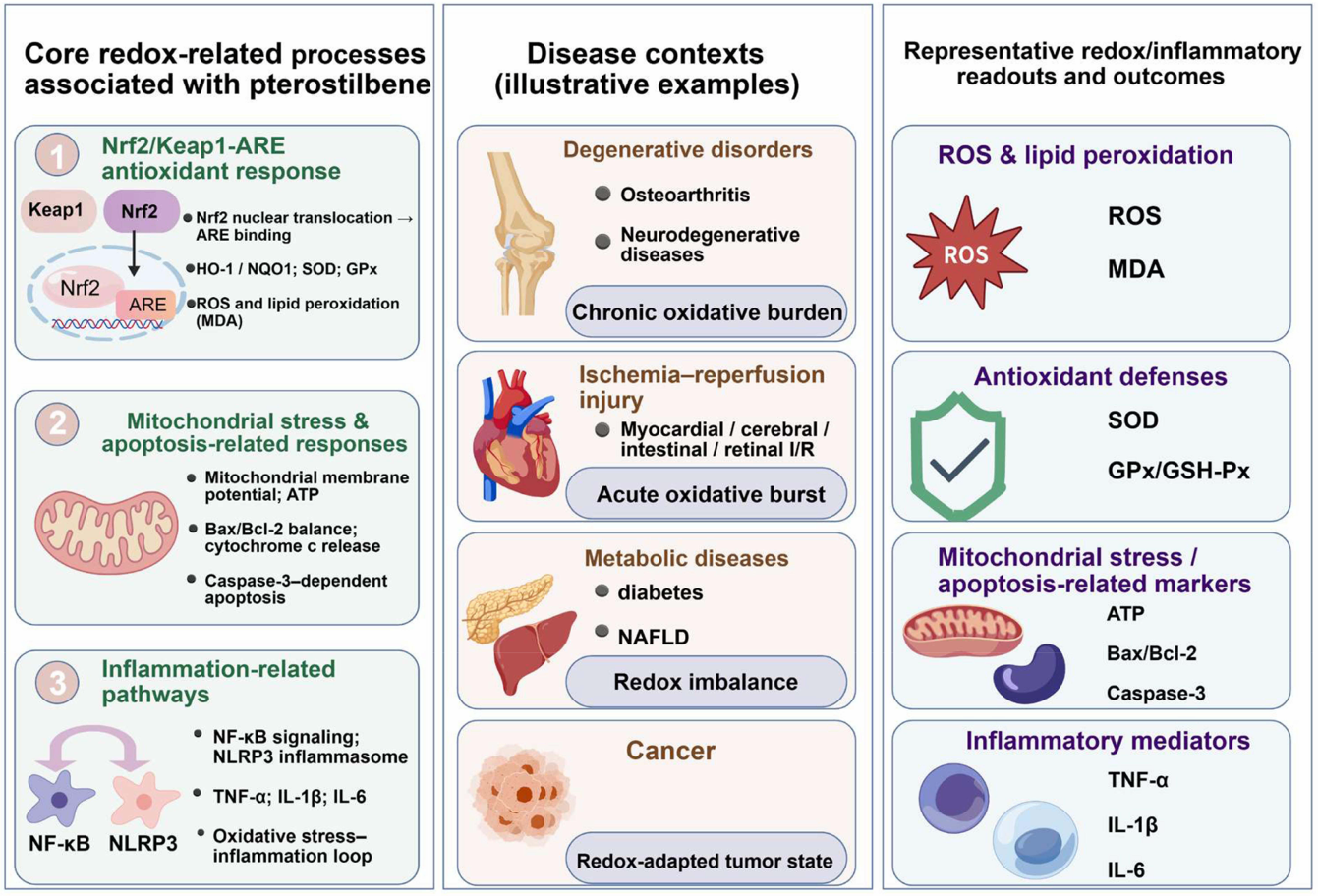
This figure provides an overview of the redox homeostasis-centered framework used in this review. The left panel summarizes major redox-related processes associated with pterostilbene in preclinical studies, including Nrf2/Keap1–ARE-related antioxidant responses, mitochondria-associated stress and apoptosis-related responses, and inflammation-related pathways such as NF-κB signaling and NLRP3 inflammasome activation.
The middle panel illustrates representative disease contexts discussed in the review, including chronic degenerative disorders such as osteoarthritis and neurodegenerative diseases, ischemia–reperfusion injury involving myocardial, cerebral, intestinal, and retinal models, metabolic diseases such as diabetes and non-alcoholic fatty liver disease, and cancer as a redox-adapted tumor state.
The right panel shows representative experimental readouts and outcomes used to assess redox-, inflammatory-, mitochondria-associated, and cell death-related effects, including ROS, MDA, SOD, GPx/GSH-Px, ATP, Bax/Bcl-2, caspase-3, TNF-α, IL-1β, and IL-6. The figure is intended as a conceptual summary and does not imply that all pathways or readouts are uniformly affected in every disease model. Figure artwork was created with BioGDP.com under academic license.
9 Abbreviations: ARE, antioxidant response element; ATP, adenosine triphosphate; Bax, BCL2-associated X protein; Bcl-2, B-cell lymphoma 2; GPx/GSH-Px, glutathione peroxidase; IL, interleukin; I/R, ischemia–reperfusion; MDA, malondialdehyde; NAFLD, non-alcoholic fatty liver disease; NF-κB, nuclear factor-κB; NLRP3, NOD-like receptor family pyrin domain-containing 3; Nrf2, nuclear factor erythroid 2-related factor 2; ROS, reactive oxygen species; SOD, superoxide dismutase; TNF-α, tumor
necrosis factor-α.6
Pterostilbene demonstrated concentration-dependent anticancer activity in five cancer cell lines.7
Modern Scientific Applications
Diabetes Support
The most well-researched application of P. marsupium is for diabetes management. A wooden cup made from the heartwood of Pterocarpus marsupium is traditionally used for drinking water to control blood sugar in the Ayurvedic system in India. Our formulation of an aqueous extract of the heartwood of P. marsupium has been tested clinically and found to be effective in non-insulin-dependent diabetes mellitus patients. Pharmacologically, extracts from various parts of P. marsupium exhibit promising antidiabetic properties, including inhibition of α-amylase and α-glucosidase enzymes, augmentation of insulin secretion, and enhancement of insulin sensitivity.
Experimental studies have shown that P. marsupium extracts can regenerate pancreatic beta cells, enhance insulin sensitivity, and regulate glucose metabolism. Recent scientific studies have validated many traditional uses. The studies suggest that the heartwood of Pterocarpus marsupium protects HepG2 cells against oxidative stress and improves glucose uptake. The results show the significant antidiabetic potential of methanolic Pterocarpus marsupium extract (MPME) using a HepG2 cell model. The effect seems to occur by reducing oxidative stress and sensitizing the cells to glucose uptake, hence lowering systemic glucose levels, as well as rescuing ROS generation.
Clinical Evidence
The glucose-balancing activity of the extracts and phytochemicals of P. indicus and P. marsupium is particularly remarkable, and they should be investigated further in clinical trials. The genus has already demonstrated notable antidiabetic activity in various clinical trials.
Anti-obesity Effects
The anti-obesity effects of pterostilbene and resveratrol include thermogenic activation in brown adipose tissue alongside the browning of white adipose tissue.
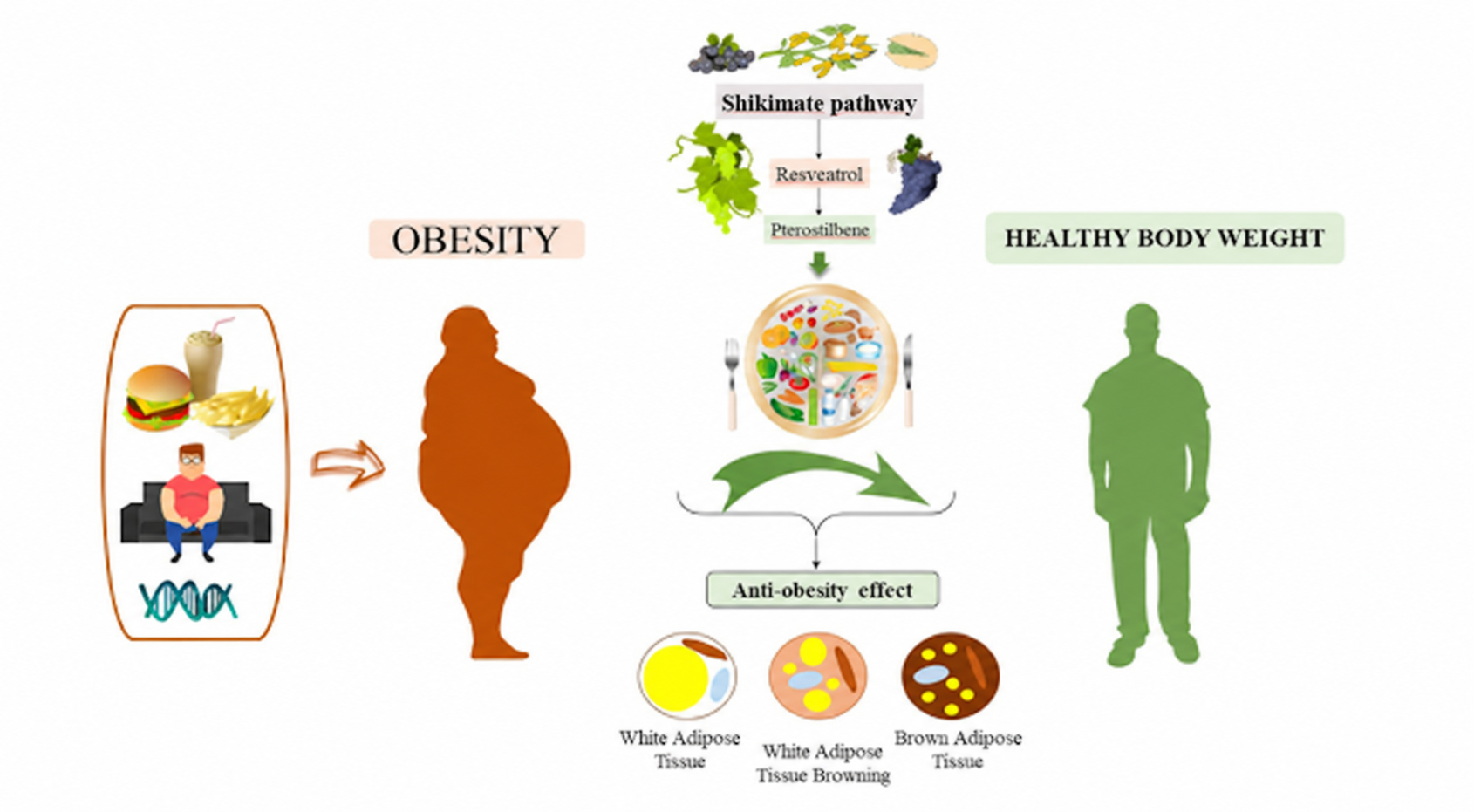
Considering nutrition and dietary habits, which have an important place in lifestyle changes for both the prevention and the treatment of obesity, pterostilbene and resveratrol, which are polyphenols and stilbenes, are seen as promising. However, optimal dosage, treatment duration, mechanisms, long-term safety, side effects, combination therapies, genomic interactions, and lifestyle modifications should also be considered.
Other Health Benefits
Beyond diabetes, research shows the plant has multiple therapeutic properties. Additionally, P. marsupium extracts manifest antioxidant, hepatoprotective, and anti-inflammatory activities, augmenting their therapeutic potential in diabetes management. It has also exhibited antimicrobial, analgesic, anticataract, cardiotonic, and anticancer activities.
Cancer: Pterostilbene Exhibits Broad-Spectrum Antitumor Activity Across Multiple Cancer Types Through Distinct Molecular Pathways
Key Oncological Findings by Cancer Type
-
Hepatocellular Carcinoma (HCC): Modulates metabolism-related gene expression through AMPK-dependent epigenetic regulation
(), suppressing diet-induced HCC development. -
Non-Small-Cell Lung Cancer (NSCLC):
- Immune Microenvironment: Triggers ROS-driven DNA damage and activates the STING/TBK1/IRF3 axis, enhancing T-cell infiltration while reducing immunosuppressive MDSCs and Tregs.
- ER Stress: High doses induce PERK/IRE1/ATF4/CHOP-mediated endoplasmic reticulum stress and ROS accumulation to trigger apoptosis.
- Autophagy: Induces early protective autophagy; co-treatment with autophagy inhibitors exacerbates cell death in docetaxel-resistant lines.
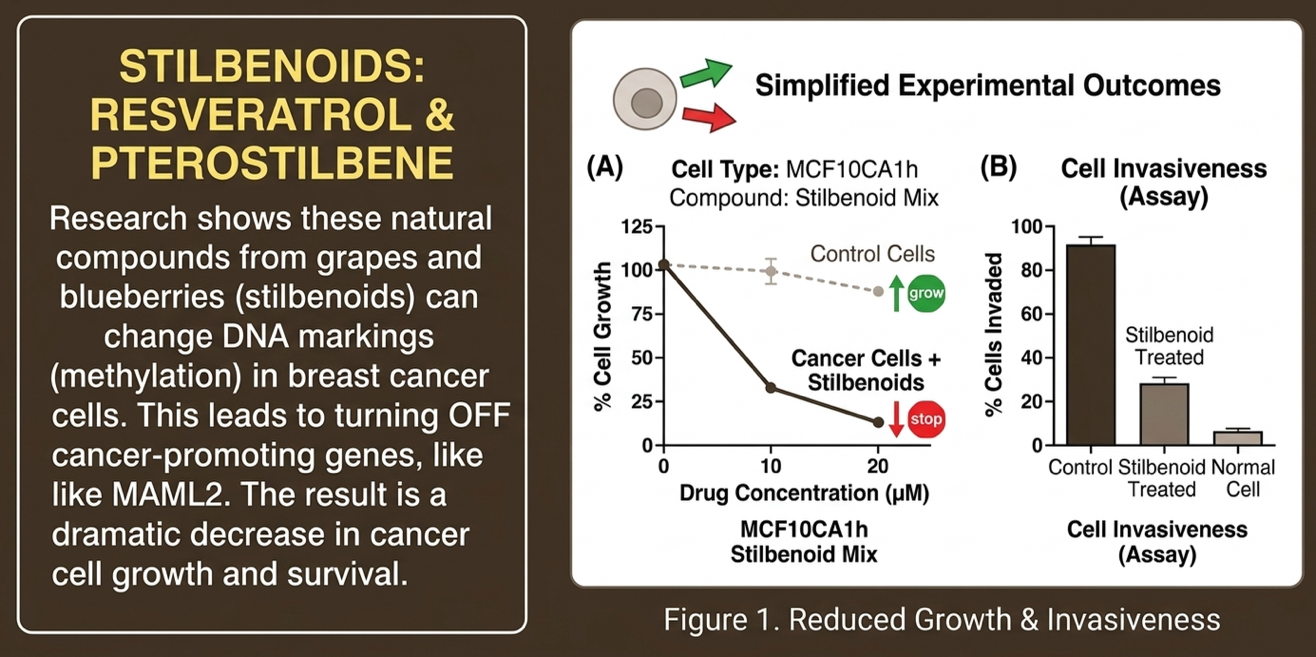
- Breast Cancer: Suppresses glycolysis via PKM2 inhibition and triggers pyroptosis (inflammatory cell death) through the caspase-8/GSDMC cascade.
- Diffuse Large B-Cell Lymphoma (DLBCL): Depolarizes mitochondrial membranes via ROS accumulation, causing S-phase arrest () and caspase-dependent apoptosis.
- Pancreatic Cancer & Melanoma: Operates via a systemic endocrine mechanism rather than direct cytotoxicity alone—downregulating pituitary ACTH and plasma corticosterone to suppress tumor Nrf2/glucocorticoid receptor-dependent antioxidant defenses.8
Conclusion
Pterocarpus marsupium stands as a remarkable example of how ancient wisdom and modern science can converge. Long revered in Ayurveda, Unani, and traditional healing systems for its glucose-lowering power, modern pharmacology now confirms that its bioactive compounds, such as pterostilbene, epicatechin, and liquiritigenin, exert potent antidiabetic, antioxidant, anti-inflammatory, and even anticancer effects. Far more than a single-use botanical, it functions as a broad-spectrum metabolic and cellular protectant and epigenetic modifier.
While current research has largely focused on its role in diabetes, early evidence suggests P. marsupium may offer benefits for liver disorders, cardiovascular health, neuroprotection, immune support, and cancer. With rising rates of metabolic disease worldwide, this tree has the potential to serve not just as a traditional remedy, but as a key player in future integrative and preventive medicine.
However, as demand increases, so does the risk of exploitation. Owing to excessive harvesting for timber and medicinal use, P. marsupium is now listed as “vulnerable” or “near-threatened” in several regions of India. Sustainable cultivation and standardized extraction protocols are urgently needed to protect this botanical treasure.
Pterocarpus is more than just a traditional remedy; it’s a scientifically validated, clinically promising medicine with wide-ranging therapeutic potential. Its continued study, responsible harvesting, and ethical integration into modern healthcare will benefit the world for generations to come.

- Agnes M. Rimando1, Nanjoo Suh2, Biological/Chemopreventive Activity of Stilbenes and their Effect on Colon Cancer, DOI 10.1055/s-0028-1088301, Planta Med 2008; 74: 1635– 1643
- Jiang S, Li H, Zhang L, et al. Generic Diagramming Platform (GDP): a comprehensive database of high-quality biomedical graphics. Nucleic AcidsRes. 2025;53(D1):D1670–d1676. doi:10.1093/nar/gkae973
- J. Chong, A. Poutaraud, and P. Hugueney, “Metabolism and roles of stilbenes in plants,” Plant Science, vol. 177, no. 3, pp. 143– 155, 2009. http://www.sabinsa.com/newsroom/articles-download/932-sabinsa-article-3
- Zhang Y, Yu Y, Xiong Z, Bin W, Yao Y, Liu H. Pterostilbene in Oxidative Stress-Related Diseases: Context-Dependent Regulation of Redox Homeostasis and Translational Challenges. Drug Des Devel Ther. 2026 Jun 30;20:608538. doi: 10.2147/DDDT.S608538. PMID: 42404708; PMCID: PMC13332737.
- Susil, A.; Harindranath, H.; Rajeshwari, S.; Mahendran, S.; Justin, A.; Ganesh, N․Vijaya, V.; Prashantha Kumar, B.R., Review on phytochemistry and pharmacology of Pterocarpus marsupium: A journey of traditional medicine, Pharmacological Research – Natural Products 10 (2026) 100544
- Zhang Y, Yu Y, Xiong Z, Bin W, Yao Y, Liu H. Pterostilbene in Oxidative Stress-Related Diseases: Context-Dependent Regulation of Redox Homeostasis and Translational Challenges. Drug Des Devel Ther. 2026 Jun 30;20:608538. doi: 10.2147/DDDT.S608538. PMID: 42404708; PMCID: PMC13332737.
- Remsberg CM, Yáñez JA, Ohgami Y, Vega-Villa KR, Rimando AM, Davies NM. Pharmacometrics of pterostilbene: preclinical pharmacokinetics and metabolism, anticancer, antiinflammatory, antioxidant and analgesic activity. Phytother Res. 2008 Feb;22(2):169-79.
- Zhang Y, Yu Y, Xiong Z, Bin W, Yao Y, Liu H. Pterostilbene in Oxidative Stress-Related Diseases: Context-Dependent Regulation of Redox Homeostasis and Translational Challenges. Drug Des Devel Ther. 2026 Jun 30;20:608538. doi: 10.2147/DDDT.S608538. PMID: 42404708; PMCID: PMC13332737.
- Kumar A, Rimando AM, Levenson AS. Resveratrol and pterostilbene as a microRNA-mediated chemopreventive and therapeutic strategy in prostate cancer. Ann N Y Acad Sci. 2017 Jun 29. doi: 10.1111/nyas.13372.