
By Donnie Yance
“Many people die with their music still in them. Why is this so? Too often it is because they are always getting ready to live. Before they know it, time runs out.” –Oliver Wendell Homes Jr.
What does it mean to live without fear? Not the absence of anxiety or the suppression of natural human caution, but something deeper—a spiritual freedom so complete that even death loses its sting. Most of us spend our lives building walls against uncertainty, hedging our bets, playing it safe. But what if the very purpose of our existence requires us to step beyond those walls, to risk everything for something we can barely articulate?
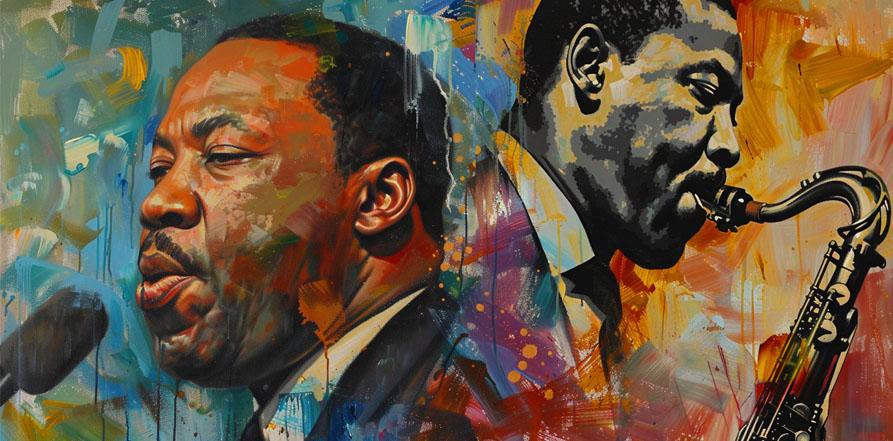
In the 1960s, two men demonstrated this radical freedom in ways that still echo through our collective consciousness. One was a Baptist preacher who stood on hotel balconies knowing assassins might be watching. The other was a jazz saxophonist who pushed his instrument beyond its known limits, searching for sounds that could express the inexpressible. Dr. Martin Luther King Jr. and John Coltrane never collaborated, never shared a stage, yet their lives ran parallel courses toward the same destination: complete surrender to divine purpose.
The Mountaintop
I’ve heard “I Have a Dream” countless times—in classrooms, at commemorations, in documentary films. It’s a magnificent speech, rightfully celebrated. But it’s King’s final speech, delivered the night before his assassination, that haunts me. “I Have a Dream” speaks to our aspirations; the mountaintop speech speaks from a place beyond aspiration, beyond hope, beyond fear itself. It’s the testimony of someone who has already crossed over, who speaks from the other side of human anxiety.
On April 3, 1968, in Memphis, Tennessee, King stood before a crowd and spoke words that still make the hair on my arms stand up:
“We’ve got some difficult days ahead,” said Dr. King. “But it doesn’t matter with me now. Because I’ve been to the mountaintop. And I don’t mind. Like anybody, I would like to live a long life. Longevity has its place. But I’m not concerned about that now. I just want to do God’s will. And He’s allowed me to go up to the mountain. And I’ve looked over. And I’ve seen the Promised Land. I do not fear any man and my eyes have seen the glory of the coming of the Lord.”
These are not the words of a man hoping for divine protection. They are the words of someone who has already seen God’s face, who has been transformed by that vision so completely that physical death has become irrelevant. “I do not fear any man”—not because he was brave in the conventional sense, but because he had experienced something that made human threats seem small by comparison. Less than twenty-four hours later, he would be dead, shot on the balcony of the Lorraine Motel. But in that final speech, he was already beyond death, already standing in eternity.
This is what theosis looks like in real time—not a theological abstraction but a lived reality. King had become so transparent to God’s presence that his own ego, his own survival instinct, his own natural human fear had been burned away. What remained was pure purpose, pure love, pure willingness to be used for something greater than himself.
A Prayer Without Words
While King was marching through the streets of Birmingham and Montgomery, John Coltrane was engaged in his own spiritual revolution, one measured in quarter notes and chord progressions rather than speeches and demonstrations. But make no mistake—it was a revolution nonetheless.
In 1963, the same year King delivered his “I Have a Dream” speech, Coltrane composed “Alabama” in response to the KKK bombing of the 16th Street Baptist Church in Birmingham—an act of terrorism that killed four young girls: Addie Mae Collins, Cynthia Wesley, Carole Robertson, and Carol Denise McNair. Where King responded with words, Coltrane responded with sound. “Alabama” is a haunting prayer without words, a lament that captures grief, rage, and transcendence all at once. The melody follows the cadence of King’s eulogy for the girls, Coltrane’s saxophone becoming a voice crying out in the wilderness.
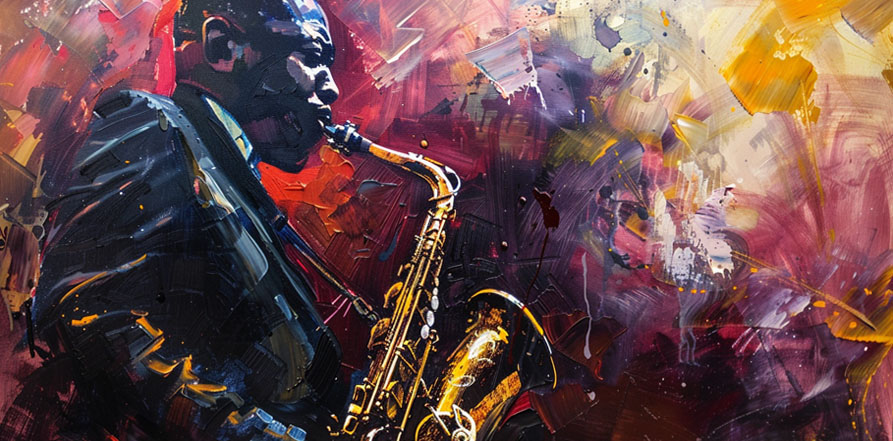
This was jazz at its cultural peak. From the mid-1950s through the mid-1960s, jazz wasn’t just entertainment—it was America’s most sophisticated art form, a laboratory for creative and spiritual exploration. And Coltrane was pushing the limits of what was possible, both musically and spiritually. He practiced for hours every day, not out of obligation but out of devotion. His horn was his prayer rope, his scales were his mantras, his improvisations were his conversations with God.
“My music is the spiritual expression of what I am—my faith, my knowledge, my being,” Coltrane said. This wasn’t just a metaphor, he meant it literally. Every note was an offering, every performance an act of worship. When you listen to “A Love Supreme,” his most famous album, you’re not just hearing music—you’re overhearing a private conversation between a man and his Creator. The album’s four movements— “Acknowledgement,” “Resolution,” “Pursuance,” and “Psalm”— trace the journey of the soul toward union with God. In the final movement, Coltrane’s saxophone literally “speaks” the words of a poem he wrote: “I will do all I can to be worthy of Thee O Lord.”
Like King, Coltrane was engaged in theosis—the process of becoming one with God. His improvisations weren’t about showing off technical skill or pursuing personal glory. They were about getting out of the way, about creating space for something greater to flow through him. The best jazz musicians will tell you that the magic happens when you stop trying to control the music and let it play you. Coltrane understood this at the deepest level. He practiced relentlessly not to master his instrument but to become so fluent that technique would disappear, leaving only spirit.
Improvisation as Vocation
This spirit of improvisation—of trusting divine guidance while taking creative risks—has become central to my own vocation. As both a jazz musician and health care practitioner, I have learned that true healing requires the same courage Coltrane demonstrated: the willingness to let something greater work through us. You cannot heal by formula alone, any more than you can create meaningful music by simply reading notes off a page. There must be presence, intuition, responsiveness to what’s actually happening in the moment.
This understanding led me to create Mederi Medicine, a unique healing modality that continues to unfold and reveal itself. Like Coltrane’s music, it’s not a fixed system but a living practice—one that requires both rigorous training and the courage to improvise, to trust that the next right action will emerge if we stay present and open. Every patient is a new composition, every healing encounter an improvisation that honors both the structure of medical knowledge and the mystery of the human spirit.
Becoming One with God
Both King and Coltrane exemplified theosis—the Eastern Orthodox understanding of salvation as the process of becoming one with God, of participating in the divine nature. This isn’t about achieving moral perfection or earning God’s favor. It’s about transformation, about becoming so transparent to God’s presence that your life becomes a window through which others can glimpse the divine.
Their work wasn’t about personal glory but about becoming vessels for divine love and justice. When King spoke, people heard more than eloquence—they heard truth that came from beyond him. When Coltrane played, listeners experienced more than virtuosity—they encountered the sacred. “The glory of God is revealed in those magic moments when we are touched by something beyond human achievement, when we see the presence of God break into the ordinary, and there is a sense that life has been fulfilled.”
This is why their legacies endure. We don’t remember them primarily for their accomplishments, impressive as those were. We remember them because they showed us what human beings look like when they stop defending their small selves and allow themselves to be used for something infinite. They showed us that it’s possible to live without fear, not because the dangers aren’t real, but because there’s something more real than danger.
The Fearless Nun
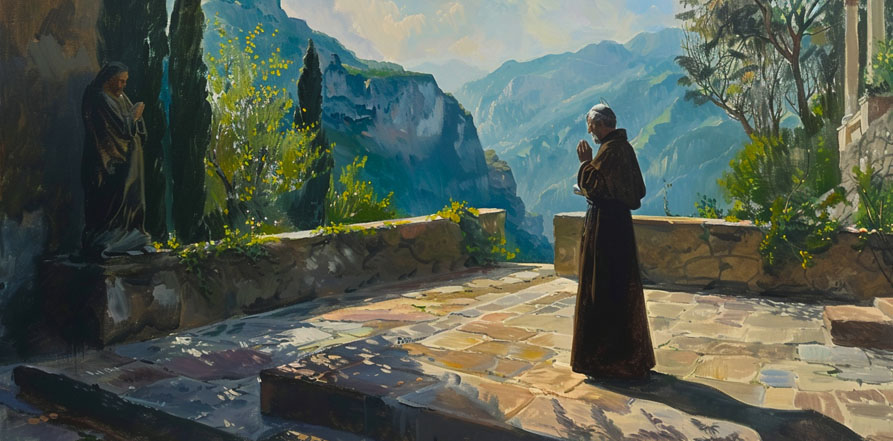
Mother Angelica, the Catholic nun who founded EWTN (Eternal Word Television Network), carried forward this same fearless spirit in her own generation. Born Rita Rizzo in Canton, Ohio, she grew up in poverty, suffered from severe health problems, and had every reason to play it safe. Instead, she built a global media empire from a monastery garage with $200 and a vision that most people thought was crazy.
Her words crackle with the same spiritual electricity that animated King and Coltrane:
“Unless you are willing to do the ridiculous, God will not do the miraculous. When you have God, you don’t have to know everything about it; you just do it.”
“We are all called by something in this world that is nothing short of divine. Everyone has a purpose, a reason, and some have a passion, but all of us are called by God on a mission. We are here to learn, to grow, and to do.“
“Faith is one foot on the ground, one foot in the air, and a queasy feeling in the stomach.”
“If you want to be like everyone else, then you’re not going to be able to change the world. You have to be different to make a difference.“
“I’m not afraid of anything except not trusting God enough.”
That last quote gets to the heart of it. Mother Angelica wasn’t fearless because she was naturally brave. She was fearless because she had learned to fear the right thing—not failure, not criticism, not even death, but the possibility of missing God’s purpose for her life. Like Reverend King standing on that mountaintop, like Coltrane pushing his horn to its limits, she had discovered that the only thing worth fearing is our own reluctance to surrender completely.
A Prayer for Difficult Days
In the spirit of these witnesses who lived without fear and trusted completely in God’s purpose, I offer you this prayer to help sustain you through challenging times:
Dear Lord,
When we are silent, whisper in our ear.
When we are confused, guide our steps.
When we are lost, show us the way.
When we are weak, give us strength.
When we are tired, give us rest.
When we are afraid, give us courage.
When we are alone, be our companion.
When we are in pain, be our comfort.
When we are in darkness, be our light.
When we are in despair, be our hope.
When we are in doubt, be our faith.
When we are in sorrow, be our joy.
When we are in anger, be our peace.
When we are in temptation, be our shield.
When we are in danger, be our protector.
When we are in need, be our provider.
When we are in trouble, be our deliverer.
When we are in sin, be our forgiveness.
When we are in death, be our resurrection.
When we are in heaven, be our eternal reward.
Amen.
Your Mountaintop
King spoke of going to the mountaintop and seeing the Promised Land. Coltrane’s music took listeners to heights where words couldn’t follow. Mother Angelica built her network on the foundation of impossible faith. Each found their unique way of touching heaven and bringing something back for the rest of us.
Now the question comes to you:
Where is your mountaintop?
What vision has been granted to you that you’re afraid to speak aloud?
What music is trying to play itself through you if you’d only pick up the instrument?
What impossible thing is God calling you to do that makes your stomach queasy and your heart race?
Your mountaintop is that place where your deepest gifts meet the world’s greatest needs, where your unique voice finds its truest expression, where you stop performing and start channeling something greater than yourself. It’s the place you’ve been avoiding because you know that once you go there, you can’t come back unchanged. It’s the place where your small self dies and your true self—the self that has always existed in God—finally emerges.
What purpose are you called to fulfill?
What truth are you meant to express?
What love are you here to embody?
These aren’t rhetorical questions. They’re the questions that matter, the ones that will haunt you if you leave them unanswered.
King didn’t live to see all his dreams fulfilled. Coltrane died at forty, his musical journey cut short. Mother Angelica built her network but never saw the full extent of its global impact. None of them had guarantees. None of them knew how the story would end. But they all said yes to the call, yes to the vision, yes to the impossible thing God was asking them to do.
In a world that still faces difficult days ahead, may we all find the courage to live without fear, to improvise with grace, and to touch heaven in our own unique way.




2 Responses
I appreciate this article! It is so beautifully written and gives me lots to contemplate! Thank you!
Thank you Donnie for all your wisdom and sharing. I don’t always read right away.
You have helped me come along way, as I will be 93 in August, still taking your vitamins and reading your mail.
I Believe!