
By Donnie Yance
For millennia, the plant ashwagandha (Withania somnifera) has stood as a cornerstone of Ayurvedic medicine, revered for its capacity to renew strength, calm the mind, promote better sleep, and extend vitality. Now, modern science is revealing the molecular pathways that explain its profound adaptogenic effects from balancing stress hormones to protecting cells from aging.
As ashwagandha gains unprecedented popularity in the wellness world, consumers face an increasingly complex marketplace with varying quality standards, extraction methods, and marketing claims. Meanwhile, as the global population rapidly ages—with those 65 and older expected to comprise 1 in 6 people by 2050—the search for effective, natural interventions to promote healthy aging has intensified.
Drawing from extensive research on Withania somnifera and over 35 years of clinical experience in herbal medicine, this comprehensive guide reveals why ashwagandha represents a remarkable bridge between ancient wisdom and modern preventive medicine, while providing essential guidance for selecting quality supplements that deliver real therapeutic benefits.
In June 2024, I published a comprehensive blog post titled: “Ashwagandha (Withania somnifera) in Medicine, Mood, and Neuropsychiatry”
(https://www.donnieyance.com/ashwagandha-withania-somnifera-in-medicine-mood-and-neuropsychiatry/).
I encourage readers to explore this detailed analysis, which examines the remarkable surge in research demonstrating ashwagandha’s mood-enhancing and neuroprotective properties.
From Sacred Text to Scientific Breakthrough
Ashwagandha holds a place of honor within Ayurveda, the traditional medicine system of India, where it’s revered as a Rasayana—a special classification for herbs prized for their ability to rejuvenate the body, nourish tissues, promote longevity, and sustain vitality. A comprehensive 2025 review published in Biogerontology reveals just how prescient this ancient classification was.1
The herb’s Sanskrit name translates to “the smell of a horse,” reflecting the traditional belief that it imparts equine-like strength and vitality. This name derives its significance from its traditional use in Indian medicine to strengthen the nervous system and promote overall vitality.
The Science Behind Adaptogenic Excellence
What makes ashwagandha so special lies in its sophisticated biological mechanisms. The herb contains several biologically active compounds, particularly withanolides—steroidal lactones that exhibit anti-inflammatory, antioxidant, immunomodulatory, and neuroprotective properties. Other notable components include alkaloids (such as somniferine and tropine), sitoindosides, and acylsterylglucosides.2,3
Because botanicals contain a variety of organic chemical complexes, they act on multiple targets, including molecular, cellular, and organ system pathways. Adaptogens such as ashwagandha earn this designation because they have been used for their tonic and broad healing properties, and have been extensively validated by modern research. They are nonspecific, normalizing, and non-toxic, making them well-suited for all people.
Adaptogens trigger pleiotropic (multi-functional) genes, molecular mechanisms, and cellular signaling pathways that mediate adaptive and defense responses, resulting in multitargeted modes of action occurring simultaneously. This produces nonspecific pleiotropic pharmacological activity, where an adaptogen’s effect on a single gene impacts multiple signaling pathways, biological processes, physiological functions, and phenotypic characteristics.
These compounds work together to modulate the hypothalamic–pituitary–adrenal (HPA) axis and the sympathetic nervous system, allowing ashwagandha to function as a true adaptogen—helping your body adapt to both psychological and physical stressors while supporting innate health within all internal interconnecting networks.
How Ashwagandha Fights Aging at the Cellular Level
Research demonstrates that ashwagandha’s anti-aging effects operate through multiple interconnected pathways:
🛡️ Cellular Protection
Ashwagandha effectively combats age-related mitochondrial decay by activating the Nrf2 antioxidant defense pathway. Think of Nrf2 as your cellular bodyguard—when activated by ashwagandha’s withanolides, it triggers the production of protective antioxidant enzymes that shield your mitochondria (your cells’ powerhouses) from damage.
🔥 Inflammation Control
Chronic, low-grade inflammation is a hallmark of aging. Clinical studies show ashwagandha significantly reduces inflammatory markers like C-reactive protein, while also demonstrating antimicrobial, cardioprotective, and anti-diabetic properties. The herb inhibits pro-inflammatory compounds such as tumor necrosis factor-alpha (TNF-α) and interleukin-6 (IL-6), while supporting anti-inflammatory mediators.
🔧 Protein Quality Control
The herb enhances your cells’ ability to maintain healthy proteins by activating heat-shock proteins that help refold damaged proteins and clear toxic protein aggregates—a key factor in preventing neurodegenerative diseases.
Withaferin A, a natural compound from the medicinal plant Withania somnifera, shows promise as an anti-aging treatment. In fruit fly studies, this compound extended male lifespan by up to 10% and improved gut health in older flies. It also activated genes responsible for protecting cells from damage, repairing DNA, and responding to stress. However, the compound’s effects on stress resistance varied by age and sex, with males generally showing improved tolerance to heat and oxidative damage at certain ages, while females showed different responses. These findings suggest Withaferin A could be a valuable candidate for developing treatments that promote healthy aging.4
Clinical Evidence: Real-World Results
💪 Physical Performance and Vitality
The clinical evidence is impressive, with studies showing remarkable improvements in:
- Muscle Strength: Up to 46 kg increases in bench press performance
- Cardiovascular & Respiratory Fitness: 13.6% improvement in VO2 max
- Body Composition: Significant gains in muscle mass
- Sleep Quality: Enhanced sleep scores across multiple trials
Clinical studies with standardized extracts have shown significant improvements in stress-related parameters, including reduced perceived stress levels and improvements in fatigue, irritability, and concentration difficulties. Research has indicated potential benefits for physical performance, with studies showing improvements in muscle strength, muscle mass, and exercise recovery in individuals engaged in resistance training.5
🧠 Cognitive Function and Neuroprotection
Clinical trials demonstrate significant improvements in memory, attention, and information processing speed, particularly in adults with mild cognitive impairment. Remarkably, studies show that ashwagandha can offset negative effects of Alzheimer’s disease by increasing LRP1 levels in the liver, which helps reduce harmful amyloid β plaques and reverse behavioral deficits.
⚖️ Hormonal Balance and Stress Management
Perhaps most notably, ashwagandha significantly:
- Reduces cortisol levels: Up to 27.9% reduction in stress hormone levels
- Increases testosterone: Natural hormone optimization
- Improves sleep quality: Better rest and recovery through cortisol rhythm normalization
Thyroid Support Benefits
Ashwagandha’s ability to support thyroid function represents one of its most valuable therapeutic properties. A randomized, double-blind, placebo-controlled study of 50 subclinical hypothyroid patients found that 8 weeks of ashwagandha root extract (600 mg daily) significantly improved thyroid hormone levels (TSH, T3, and T4) compared to placebo, normalizing thyroid indices with minimal adverse effects.6
This thyroid-supportive effect reflects ashwagandha’s intelligent adaptogenic nature—it helps restore balance rather than simply stimulating or suppressing function. Research suggests ashwagandha may optimize thyroid function by reducing cortisol levels, which interfere with thyroid hormone production and conversion.
Immune System Modulation
Ashwagandha’s sophisticated immune-modulating properties offer significant advantages for overall health and resilience. Rather than simply stimulating or suppressing immunity, ashwagandha optimizes immune responses, enhancing protective immunity while reducing excessive inflammatory responses.
Research shows ashwagandha increases natural killer cell activity, enhances macrophage function, and helps balance cytokine production. This balanced approach to inflammation management may contribute to ashwagandha’s benefits for various chronic health conditions associated with excessive inflammation.
Immunomodulatory Effects
Ashwagandha enhances immune function through multiple pathways:
- Increases natural killer (NK) cell activity and macrophage function
- Modulates T-cell and B-cell responses
- Regulates cytokines by reducing pro-inflammatory markers (TNF-α, IL-6) while increasing anti-inflammatory IL-10
- Supports both innate and adaptive immunity7
The Harmony Principle
Just as a symphony requires multiple instruments playing in harmony to create beautiful music, effective herbal medicine requires multiple plants working together in precise ratios. This is why traditional formulations often contain 8-12 different herbs, each contributing to a balanced, harmonious whole.
When choosing herbal supplements, look for well-researched, traditional formulations rather than isolated single herbs. Your body will thank you for the comprehensive support.
Understanding the Mechanisms: A Visual Guide
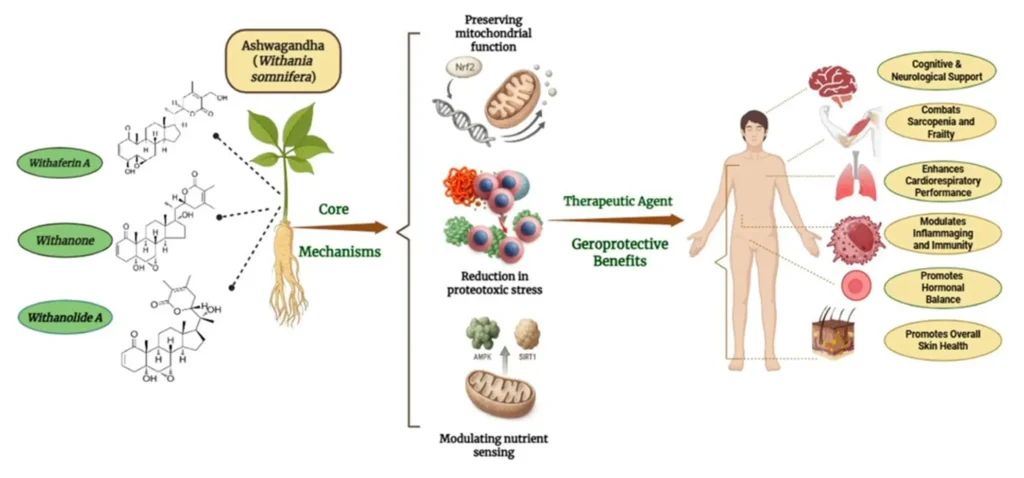
The complex pathways through which Ashwagandha works are beautifully illustrated in recent research. The herb affects multiple molecular targets simultaneously, from activating protective Nrf2 pathways to inhibiting inflammatory NF-κB signaling.
The COVID-19 Connection
Emerging research suggests potential benefits for post-viral syndromes like long COVID, with studies investigating ashwagandha’s immunomodulatory effects and ability to reduce persistent fatigue and cognitive symptoms.8
Particularly relevant in our post-pandemic world, research shows how Ashwagandha may help modulate immune responses and inflammation related to viral infections:
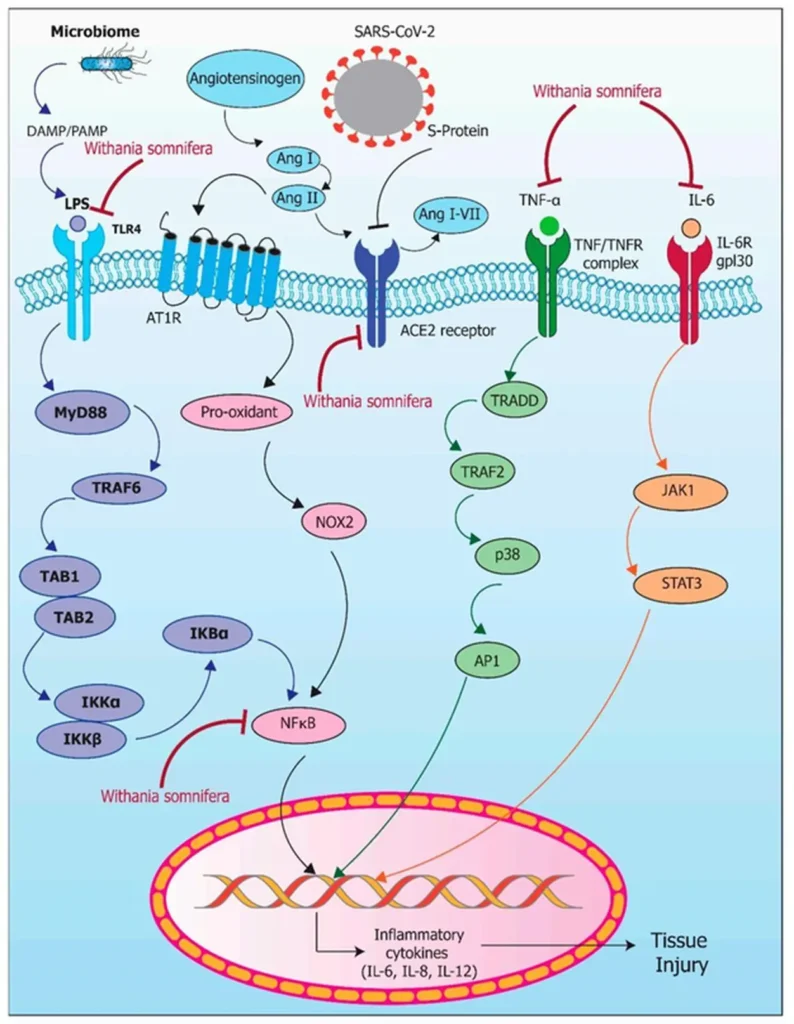
The SARS-CoV-2 viral spike protein interacts with the ACE2 receptor, triggering downstream inflammatory pathways. Key inflammatory signaling cascades—such as TNF-α, IL-6, NF-κB, JAK/STAT3, and AP-1, all ultimately promote transcription of inflammatory cytokines (IL-1, IL-6, IL-8, IL-12), which can contribute to tissue injury.
There are several points at which ashwagandha may exert regulatory effects, including potential suppression of ACE2–virus interaction, modulation of TLR4-mediated signaling, inhibition of NF-κB activation, and down-regulation of JAK/STAT and p38 pathways. It also suggests antioxidant effects, counteracting NOX2-driven oxidative stress. Together, these actions depict how ashwagandha can help reduce pro-inflammatory cascades and cytokine release, thereby protecting tissues from excessive inflammatory damage from viral infection.
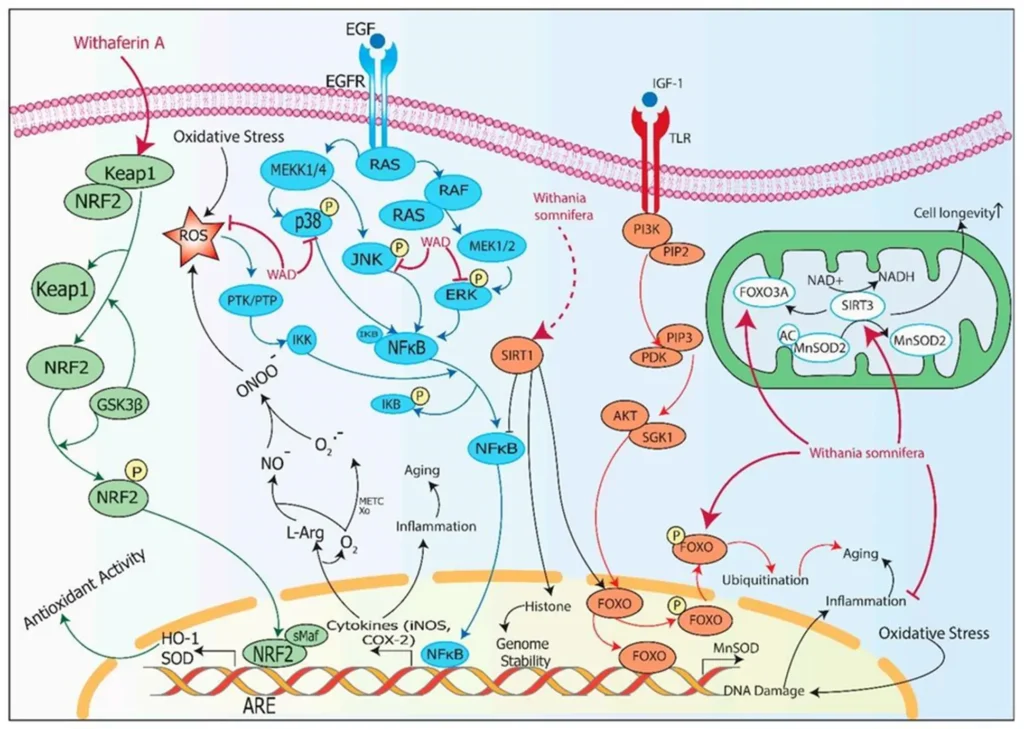
Ashwagandha also supports the long-term protection of our cells through antioxidant and longevity pathways. Ashwagandha’s activation of NRF2, a master regulator that turns on protective antioxidant enzymes like Heme Oxygenase-1 (HO-1) and Superoxide dismutase (SOD1) to help calm oxidative stress. A particularly intriguing pathway highlighted in this above illustration is the SIRT1–FOXO system, a well-known longevity switch that boosts DNA stability and mitochondrial performance. Inside the mitochondria, Ashwagandha supports antioxidant activity through SIRT3 and MnSOD2, helping protect cells from energy-related stress and damage. Ashwagandha’s benefits reach far beyond immune support: it helps defend our cells from oxidative stress, maintain healthy aging processes, and promote stronger mitochondrial function for long-term wellness.
Protein Network Effects
The interconnected nature of Ashwagandha’s effects on aging-related proteins demonstrates why this herb has such broad-spectrum benefits:
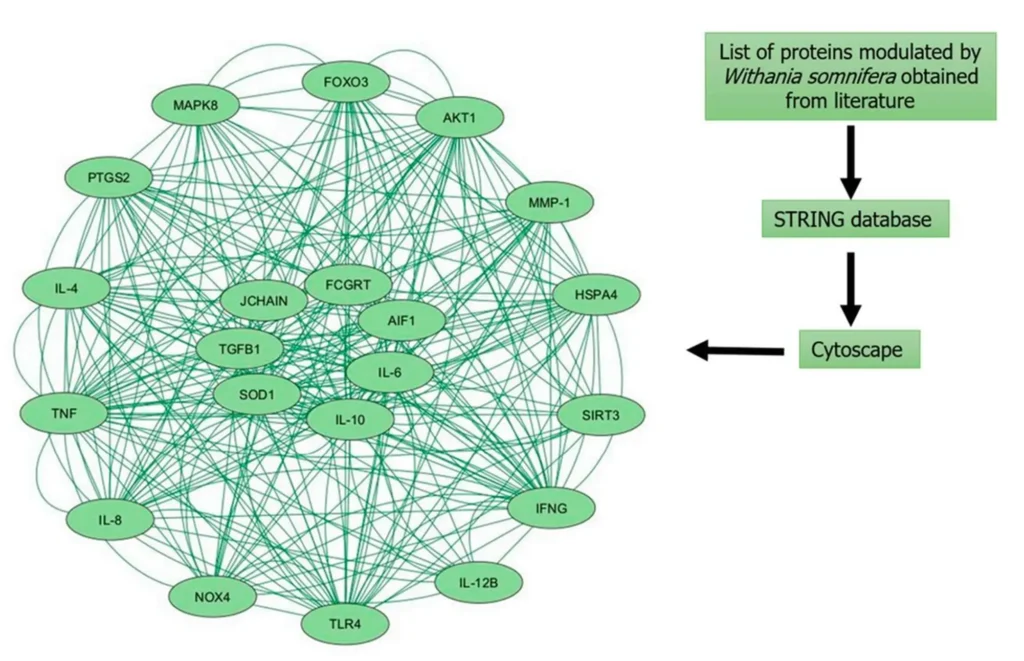
This network diagram shows how Ashwagandha influences a wide range of interconnected proteins and genes that regulate inflammation, immune response, oxidative stress, and cellular signaling.The proteins located in the center are highly connected “hub” molecules. The list of proteins modulated by Ashwagandha was compiled from scientific literature, analyzed through a special database to identify known and predicted protein-protein interactions, and then visualized using Cytoscape software. Key targets include IL-6, TNF, IL-1β, IFNG, and IL-10, which are major immune and inflammatory mediators, suggesting that Ashwagandha helps balance pro- and anti-inflammatory pathways.
Proteins such as SOD1, NOX4, and MAPK8 are involved in oxidative stress regulation, while AKT1 and FOXO3 play roles in cell survival and metabolism. The dense interconnections in the diagram indicate that Ashwagandha acts as a multi-target adaptogen, influencing several signaling networks simultaneously rather than a single pathway. This systems-level modulation likely explains its broad therapeutic effects on stress resilience, immune balance, and inflammation control.
The Art of Herbal Formulation: Why I Never Use Single Herbs
Here’s something crucial that most people don’t understand about herbal medicine: I never recommend using single herbs in isolation. This approach goes against thousands of years of traditional wisdom and, increasingly, modern research.
Traditional medical systems, including Ayurveda and Traditional Chinese Medicine, recognized millennia ago that combining multiple herbs yields significantly greater therapeutic benefits than individual plants. Like a musical ensemble where melody, harmony, and rhythm work together to create something greater than the sum of their parts, herbal formulations achieve therapeutic effects that surpass what any single plant could accomplish alone.
Our product line features several formulations containing ashwagandha extract. Two of these formulations incorporate a comprehensive adaptogen complex, including schisandra, eleuthero, Panax ginseng, and rhodiola. The remaining two formulations consist of a mood support blend and a medicinal mushroom complex.
The Traditional Chinese Medicine Approach To Formulation
TCM practitioners rarely prescribe single herbs, instead creating carefully balanced formulations where each herb plays a specific role:
- Chief herbs: provide the primary therapeutic effect
- Deputy herbs: assist and enhance the chief herbs
- Assistant herbs: moderate potential side effects
- Envoy herbs: help deliver the formula to target organs
Why Adaptogen Combinations Work Better
Research increasingly supports what traditional medicine systems have known for millennia: combining adaptogens creates more effective and balanced outcomes than using them alone. Studies show that adaptogen combinations:
✅ Provide broader physiological support by targeting multiple stress-response pathways simultaneously
✅ Reduce potential side effects through natural balancing and moderation
✅ Create synergistic effects where compounds enhance each other’s bioavailability and effectiveness
✅ Offer more personalized benefits by addressing multiple aspects of health simultaneously
For example, while ashwagandha excels at cortisol regulation and physical performance, combining it with other adaptogens like Rhodiola (for mental clarity), Schisandra (for liver support), or Holy Basil (for immune function) creates a more comprehensive approach to wellness.
Quality Markers That Matter Most: Expert Guidance for Supplement Selection
With ashwagandha’s popularity leading to products with varying quality standards, informed selection becomes crucial. Key factors for high-quality herbal adaptogens include: genetic factors like correct species identification, environmental conditions, soil characteristics (pH, fertilization, heavy metal content), and beneficial stress from insects and microbes that activates the plant’s immune system to produce protective compounds.
The Wild vs. Cultivated Advantage
Research increasingly supports wild-sourced ashwagandha’s superiority over cultivated varieties. Wild ashwagandha thrives in challenging environments with poor, damaged soil. In response to these stresses, the plant produces protective secondary metabolites that significantly contribute to its therapeutic benefits through xenohormesis, emerging research shows how environmental stress enhances medicinal compounds in plants.
A recent comparative study found properly processed wild ashwagandha demonstrated superior efficacy across multiple stress-related symptoms compared to cultivated varieties, highlighting the importance of traditional processing methods such as milk steam purification (Swedana).10
However, sourcing wild ashwagandha presents practical challenges, requiring expert identification and proper traditional processing to ensure safety and efficacy. For most consumers, standardized cultivated extracts remain the most reliable and accessible options.
Standardized Extracts: The Gold Standards
While withanolide content is often highlighted on supplement labels, it’s just one piece of the quality puzzle. The most reputable ashwagandha supplements use standardized extracts that have undergone rigorous clinical testing. Three proprietary extracts stand out in research:
KSM-66
A full-spectrum root extract that maintains the natural balance of bioactive compounds found in the whole plant. Research supporting KSM-66 includes studies on stress reduction, cognitive function, and sleep quality, with dosages typically ranging from 300 to 600 milligrams daily.
Sensoril
Combines both root and leaf extracts, offering a different phytochemical profile with access to bioactive compounds more concentrated in the leaves. Clinical studies show particular promise for stress management and cortisol regulation, often at lower doses (125-250mg daily) than traditional root-only extracts.
Sabinsa Standardized Extracts (my personal favorite and the form I use in several of my formulations)
Sabinsa makes 2 different extracts of Ashwagandha. The lower potency one is called Shagandha® by Sabinsa, which is a standardized extract from the roots of Withania somnifera (Ashwagandha), complying with USP monograph requirements and verified by Alkemist Labs. It is standardized to ≥2.5% withanolides and 0.25% withaferin A, analyzed by HPLC. The dosage range of this extract is 250-500 mg. daily.
The 2nd extract, a more potent concentration, and the one I use, contains 7% Withanolides, 0.25% Withaferin A, and 1% Alkaloids. This extract demonstrates significant research validation and superior therapeutic outcomes in clinical experience.
This extract is assayed for three quality markers. This multi-marker standardization ensures comprehensive assessment of therapeutic potential while complying with US Pharmacopoeia-National Formulary (USP-NF) monograph standards.11 Similar to Sensoril, the therapeutic dosage for this extract would be 125-250 mg daily.
Delivery Methods and Absorption
Traditional root powder can be taken at 1-6 grams daily. This is less convenient but offers the full spectrum of plant compounds. Capsules with the standardized extracts offer precise dosing and convenience, making them the preferred choice for most users. Gummies often contain lower concentrations and added sugars that may interfere with therapeutic effects. Liquid extracts offer rapid absorption but present taste challenges. Powder forms allow versatility but may have inconsistent absorption.
Critical Quality Markers
Beyond total withanolide content, withaferin A serves as a critical quality marker, representing one of the most bioactive compounds responsible for ashwagandha’s therapeutic effects. However, the relationship between withaferin A content and therapeutic efficacy is complex, as this compound can be cytotoxic at high concentrations, making precise standardization essential.
Organic certification serves as an important quality indicator. Ashwagandha plants can absorb heavy metals and pesticides from contaminated soil, making organic sourcing particularly crucial for safety. Look for USDA Organic certification or equivalent international standards.
Third-party testing represents another non-negotiable quality marker. Reputable manufacturers provide certificates of analysis showing testing for:
- Heavy metals (lead, mercury, cadmium, arsenic)
- Microbial contamination
- Pesticide residues
- Potency verification of active compounds
Critical Safety Considerations
Recent reports from multiple countries have documented cases of ashwagandha-induced liver injury, including severe cases requiring hospitalization. While rare, consumers should discontinue use immediately if experiencing jaundice, dark urine, abdominal pain, or unusual fatigue, and consult healthcare providers before use, especially if taking medications or having existing health conditions.12
Most clinical research has not reported significant liver-related adverse events, suggesting that when high-quality, properly standardized products are used within recommended dosages, the risk remains low.
Medication Interactions and Monitoring
Understanding ashwagandha’s interactions with medications can help optimize therapeutic outcomes while ensuring safety. The herb’s natural GABAergic activity may enhance medications that influence GABA neurotransmission, including benzodiazepines and sleep medications.
For individuals managing blood sugar levels, ashwagandha’s glucose-supporting properties can complement existing treatments, though monitoring ensures optimal coordination. The herb may also interact with blood pressure medications due to mild hypotensive effects, and its thyroid-supportive effects mean individuals taking thyroid medications should have regular monitoring.
Timing and Circadian Effects
Ashwagandha’s adaptogenic properties typically energize during the day and calm in the evening, though some may initially experience heightened energy as their system adjusts. The herb’s effects on cortisol rhythms contribute to its ability to support healthy sleep-wake cycles by normalizing the natural circadian pattern.
For those experiencing sleep difficulties initially, start with smaller doses taken earlier and gradually adjust timing based on response. Some find taking ashwagandha with breakfast provides sustained energy, while others prefer splitting doses between morning and early afternoon.
Clinical Safety Observation
Based on 35 years of clinical practice with thousands of patients across diverse health conditions—many taking multiple pharmaceutical medications—ashwagandha demonstrates exceptional safety within recommended dosages. The herb’s actions are gentle and supportive, with no observed negative interactions with conventional medications in extensive clinical experience.
This real-world safety data complements controlled clinical trials and suggests the herb’s mechanisms are generally complementary rather than antagonistic to conventional treatments. Adaptogens like ashwagandha serve as foundational elements by strengthening fundamental systems that support health and resilience.
The Future of Healthy Aging
As we face the unprecedented challenge of global population aging, ashwagandha represents a promising bridge between ancient wisdom and modern preventive medicine. The extensive research highlights its remarkable potential as a multifaceted agent for promoting healthy aging—from enhancing physical strength and cognitive function to modulating inflammation and neurodegeneration.
However, researchers emphasize the need for more standardized extracts, larger long-term trials, and better understanding of optimal dosing protocols. The specific mechanisms of ashwagandha’s action and its impact on different aspects of physical performance, body composition, and medical effects still need more thorough analysis.
Conclusion
Ashwagandha offers a comprehensive approach to extending not just lifespan, but healthspan—the years we live free from chronic disease and disability. The herb’s therapeutic effects—from stress reduction and cortisol regulation to immune system modulation and thyroid support—reflect the sophisticated mechanisms by which adaptogens support human health. I feature ashwagandha in several of my formulations.
Unlike single-target pharmaceutical interventions, ashwagandha’s pleiotropic effects on multiple physiological systems exemplify the holistic approach of traditional herbal medicine. When properly formulated with other complementary botanicals and integrated into a comprehensive wellness approach, this ancient herb provides modern solutions to contemporary aging challenges.
Individual variation in response highlights the importance of starting with appropriate dosages and adjusting based on personal response and therapeutic goals. Working with knowledgeable healthcare providers can help optimize ashwagandha’s adaptogenic benefits while ensuring safety and proper monitoring.
The key takeaway? Don’t go it alone—whether you’re an aging cell fighting oxidative stress or an herb working to support human health, everything works better with the right companions. Future research promises to further uncover the mechanisms underlying ashwagandha’s therapeutic effects and may lead to more effective standardized extracts and delivery methods, ensuring this remarkable adaptogen continues bridging ancient wisdom with modern health optimization.
About the Author
Donnie Yance is a Clinical Master Herbalist and Certified Nutritionist renowned for his extraordinary knowledge and deep understanding of the healing properties of plants and nutrition, as well as epigenetics, laboratory medicine, oncologic pathology, and molecular oncology. A professional member of the American Herbalists Guild and the National Association of Nutrition Professionals, Donnie lectures nationally and internationally on his pioneering work in the field of botanical and nutritional medicine in cancer. He is the Founder of the Mederi Center, a non-profit organization offering patient services, professional education, and clinical research in holistic medicine and integrative oncology. He is also the President and Formulator of Natura Health Products, a line of botanical and nutritional products for healthcare practitioners.
As a visionary leader, mentor, teacher, author, and healer, Donnie’s methodology has transformed thousands of lives and is taught to healthcare practitioners worldwide through the Mederi Academy, an online training program focused on whole systems, integrative oncology principles, clinical applications, and therapeutics. He is the author of Herbal Medicine, Healing and Cancer and Adaptogens in Medical Herbalism: Elite Herbs and Natural Compounds for Mastering Stress, Aging and Chronic Disease.

- Vittal, M., & Vinciguerra, M. (2025). Enhancing healthspan with Ashwagandha (Withania somnifera): a comprehensive review of its multifaceted geroprotective benefits. Biogerontology, 26(179). https://doi.org/10.1007/s10522-025-10320-0
- Wiciński M, Fajkiel-Madajczyk A, Sławatycki J, Szambelan M, Szyperski P, Wojciechowski P, Wójcicki J, Gawryjołek M. Ashwagandha (Withania somnifera) and Its Effects on Well-Being-A Review. Nutrients. 2025 Jun 27;17(13):2143. doi: 10.3390/nu17132143.
- Dipankar SP, Dani MM, Anirudhan R, Tripathi D, Mishra C, Devi SH. Pharmacological Insights Into Ashwagandha (Withania somnifera): A Review of Its Immunomodulatory and Neuroprotective Properties. Cureus. 2025 Aug 12;17(8):e89856. doi: 10.7759/cureus.89856. PMID: 40951251; PMCID: PMC12423730.
- Koval L, Zemskaya N, Aliper A, Zhavoronkov A, Moskalev A. Evaluation of the geroprotective effects of withaferin A in Drosophila melanogaster. Aging (Albany NY). 2021 Jan 26;13(2):1817-1841. doi: 10.18632/aging.202572. Epub 2021 Jan 26. PMID: 33498013; PMCID: PMC7880378.
- Bonilla DA, Moreno Y, Gho C, Petro JL, Odriozola-Martínez A, Kreider RB. Effects of Ashwagandha (Withania somnifera) on Physical Performance: Systematic Review and Bayesian Meta-Analysis. J Funct Morphol Kinesiol. 2021 Feb 11;6(1):20. doi: 10.3390/jfmk6010020.
- Sharma AK, Basu I, Singh S. Efficacy and Safety of Ashwagandha Root Extract in Subclinical Hypothyroid Patients: A Double-Blind, Randomized Placebo-Controlled Trial. J Altern Complement Med. 2018;24(3):243-248.
- Dipankar SP, Dani MM, Anirudhan R, Tripathi D, Mishra C, Devi SH. Pharmacological Insights Into Ashwagandha (Withania somnifera): A Review of Its Immunomodulatory and Neuroprotective Properties. Cureus. 2025 Aug 12;17(8):e89856. doi: 10.7759/cureus.89856. PMID: 40951251; PMCID: PMC12423730.
- Prajapati, S. K., Malaiya, A., Mishra, G., Jain, D., Kesharwani, P., Mody, N., Ahmadi, A., Paliwal, R., & Jain, A. (2022). An exhaustive comprehension of the role of herbal medicines in Pre- and Post-COVID manifestations. Journal of ethnopharmacology, 296, 115420. https://doi.org/10.1016/j.jep.2022.115420
- Basudkar V, Gujrati G, Ajgaonkar S, Gandhi M, Mehta D, Nair S. Emerging Vistas for the Nutraceutical Withania somnifera in Inflammaging. Pharmaceuticals (Basel). 2024 May 7;17(5):597. doi: 10.3390/ph17050597. PMID: 38794167; PMCID: PMC11123800.
- Singh N, Bhalla M, de Jager P, Gilca M. An overview on ashwagandha: a Rasayana (rejuvenator) of Ayurveda. Afr J Tradit Complement Altern Med. 2011;8(5 Suppl):208-213.
- Lopresti AL, Smith SJ, Malvi H, Kodgule R. An investigation into the stress-relieving and pharmacological actions of an ashwagandha (Withania somnifera) extract: A randomized, double-blind, placebo-controlled study. Medicine. 2019;98(37):e17186.
- Basudkar V, Gujrati G, Ajgaonkar S, Gandhi M, Mehta D, Nair S. Emerging Vistas for the Nutraceutical Withania somnifera in Inflammaging. Pharmaceuticals (Basel). 2024 May 7;17(5):597. doi: 10.3390/ph17050597.