
By Donnie Yance
Human health depends on a complex symphony of nutrient interactions, not on isolated substances. While Coenzyme Q10 (CoQ10) has been extensively researched, its effectiveness often depends on the presence of other nutrients and cofactors that support its absorption, utilization, and biological activity. Most patients with chronic illness, whether cardiovascular disease, diabetes, or neurodegeneration, present with multiple concurrent nutrient deficiencies. This reality helps explain why studies or clinical use of CoQ10 as a standalone supplement often produce inconsistent results.
Where CoQ10 Works In the Body
Mitochondria: CoQ10 is an essential component of the electron transport chain inside our mitochondria, which transforms food energy and oxygen into ATP, the energy currency molecule of the entire body. It transfers electrons between complexes I/II and complex III, making it indispensable for energy metabolism.
Cell Membranes: CoQ10 resides in the phospholipid bilayers, where it stabilizes cell membranes and prevents oxidative damage.
Circulating Antioxidant: In its reduced form (ubiquinol), CoQ10 neutralizes free radicals, regenerates vitamin E, and protects LDL cholesterol from oxidation.
Why It Matters
High-energy tissues like the heart, kidneys, brain, liver, and muscles, are especially dependent on CoQ10. A deficiency can directly impair cellular energy, leading to fatigue, organ dysfunction, and accelerated aging.
CoQ10 also supports endothelial function, insulin signaling, and sperm motility, connecting mitochondrial health with systemic well-being.
Causes of CoQ10 Deficiency
Even though the body synthesizes CoQ10, many factors reduce levels:
- Aging: Internal production declines steadily after age 30, with marked reductions in elderly populations.
- Medications: Statins, beta-blockers, tricyclic antidepressants, and some diabetic drugs inhibit pathways needed for CoQ10 synthesis.
- Chronic Illness: Heart failure, diabetes, cancer, and neurodegenerative diseases increase oxidative stress and deplete CoQ10 reserves.
- Nutrient Gaps: Adeficiency of B vitamins, selenium, magnesium, or amino acids (like tyrosine) disrupts CoQ10 synthesis.
- Lifestyle Factors: Poor diet, smoking, and chronic stress all accelerate CoQ10 depletion.
The result: many patients most in need of CoQ10 are also least able to synthesize or utilize it effectively.
The Power of Combination Therapy
If you’ve been researching supplements for energy, brain health, or healthy aging, you’ve probably come across CoQ10. But here’s what most people don’t know: CoQ10 works dramatically better when combined with specific partner nutrients—not because we’re simply adding more ingredients, but because we’re working with the body’s own wisdom.
This isn’t about taking more supplements—it’s about strategic synergy that honors how nature designed our cells to function. When we combine CoQ10 with R-lipoic acid, selenium, PQQ, resveratrol, and piperine, we’re not forcing the body to do something unnatural. Instead, we’re supporting multiple interconnected pathways of cellular energy production simultaneously, strengthening the terrain and building resilience from the foundation up. This approach creates effects that far exceed what any single ingredient can achieve alone—because true healing happens when we address root causes and work with the body’s innate intelligence.
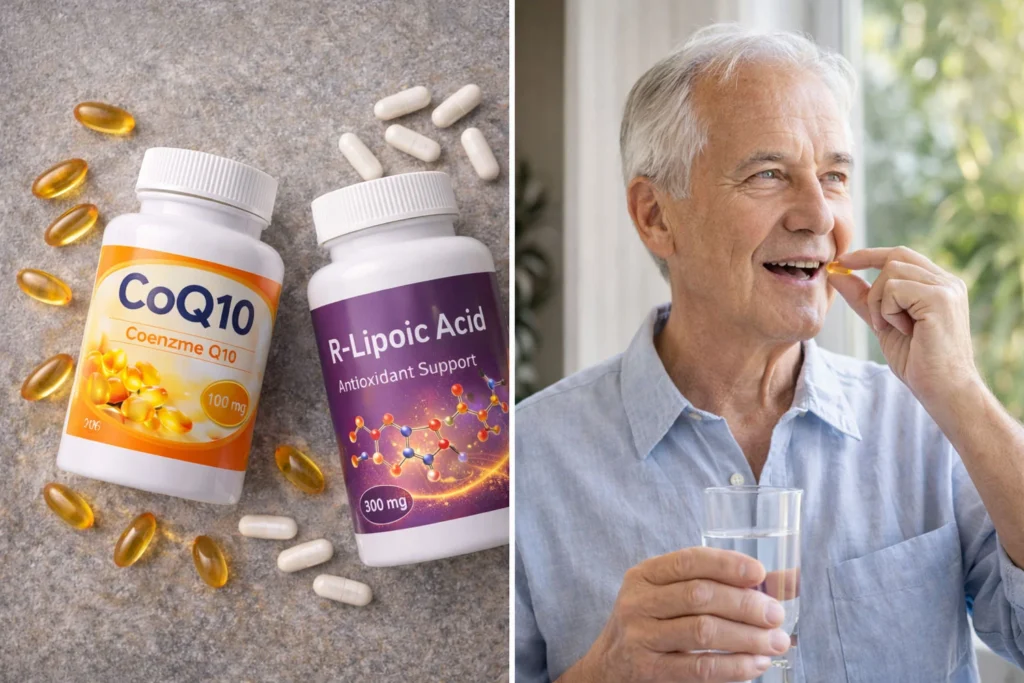
CoQ10 and R-Lipoic Acid: The Foundation of Cellular Vitality
The synergy starts with CoQ10 and alpha-lipoic acid—two nutrients that work together to restore what aging and oxidative stress have depleted. In cultured muscle cells, this combination significantly increased PGC1α, a master regulator that controls energy metabolism and signals your cells to build new mitochondria 1. The combination also upregulated TFAM (involved in mitochondrial replication) and PPARγ, creating effects greater than either compound alone.
Here’s why they work so beautifully together: CoQ10 functions as a fat-soluble antioxidant in mitochondrial membranes and drives electron transport—the very process that generates cellular energy. Lipoic acid acts as both a mitochondrial cofactor and antioxidant. But the real magic happens because reduced lipoic acid recycles oxidized CoQ10 and vitamin E back to their active forms, creating a regenerative antioxidant network 2. This is nature’s elegant design—a self-sustaining cycle of protection and renewal.
Think of it like a relay race where the runners keep passing the baton back and forth—except in this case, they’re recycling antioxidants to keep your cells protected. This is the body’s innate healing capacity at work, and we’re simply providing the raw materials it needs to function optimally.
Adding Selenium: Completing the Glutathione Cycle and Strengthening Terrain
The CoQ10/lipoic acid combination dramatically upregulates genes for glutathione synthesis—your body’s master antioxidant system and a cornerstone of cellular resilience 3. But here’s where understanding the body’s interconnected systems becomes crucial: without adequate selenium, this increased glutathione production cannot be fully utilized. Selenium is essential for glutathione peroxidase, the enzyme that uses glutathione to neutralize hydrogen peroxide and protect against oxidative damage.
This is where the landmark KiSel-10 study reveals something profound about addressing root causes. Researchers gave 443 elderly Swedish subjects (aged 70-88) CoQ10 (200mg/day) plus selenium (200mcg/day) for four years. The results speak to the power of supporting foundational cellular processes: a 53% reduction in cardiovascular mortality risk 4.
Participants also showed:
- Significantly better cardiac function on echocardiography
- Fewer hospital days
- Less decline in quality of life
- Reduced inflammation markers (C-reactive protein, sP-selectin) 5
- Lower oxidative stress markers (copeptin, adrenomedullin) 6
Even more remarkable? The protective effect persisted for eight years after supplementation ended 7. This isn’t a temporary fix—it’s evidence of restored cellular function and strengthened terrain. This makes sense when you understand that CoQ10 levels in heart tissue decline dramatically with age—from 110 mcg/g in younger people to just 47 mcg/g in those aged 77-81 8. Many elderly Europeans also have suboptimal selenium intake, creating a perfect storm for cardiovascular vulnerability 9. By addressing these fundamental deficiencies, we support the body’s capacity to heal and maintain itself.
PQQ: Building New Mitochondria and Restoring Cellular Vitality
While CoQ10 and lipoic acid enhance existing mitochondrial function, PQQ (pyrroloquinoline quinone) directly stimulates the formation of new mitochondria 10. This is crucial because aging doesn’t just damage your existing cellular power plants—you also make fewer new ones. Mitochondrial biogenesis is one of the body’s most fundamental renewal processes, and PQQ helps restore this innate capacity.
Double-blind, placebo-controlled trials show PQQ improves general memory, verbal memory, working memory, and attention 11. When combined with CoQ10, the effects are even greater—a beautiful example of synergy in action. Young adults (20-40 years) showed faster improvements in cognitive flexibility and executive speed compared to older adults, though both groups benefited 12. This speaks to PQQ’s ability to support the body’s natural healing capacity across the lifespan.
Research also suggests the CoQ10/PQQ combination may help with obesity-related reproductive dysfunction by supporting mitochondrial function and reducing oxidative stress 13—another example of how addressing cellular energy at its root can have far-reaching effects throughout the body’s interconnected systems.
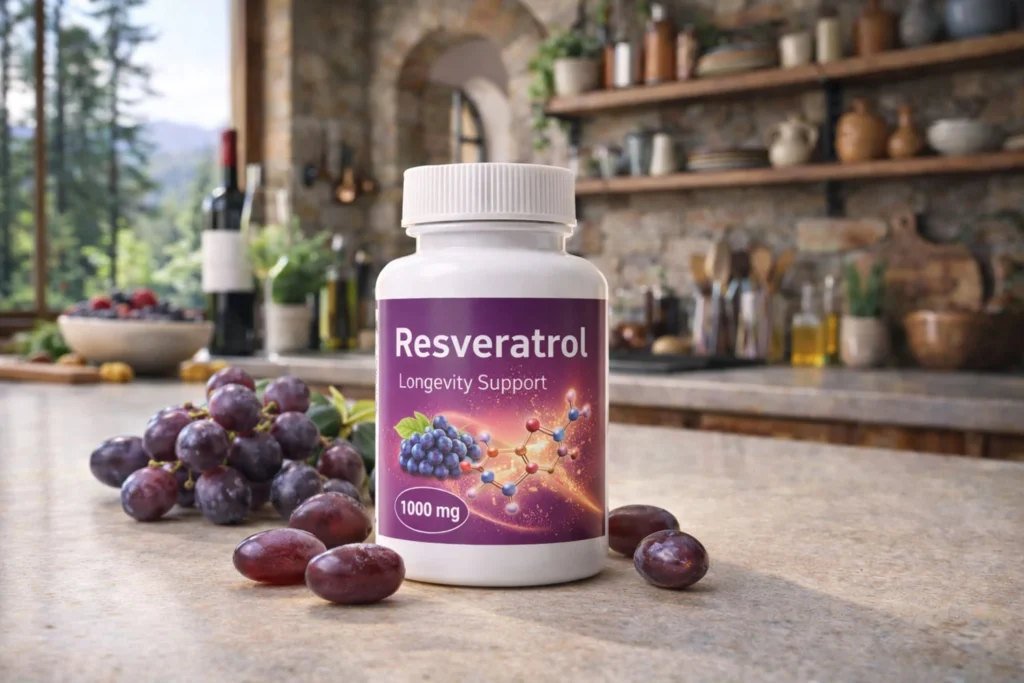
Resveratrol: Activating Longevity Pathways and Cellular Wisdom
Resveratrol and CoQ10 target different but complementary pathways in the body’s aging process—working together to activate what we might call the body’s “longevity intelligence.” Resveratrol activates SIRT1, which removes acetyl groups from PGC1α, triggering genes involved in mitochondrial biogenesis 14. CoQ10 then ensures those newly formed mitochondria function optimally. This is systems thinking in action: one nutrient signals for renewal, the other provides the functional support.
A 2022 study on human stem cells demonstrated the practical wisdom of this combination. Treatment with resveratrol plus CoQ10 increased cell proliferation, rescued mitochondrial functions, reduced oxidative stress, and promoted neural differentiation 15. In patients with neurodegenerative diseases like Parkinson’s, resveratrol plus CoQ10 preserved mitochondrial function, reduced neural loss, and delayed functional decline 16. These aren’t just symptom improvements—they represent restoration of cellular resilience and the body’s capacity to maintain itself.
Piperine: Honoring Bioavailability and the Body’s Absorption Wisdom
Finally, piperine (from black pepper) significantly enhances CoQ10 bioavailability—a reminder that traditional wisdom about combining herbs and nutrients has scientific merit. A clinical study found that 5mg of piperine with 120mg CoQ10 resulted in approximately 30% higher plasma CoQ10 levels compared to CoQ10 alone 17. Piperine increases gastrointestinal blood flow, enhances micelle formation, and modifies intestinal permeability—essentially helping your body absorb and use more of what you’re taking. This is about working with the body’s natural processes, not against them.
Real-World Clinical Results: Evidence of Restored Function
Chronic Fatigue and Post-Viral Syndromes: Rebuilding Cellular Energy
In a study of 174 patients with chronic COVID syndrome—characterized by debilitating fatigue, muscle pain, and sleep disturbances— those receiving CoQ10 (100mg) plus alpha-lipoic acid (100mg) twice daily for two months showed dramatic improvements in their body’s capacity to generate energy and maintain resilience. Complete fatigue resolution occurred in 53.5% of the treatment group versus only 3.5% of controls (p < 0.0001) 18. This speaks to the power of addressing mitochondrial dysfunction at its root rather than merely managing symptoms.
Mitochondrial Diseases: Supporting Foundational Cellular Processes
Patients with mitochondrial cytopathies (including MELAS and chronic progressive external ophthalmoplegia) who received a combination of creatine, CoQ10, and lipoic acid showed lower resting plasma lactate, reduced urinary markers of oxidative stress, and less muscle strength decline 19. These results demonstrate that when we support the body’s fundamental energy-producing machinery, we create the conditions for healing and maintained function.
Neuroprotection: Strengthening Cellular Resilience
In experimental diabetic neuropathy, CoQ10 and alpha-lipoic acid combination more effectively reduced reactive oxygen species and protected neurons than either compound alone, with significantly better results than CoQ10 alone (p < 0.05) 20. This is the essence of synergistic medicine—working with multiple pathways simultaneously to strengthen the terrain and support the body’s innate protective mechanisms.
Building Resilience from the Cellular Foundation
The evidence reveals a profound truth: CoQ10 doesn’t work in isolation, just as no single aspect of our health exists independently. When we combine CoQ10 with R-lipoic acid, selenium, PQQ, resveratrol, and piperine, we create a comprehensive system that honors the body’s interconnected wisdom: 21 22 23 24 25
- Supports existing mitochondrial function (CoQ10, lipoic acid)
- Completes the antioxidant defense cycle (selenium)
- Amplifies mitochondrial biogenesis (PQQ)
- Activates longevity pathways (resveratrol)
- Enhances absorption (piperine)
Human metabolism fundamentally relies on an integrated nutrient network. Within this system, CoQ10 plays a key role by working alongside other macro- and micronutrients in energy production and antioxidant defense. Genetic conditions represent an important exception, where certain individuals face a specific nutrient deficiency that may benefit from high-dose single nutrient treatment—such as in primary CoQ10 deficiencies. However, patients with chronic illnesses typically experience multiple nutrient gaps at once. This explains why CoQ10 alone has produced mixed results, especially in people with significantly depleted nutrient stores. For these cases, combining CoQ10 with other complementary nutrients could potentially enhance clinical outcomes 26.
Conclusion: Toward a Network Medicine Approach
CoQ10 isn’t just a supplement, it’s a cornerstone of mitochondrial health and antioxidant defense. However, its full power is realized only when used in harmony with a broader symphony of nutrients. Alone, it may help; together, it can transform wellness.
The evidence is strongest in the elderly, where CoQ10 and selenium reduced cardiovascular deaths and enhanced quality of life. In male infertility, combination therapy restored hope for families. In chronic disease, CoQ10 with synergistic nutrients improved energy, resilience, and clinical outcomes.
The lesson is clear: the body doesn’t heal with single molecules, but in complex networks of nutrients. CoQ10 plays a vital part, but only when supported by its metabolic and antioxidant partners.
For clinicians and researchers, this calls for a shift in perspective. We must study, prescribe, and use nutrients in networks, not as isolates. For patients, it means that real healing comes from restoring the orchestra of true cellular function.
CoQ10, in combination with other critical nutrients, offers a profound example of how embracing synergy can extend life, reduce suffering, and unlock the body’s innate capacity for renewal. This isn’t just a clinical tool, but an invitation to explore, study, and harness the power of network nutrition for a healthier, more vibrant future.

- Wagner AE, Ernst IM, Birringer M, Sancak O, Barella L, Rimbach G. A combination of lipoic acid plus coenzyme Q10 induces PGC1α, a master switch of energy metabolism, improves stress response, and increases cellular glutathione levels in cultured C2C12 skeletal muscle cells. Oxid Med Cell Longev. 2012. https://www.hindawi.com/journals/omcl/2012/835970/
- Wagner AE, Ernst IM, Birringer M, Sancak O, Barella L, Rimbach G. A combination of lipoic acid plus coenzyme Q10 induces PGC1α, a master switch of energy metabolism, improves stress response, and increases cellular glutathione levels in cultured C2C12 skeletal muscle cells. Oxid Med Cell Longev. 2012. https://www.hindawi.com/journals/omcl/2012/835970/
- Wagner AE, Ernst IM, Birringer M, Sancak O, Barella L, Rimbach G. A combination of lipoic acid plus coenzyme Q10 induces PGC1α, a master switch of energy metabolism, improves stress response, and increases cellular glutathione levels in cultured C2C12 skeletal muscle cells. Oxid Med Cell Longev. 2012. https://www.hindawi.com/journals/omcl/2012/835970/
- Alehagen U, Johansson P, Björnstedt M, Rosén A, Dahlström U. Cardiovascular mortality and N-terminal-proBNP reduced after combined selenium and coenzyme Q10 supplementation: A 5-year prospective randomized double-blind placebo-controlled trial among elderly Swedish citizens. Int J Cardiol. 2013;167:1860-1866.
- Alehagen U, Lindahl TL, Aaseth J, Svensson E, Johansson P. Levels of sP-selectin and hs-CRP Decrease with Dietary Intervention with Selenium and Coenzyme Q10 Combined: A Secondary Analysis of a Randomized Clinical Trial. PLoS ONE 2015;10:e0137680.
- Alehagen U, Aaseth J, Johansson P. Less increase of copeptin and MR-proADM due to intervention with selenium and coenzyme Q10 combined: Results from a 4-year prospective randomized double-blind placebo-controlled trial among elderly Swedish citizens. Biofactors 2015;41:443-452.
- Alehagen U, Aaseth J, Alexander J, Johansson P. Still reduced cardiovascular mortality 12 years after supplementation with selenium and coenzyme Q10 for four years: A validation of previous 10-year follow-up results of a prospective randomized double-blind placebo-controlled trial in elderly. PLoS ONE 2018;13:e0193120.
- Kalén A, Appelkvist EL, Dallner G. Age-related changes in the lipid compositions of rat and human tissues. Lipids 1989;24:579-584.
- Alehagen U, Johansson P, Björnstedt M, Rosén A, Post C, Aaseth J. Relatively high mortality risk in elderly Swedish subjects with low selenium status. Eur J Clin Nutr. 2016;70:91-96.
- Nalbant G, Eroğlu A. Effects of Pyrroloquinoline Quinone (PQQ) and Coenzyme Q10 on Mitochondrial Genes, MitomiRs and Cellular Properties in HepG2 Cell Line. Cellular and Molecular Biology 2023;69(5).
- Ikemoto K, Mohamad Ishak NS, Akagawa M. The effects of pyrroloquinoline quinone disodium salt on brain function and physiological processes. J Med Invest. 2024;71(1.2):23-28.
- Ikemoto K, Mohamad Ishak NS, Akagawa M. The effects of pyrroloquinoline quinone disodium salt on brain function and physiological processes. J Med Invest. 2024;71(1.2):23-28.
- Castillo-Castrejon M, McClurg HE, Maxted MF, Myers DA, Jonscher KR. A Role for the Antioxidants Coenzyme Q10 and Pyrroloquinoline Quinone in Mitigating Obesity-Associated Reproductive Dysfunction. Biol Reprod. 2025 Aug 14:ioaf185.
- Díaz-Casado ME, Quiles JL, Barriocanal-Casado E, et al. CoQ10 and Resveratrol Effects to Ameliorate Aged-Related Mitochondrial Dysfunctions. Antioxidants (Basel). 2022;11(11):2250. https://pmc.ncbi.nlm.nih.gov/articles/PMC9611139/
- Jahan I, Cortes N, Yacaman JM, Marulanda J. Biomolecules resveratrol + coenzyme Q10 recover the cell state of human mesenchymal stem cells after 1-methyl-4-phenylpyridinium-induced damage and improve proliferation and neural differentiation. Front Neurosci. 2022;16:929590. https://www.frontiersin.org/journals/neuroscience/articles/10.3389/fnins.2022.929590/full
- Díaz-Casado ME, Quiles JL, Barriocanal-Casado E, et al. CoQ10 and Resveratrol Effects to Ameliorate Aged-Related Mitochondrial Dysfunctions. Antioxidants (Basel). 2022;11(11):2250. https://pmc.ncbi.nlm.nih.gov/articles/PMC9611139/
- Badmaev V, Majeed M, Prakash L. Piperine derived from black pepper increases the plasma levels of coenzyme Q10 following oral supplementation. Journal of Nutritional Biochemistry 2000;11(2):109-113.
- Schirinzi E, Pepe G, Campolo M, et al. Coenzyme Q10 + alpha lipoic acid for chronic COVID syndrome. Clin Exp Med. 2022. https://link.springer.com/article/10.1007/s10238-022-00871-8
- Rodriguez MC, MacDonald JR, Mahoney DJ, et al. Beneficial effects of creatine, CoQ10, and lipoic acid in mitochondrial disorders. Muscle Nerve. 2007;35(2):235-42. https://pubmed.ncbi.nlm.nih.gov/17080429/
- Sadeghiyan Galeshkalami N, Abdollahi M, Najafi R, et al. Alpha-lipoic acid and coenzyme Q10 combination ameliorates experimental diabetic neuropathy by modulating oxidative stress and apoptosis. Life Sci. 2019;216:101-110. https://www.sciencedirect.com/science/article/abs/pii/S0024320518306842
- Johansson P, Dahlström Ö, Dahlström U, Alehagen U. Improved Health-Related Quality of Life, and More Days out of Hospital with Supplementation with Selenium and Coenzyme Q10 Combined. Results from a Double Blind, Placebo-Controlled Prospective Study. J Nutr Health Aging 2015;19:870-877.
- Gutierrez-Mariscal FM, de la Cruz-Ares S, Torres-Peña JD, et al. Coenzyme Q10 and α-lipoic acid: antioxidant and pro-oxidant effects in plasma and peripheral blood lymphocytes. J Funct Foods. 2015. https://pmc.ncbi.nlm.nih.gov/articles/PMC4512890/
- Rondanelli M, Gasparri C, Peroni G, et al. Supplementation with α-Lipoic Acid, CoQ10, and Vitamin E Augments Running Performance and Mitochondrial Function in Female Mice. PLoS One. 2013;8(4):e60722. https://journals.plos.org/plosone/article?id=10.1371/journal.pone.0060722
- Mantle D, Hargreaves IP. Impact of a Formulation Containing Chaga Extract, Coenzyme Q10, and Alpha-Lipoic Acid on Mitochondrial Dysfunction and Oxidative Stress. Antioxidants. 2025;14(6):753. https://www.mdpi.com/2076-3921/14/6/753
- Yılmaz S, Aksoy H. Protective effects of coenzyme Q10 and resveratrol on oxidative stress induced by various dioxins on transheterozigot larvae of Drosophila melanogaster. Toxicol Ind Health. 2018;34(8):527-536. https://pmc.ncbi.nlm.nih.gov/articles/PMC6062338/
- Tippairote T, Bjørklund G, Gasmi A, Semenova Y, Peana M, Chirumbolo S, Hangan T. Combined Supplementation of Coenzyme Q10 and Other Nutrients in Specific Medical Conditions. Nutrients. 2022 Oct 19;14(20):4383. doi: 10.3390/nu14204383. PMID: 36297067; PMCID: PMC9609170.


One Response
Fabulous article!